Curious why some refrigerators shine while others look smeared even after a wipe? This guide challenges common habits and shows a clear way to get uniform results on kitchen surfaces. It asks what truly works across stainless steel appliances and steel appliances in real homes.
Experts agree: work with the grain and finish with a dry microfiber cloth to cut streaks and lint. This buyer’s guide compares sprays, wipes, creams, and powders so readers can match a product to each surface without guesswork.
The review covers store options such as Weiman and Therapy, plus DIY solutions like white vinegar and mild soap. It also flags what to avoid—abrasive pads, Magic Erasers, bleach, and ammonia-based glass cleaners—that can dull or harm finishes.
Whether you’ve tried many methods or are just looking for a simple routine, this introduction sets the stage: practical tips, tested products, and step-by-step ways to clean stainless steel and keep appliances looking like new. From effective everyday solutions to specialized products, you’ll discover a range of options suitable for every budget. For those eager to maintain a pristine finish, utilizing the right techniques can make all the difference. Remember to check back for more cleaning stainless steel appliances tips that will help you achieve that sparkling shine effortlessly.
What to Look For in a Buyer’s Guide to Stainless Steel Cleaners
Not every formula suits every surface. Match product type to the item—appliances usually tolerate more options, while cookware and sinks need gentler care.
Check labels first: some liquids and pastes can abrade or react with delicate finishes. Wipes and sprays speed up routine work; creams and powders give more control on stains and stubborn residue.
Odor matters for daily use. Choose plant-based or low-odor options if strong scents bother occupants. Fast-evaporating formulas reduce oily films that attract dust.
- Match the cleaner to the surface—verify compatibility with both steel appliances and cookware.
- Pick the format that fits your workflow: wipes for quick jobs, creams or powders for tough stains.
- Consider water quality—hard water calls for distilled water or thorough drying to avoid spots.
- Balance DIY staples like vinegar and baking soda with specialty products for efficiency and less residue.
Small scratches: try non-abrasive compounds and work with the grain. A quality cloth and consistent method often matter more than the product label alone.
Best Stainless Steel Cleaner: Top Tested Picks and Why They Stand Out
Hands-on trials reveal which formulas remove smudges and fingerprints with minimal effort. The list below groups quick-maintenance options, heavy-duty sink treatments, and clever combo methods that deliver consistent results on stainless steel appliances and other kitchen metal surfaces.

- Weiman Stainless Steel Cleaning Wipes: Ideal for rapid upkeep on large appliances—work with the grain, then buff dry with microfiber to erase fingerprints and smudges fast.
- Therapy Stainless Steel Cleaner & Polish: A plant-based spray with a coconut-oil base that polishes as it cleans. Low odor and one-step polish results make it a go-to for users sensitive to harsh scents.
- Hope’s Perfect Sink Cleaner and Polish: Formulated for sinks and heavy build-up—targets water-line discoloration and restores a bright polish on dish areas and fixtures.
- Bar Keepers Friend + mineral or olive oil: Editor-tested two-step: clean with liquid BKF, rinse and dry, then apply a thin oil film to even out finish and boost shine with low odor.
- Scrub Daddy Power Paste + Scrub Mommy: A gentle, fine-abrasive paste that lifts grime on fridges, kettles, and sinks; rinse and dry with microfiber for a quick polish (won’t stop future fingerprints).
Application tips: Use minimal product, always move with the grain, and finish by buffing with a clean microfiber cloth. For sink-heavy jobs, favor BKF or a sink-specific polish; for daily touch-ups, opt for wipes or a plant-based spray.
For a deeper comparison and buying guidance, see this short review guide: recommended product roundup.
How to Choose the Right Format: Wipes, Sprays, Liquids, Creams, or Powders
Some formats favor speed; others give control for tough spots. Match the delivery to the job: quick refreshes, heavy residue, or a final polish. The right pick saves time and protects the finish.

When convenience wins: pre-soaked wipes vs. reusable towels
Pre-soaked wipes are the fastest way to refresh large appliance doors and remove light fingerprints. They fit daily touch-ups and busy households.
Reusable towels plus a low-residue spray reduce waste. A clean cloth and a dry microfiber finish give a better buff and fewer streaks.
Liquids and creams for polishing versus powders for tougher residue
Sprays give even coverage on broad surfaces and are easy to control. Liquids and creams often polish more uniformly when buffed properly.
Powders and pastes add mild abrasives for stubborn buildup. Use sparingly, work with the grain, rinse well, and dry to avoid water spots.
- Choose wipes or sprays for large appliances and quick jobs.
- Use creams or powders for targeted stains and tough residue.
- Always test a small area and finish with microfiber to minimize streaks.
Step-by-Step: Cleaning Stainless Steel Appliances Without Streaks
A simple sequence—dust, clean, and buff—delivers the most reliable finish on metal surfaces. Start with a dry dusting to remove loose debris. This prevents grit from scratching the surface during the next step.
Always work with the grain and avoid circular motions. Apply your chosen product or a mild mix, then wipe in the grain direction. Do not let the surface air-dry.

Always work with the grain and finish with a dry microfiber cloth
After cleaning, immediately dry and polish with a clean microfiber cloth. A dry microfiber cloth removes remaining water and reduces streaks more than any product.
Dealing with grease, fingerprints, and smudges on kitchen surfaces
- Dust the surface with a dry cloth, then apply cleaner sparingly and wipe with the grain.
- For grease and fingerprints: mix a few drops of dish soap in warm water, wipe gently, rinse, and dry at once to avoid water marks.
- Use distilled water where tap water leaves spots—rinse and immediately buff with microfiber.
- If extra sheen is desired, rub a tiny amount of oil into a cloth, pass lightly, then buff off excess to prevent dust attraction.
- Work top-to-bottom in sections and repeat light applications on stubborn smudges instead of scrubbing across the grain.
Safety note: avoid oil-based finishing near a gas range and keep solvents with strong fumes out of closed spaces.
Natural and DIY Solutions That Actually Work
Home staples clean effectively when paired with direction and a good cloth. These methods cost little and keep appliances looking clean without harsh fumes.
White vinegar spray: Mix equal parts vinegar and water in a spray bottle. Spritz, wipe with the grain, and expect to use a bit of elbow grease on greasy spots. Always finish by drying and polishing with a clean microfiber cloth to remove streaks and residue.
Mild dish soap and water: A few drops of dish soap in warm water cut grease well. Wipe gently, rinse to remove soap residue, then dry immediately to prevent mineral spots. For the kitchen sink and rims, rinse thoroughly at seams and drains.
Distilled water: In hard-water areas, swap tap water for distilled water when rinsing. That small change reduces spots as the surface dries.

- Baking soda helps on targeted stains—use gently, rinse completely, and buff dry.
- DIY methods shine when used with a soft cloth and steady technique.
- These approaches are appliance-safe when you work with the grain and control moisture.
For a short natural care primer, see this guide: how to clean stainless steel appliances.
Products and Practices to Avoid on Stainless Steel
Many go-to scrubbing tools behave like fine sandpaper on metal surfaces.
Why abrasive pads, steel wool, and Magic Erasers can dull finishes
Abrasive pads, steel wool, and Magic Erasers create micro-scratches that scatter light and produce a permanent haze. Tiny lines are especially visible on brushed finishes and can worsen with repeated use.
Skip bleach and ammonia-based glass cleaners on steel appliances
Bleach and chlorine products may corrode alloys and cause pitting. Ammonia-based glass sprays leave films that show as streaks and attract more residue and smudges.
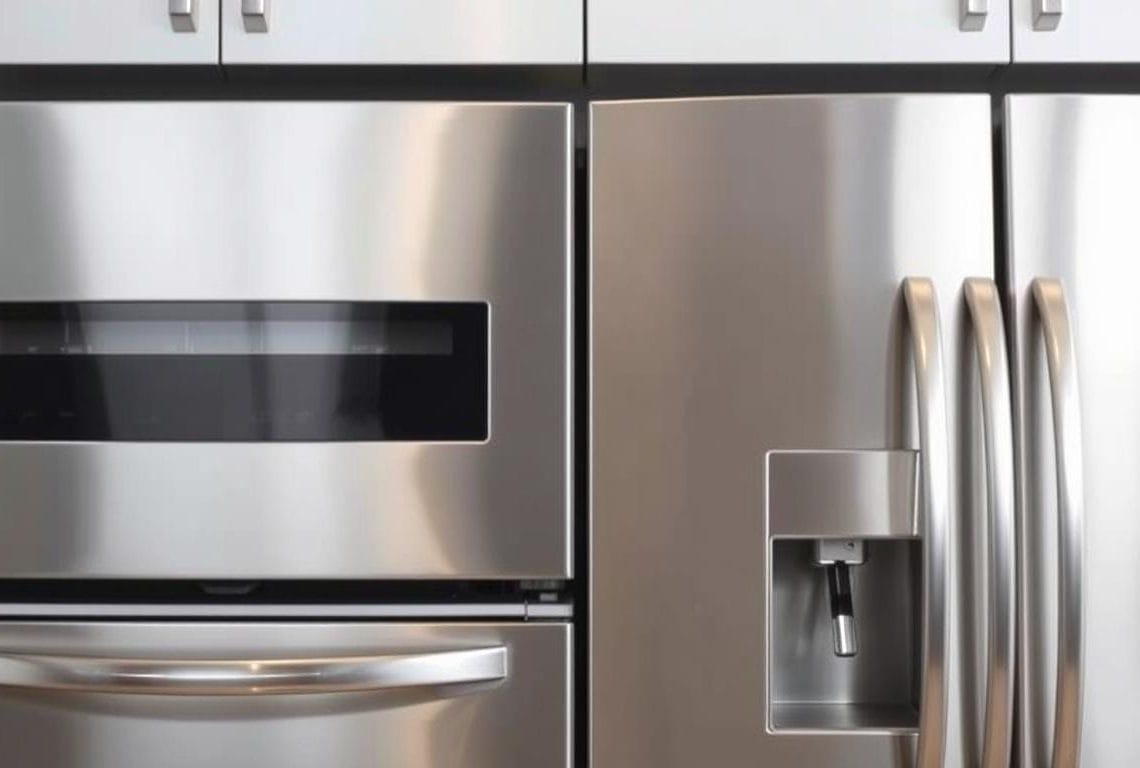
WD-40: shine with caveats (odor and flammability)
WD-40 can add a short-term shine but deposits oil and odor. It is flammable—avoid use near active cooktops. If used, wipe off excess with a soft cloth and ventilate the area.
- Do not use harsh abrasives—they permanently alter the finish.
- Avoid bleach, chlorine, and ammonia glass formulas on kitchen metal surfaces.
- When in doubt, test in an inconspicuous spot and stick to non-abrasive cleaning methods.
If persistent stains or smudges remain, move to a purpose-made product or a gentle paste and rinse—never escalate to a harsher abrasive.
Scratch, Stain, and Spot Remedies
Minor marks and tiny scratches are often reversible with careful technique rather than heavy abrasion. Start by cleaning the area so you can judge depth before any repair work. Good light helps avoid overworking the finish.
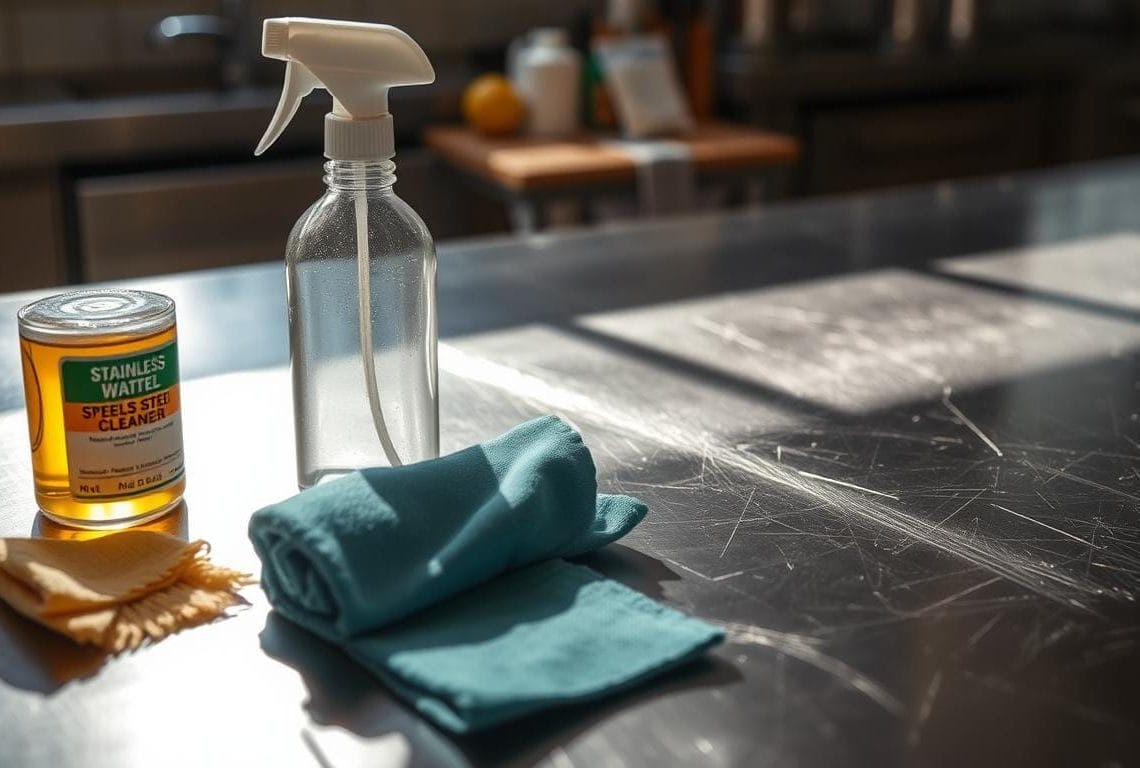
Light scratches: gentle compounds and careful rubbing
For light scratches, apply a non-abrasive compound and rub with the grain in short, even strokes. Use a soft cloth and test progress often. Stop if the mark does not fade — further abrasion can make a dull patch that is hard to blend.
Older appliances and rust flecks: when Bar Keepers Friend helps
Liquid Bar Keepers Friend lifts oxidation, rust flecks, and stubborn discoloration on older appliances. Apply with a damp cloth, rinse thoroughly with water, then dry completely to avoid new spots. Finish with a light polish if needed to restore even sheen.
- Use a mild baking soda slurry for small stains—treat, rinse, and buff dry.
- Avoid aggressive pads; preserve the brushed look by working gently.
- After repairs, return to gentler maintenance to protect the restored surface.
For detailed product guidance and a recommended surface routine, consult the stainless steel surface cleaner resource. In addition to the product recommendations, it’s important to familiarize yourself with effective stainless steel cleaning techniques to maintain the luster and longevity of your surfaces. Regular cleaning can prevent stains and fingerprints, ensuring a pristine appearance. Explore the various methods suggested in the resource to find the most suitable approach for your specific needs.
Maintenance Habits for Long-Lasting Shine
A short, steady routine protects finishes and cuts the time you spend on deep cleaning. Regular, light care prevents buildup on appliances and keeps a kitchen surface ready for daily use.

Microfiber cloth rotation: clean, buff, and polish in one pass
Keep multiple microfiber cloths in rotation — one for the cleaning solution, one to dry, and one for the final polish. This method reduces cross-contamination and prevents streaks.
Tip: Buff with a dry microfiber cloth after each pass to remove lint and tiny water marks. For guidance on systems and supplies, consult this microfiber system guide.
Preventing residue build-up on your refrigerator and kitchen sink
Wipe high-touch areas on appliances several times per week to stop layers of residue. Address grease quickly — a brief wash with dish soap, rinse, and a microfiber dry resets the surface without heavy work.
- Dry surfaces immediately after washing to avoid hard-water spots on the sink and doors.
- Spot-wipe handles and fridge panels daily to reduce weekly effort.
- Occasionally apply a minimal oil pass, then buff thoroughly to preserve a clean stainless look without attracting dust.
Ready to Find Your Best-Fit Cleaner and Keep Your Kitchen Smudge-Free
A simple system—one product, one quality cloth, one repeatable method—saves time and preserves finishes. Pick a stainless steel cleaner that suits your routine: wipes for speed, a plant-based spray for low odor, or a paste for spots.
For heavy use, pair a dedicated steel cleaner with a weekly microfiber polish. Rotate a sink-specific product like BKF for tough buildup, then rinse and dry to lock clarity.
Keep it minimal: choose a single product, a reliable cloth, and a steady method. That setup makes upkeep quick, keeps stainless steel appliances and steel appliances looking their best, and makes cleaning less work.