Can a single pan truly replace an entire set and still deliver pro-level sears and sauces?
Home cooks and pros alike want gear that handles high heat, builds fond, and survives years of daily use without fuss.
This guide lays out clear, editor-backed picks and explains why a quality pan or cookware set matters for results. It balances lab-style testing with real food trials so readers get actionable advice, not vague claims.
Expect: concise notes on construction—ply count, core material, and handle design—plus when to buy individual pieces versus full sets.
Coverage includes performance on gas, electric, and induction ranges, how surfaces respond to heat and utensils, and care tips that protect finish and longevity.
Top-rated stainless steel cookware at a glance for the United States
For shoppers who want fast, practical guidance, this snapshot highlights three proven options for everyday cooking.
Editor’s picks:
- All-Clad D3 — praised for even heat and long life; excels at searing on high heat and stabilizes quickly across the pan.
- Goldilocks Skillet — an affordable 3‑ply alternative with a broad surface and easy pouring for quick sauces and pan juices.
- Calphalon Classic Set — a well-rounded set: induction-ready, oven-safe to 450°F without lids, dishwasher-safe, with clear lids and textured handles.
Why this material wins
Metal-clad designs handle high heat, move from range to oven without worry, and tolerate metal utensils better than many nonstick options.
The quick-look below helps readers pick between a single frying pan for sears and sauces or a full set for broader kitchen needs.
For more on choosing a skillet suited to serious searing, see the best stainless steel skillet.
How we test stainless steel pans and cookware sets
The testing protocol combines lab-style heat mapping with hands-on cooking to reveal real-world performance. Each step measures a clear variable so readers see how a pan behaves under normal kitchen use.
Even heating and hot-spot checks
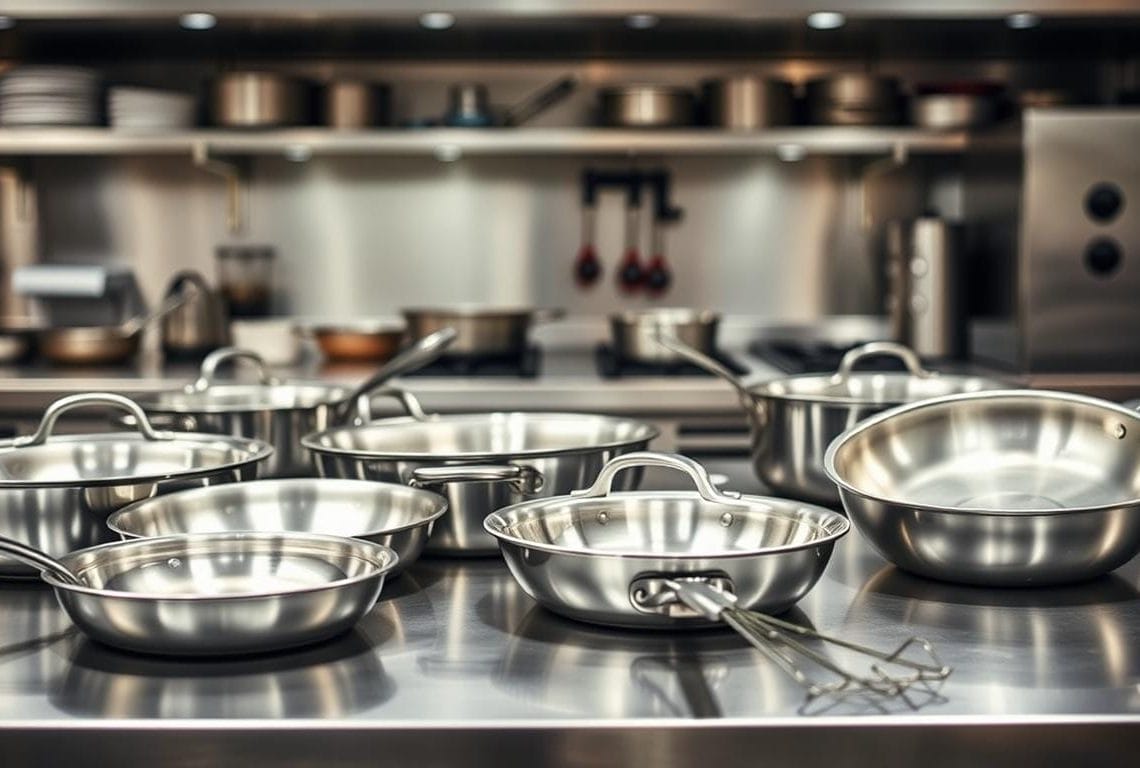
Heat mapping starts with a flour test. As flour browns across the surface, it flags any hot spots and uneven heat.
We time preheat, and note how quickly a pan reaches target temperature for a clean sear.
Real-world cooking trials
Next: caramelized onions and pan-fried skin-on chicken thighs. These tests stress sticking, fat rendering, and how a 12‑inch pan handles four pieces without crowding.
Sear and deglaze steps track fond formation and release for easy pan sauces — a key sign of a useful cooking surface.
Usability, washing, and durability
- Usability: weight balance, handle angle, oven tolerance.
- Cleaning: how oil films lift with warm water and mild detergent; rivet traps and edge wear.
- Construction: fully clad design with an aluminum core favored for even heat and quick response.
Results are recorded to compare pans, single pans versus a full set, and long-term performance of stainless steel cookware. These comparisons provide valuable insights into the durability, heat distribution, and ease of maintenance of various cookware options. Additionally, consulting best stainless steel cookware reviews can help consumers make informed decisions based on real user experiences. Ultimately, selecting the right cookware can significantly impact cooking efficiency and the overall quality of meals prepared at home. Furthermore, understanding the stainless steel cookware benefits, such as its resistance to staining and non-reactivity with foods, can enhance users’ cooking experience. The longevity of stainless steel cookware often translates to cost savings over time, as it can withstand frequent use without degrading. As more consumers prioritize both performance and health in their cooking tools, stainless steel continues to gain popularity as a top choice in modern kitchens.
Best stainless steel pan: All-Clad D3 Frying Pan
For cooks who demand repeatable results, the All-Clad D3 frying pan blends precise heat control with everyday usability. This 3‑ply design sandwiches an aluminum core between stainless layers for fast, even warming across the cooking surface.
The 10‑ and 12‑inch sizes feel light in hand yet deliver pro-level sears. Editors note the gently sloped walls make pouring sauces and moving rendered fat simple.
Why we love it
- Even heating: the 3‑ply build reduces edge-to-center variance for dependable browning.
- Versatile oven use: safe to 600°F—ideal for high-heat finishing and stovetop-to-oven proteins.
- Durable design: resists warping and stands up to years of metal-utensil use.
What to consider
Expect a premium price, but the long service life often offsets the cost for frequent cooks. To protect the refined finish and avoid dulling, hand-wash with warm water and a gentle sponge.
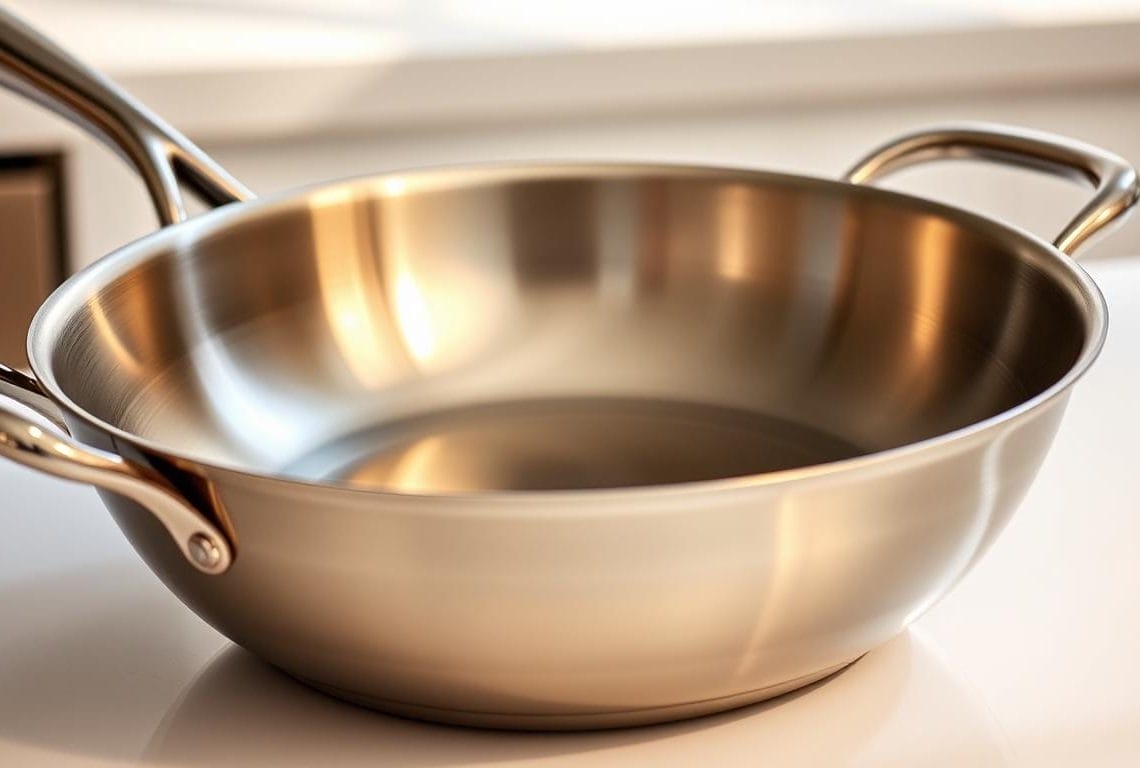
Handle geometry feels secure for most users; for larger sizes, add a heat-safe sleeve or helper tool when moving hot pans from oven to counter.
Best budget stainless steel pan: Goldilocks skillet
A practical, wallet-friendly option, the Goldilocks pan balances quick warming with an easy-pour rim. The 3‑ply build uses an aluminum core that responds to flame changes and spreads heat across a broad surface.
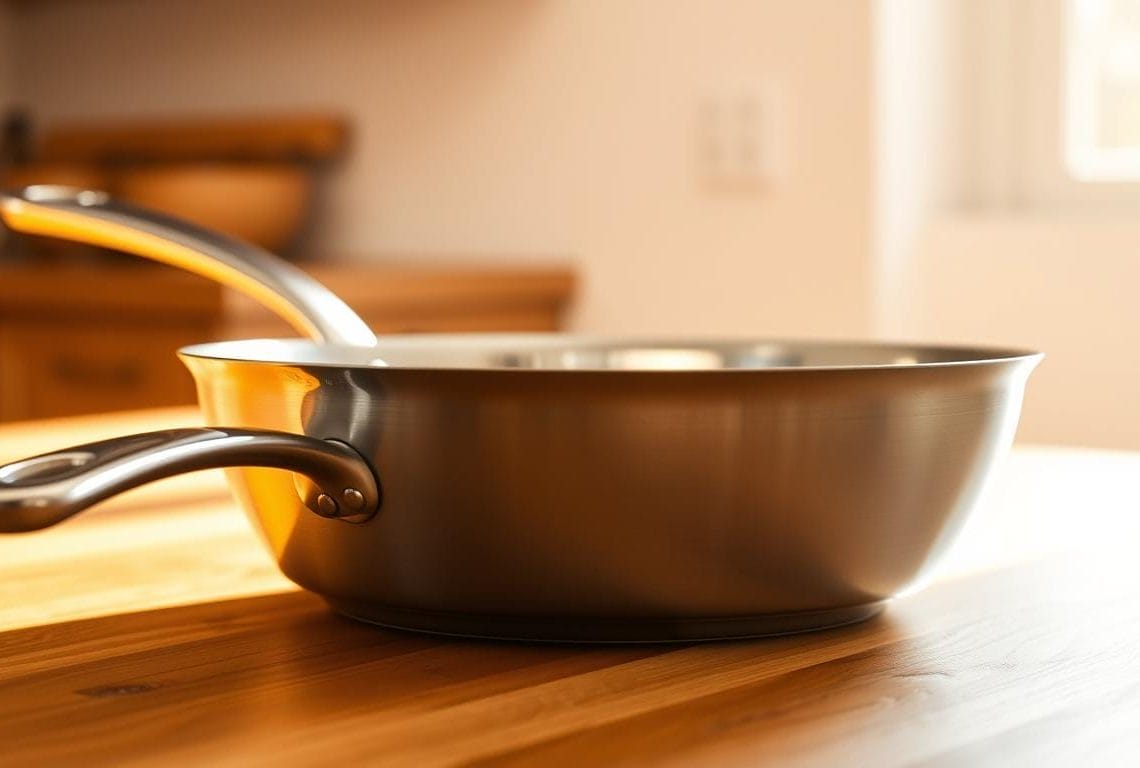
Performance for the price: responsive 3-ply, broad surface, easy pouring
Testing showed smooth caramelized onions and reliably browned chicken thighs with no clear hot spots. The curved rim helps decant oil and pan sauce cleanly.
Trade-offs: quicker to scorch at high heat, patina and handle preferences
- Watch the heat: it can scorch faster if left at high flame—reduce heat during transitions.
- Surface change: a bronzed patina may appear over time; performance stays solid despite color shifts.
- Handle feel: some users prefer more texture or a different angle—test grip if you lift heavy pans often.
At a fraction of premium price and oven-safe to 550°F, it’s a useful addition to a kitchen kit. Consider a compatible lid if you need covered cooking.
The best stainless steel cookware set for most kitchens: Calphalon Classic
For home cooks who want a single, sensible cookware set that covers everyday needs, Calphalon Classic is a practical choice. The set combines common sizes with useful details so users can move from prep to plate with fewer tools.
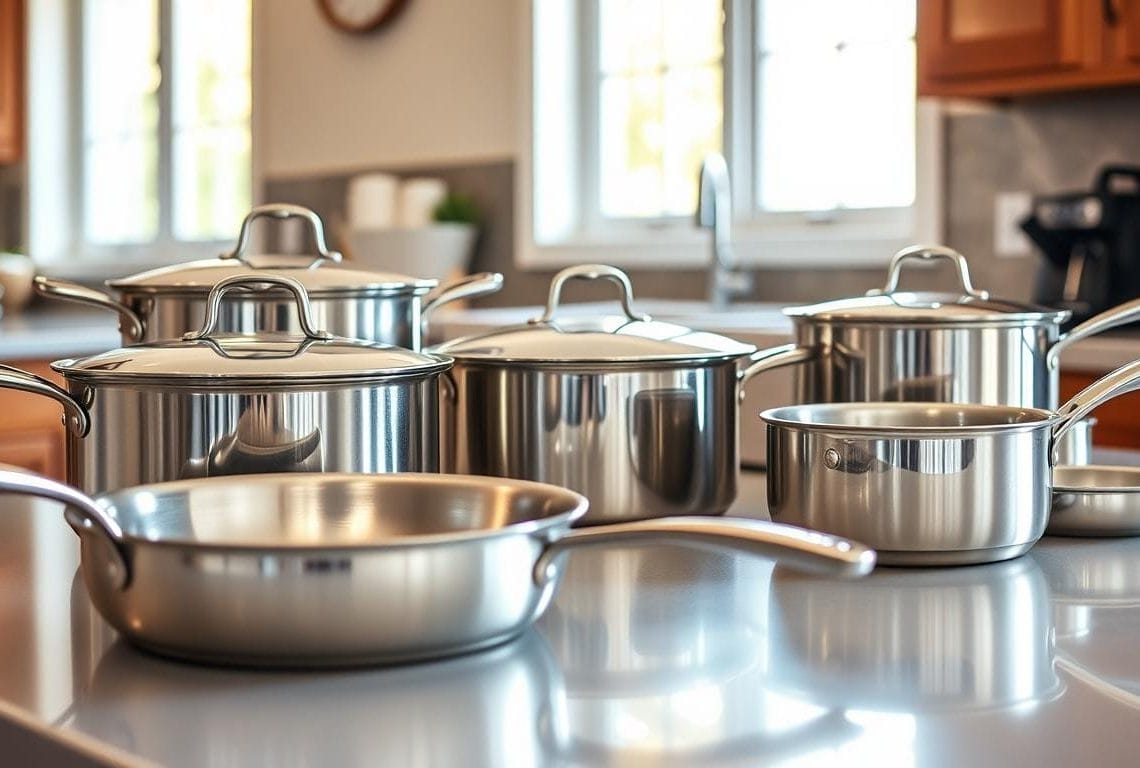
Set makeup and specs
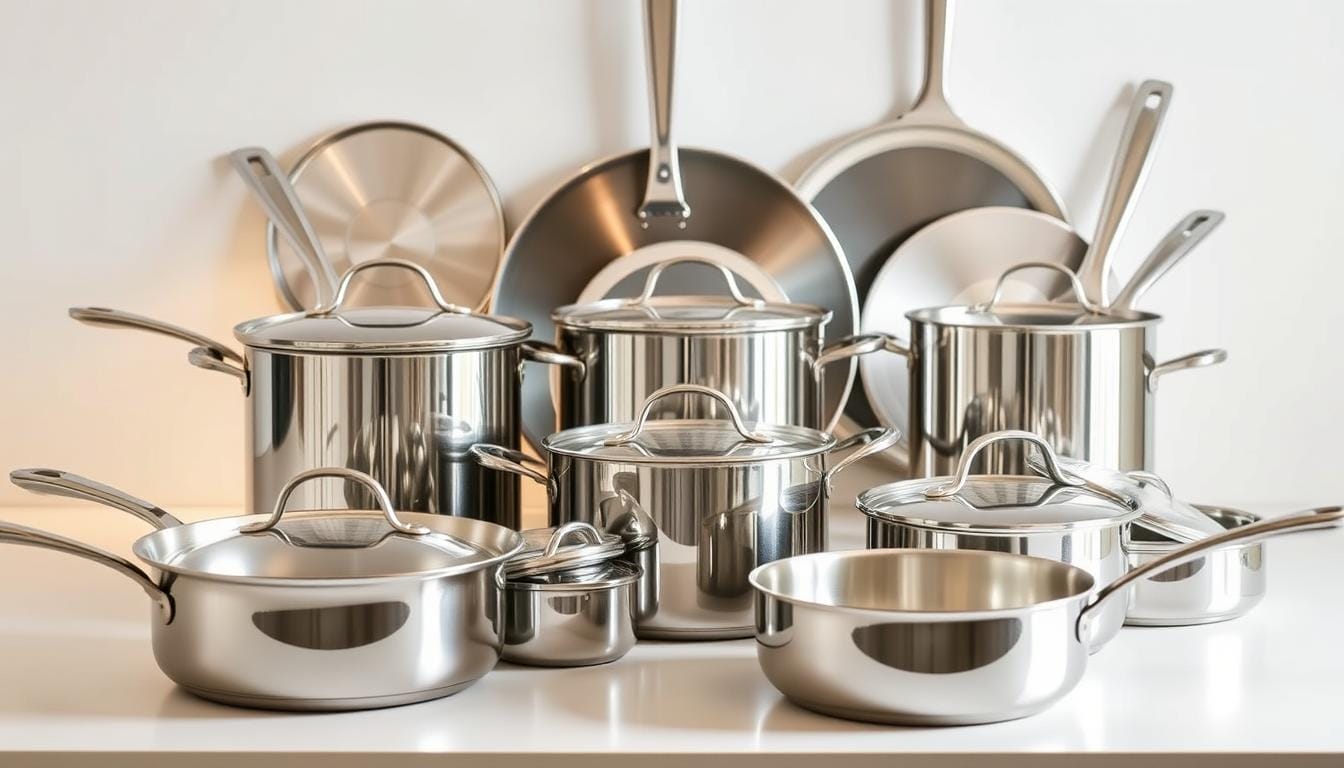
The typical bundle includes 8″ and 10″ fry pans, 1.5‑ and 2.5‑quart saucepans with lids, a 3‑quart sauté pan with lid, and a 6‑quart stockpot with lid. It is induction-compatible, dishwasher-safe, and the set oven-safe to 450°F without lids.
Design wins
Clear tempered lids let cooks monitor food without lifting. Pour spouts and draining lids reduce the need for extra tools. Interior measurement marks speed up liquid work, and lightly textured handles aid grip when hands are wet or greasy.
Cook tests that matter
In trials, the 10″ pan seared salmon skin crisply on medium heat. Browned butter finished evenly in the 1.5‑quart pan. The sauté pan handled Jollof rice and formed fond that released cleanly when stock or water hit the surface.
Worth noting
- The fry pans do not include lids; consider adding a lid if you need covered frying.
- Not broiler-safe—avoid high broiler heat on these pieces.
- At about $200, this steel cookware set offers strong performance-per-piece and sensible features for most kitchens.
Other stainless steel cookware worth a look
Wide choice matters: shoppers who want extra features or a larger set should compare a handful of reputable brands before buying.
One notable option is the Cuisinart larger set. It adds a steamer insert and interchangeable lids that fit multiple pieces. Expect to pay about $100 more than the Calphalon set. Cleaning required more elbow grease when oil baked on in testing, but the added function can justify the cost for some kitchens.
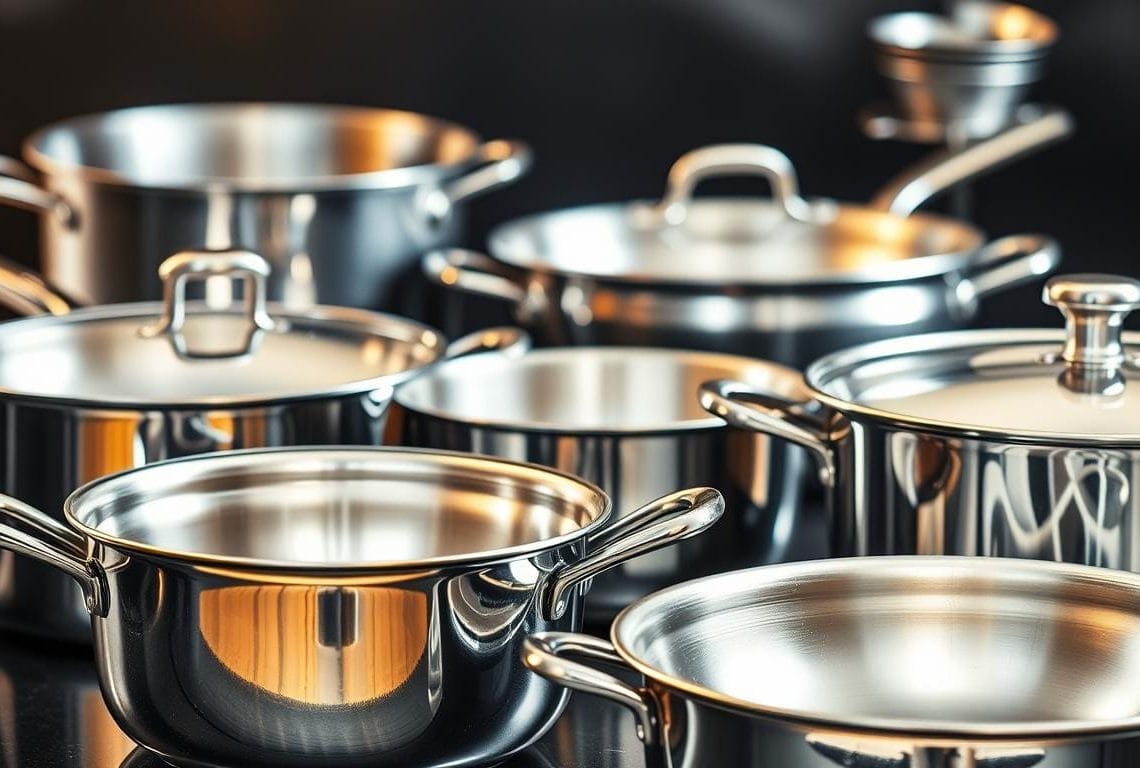
Brands to consider
- The Cellar (Macy’s) — solid department-store option with familiar warranty terms.
- Cuisinart SmartNest — space-saving sets with nested storage and sensible lids.
- Henckels Clad H3 and Tramontina Tri‑Ply Clad — Consumer Reports favorites for consistent heat at varied price points.
Tested standouts and caveats
High-end Fissler brings excellent 5‑ply heat but adds heft and price. Made In matches All‑Clad performance in many tests, though some sizes lack lids.
Hestan offers premium details like flush rivets and ergonomic handles, yet testing showed a mild central hot spot. Ninja heats fast with a slight center bias and is a strong budget alternative.
- Misen — good overall performance; long handle is polarizing.
- Zwilling Spirit & Anolon — uneven flour tests suggest variable browning across the pan.
Quick take: if you want a larger set with extras, choose Cuisinart for the steamer and lid system. For tighter budgets, Tramontina gives value but note steeper sides. For even heat and sidewall warmth, consider Fissler if weight and price are acceptable.
Best stainless steel cookware buying guide
Choose construction first: layer count and core type determine heat response, fond formation, and long-term stability. The right build reduces hot spots and improves results when searing or sauce-reducing.
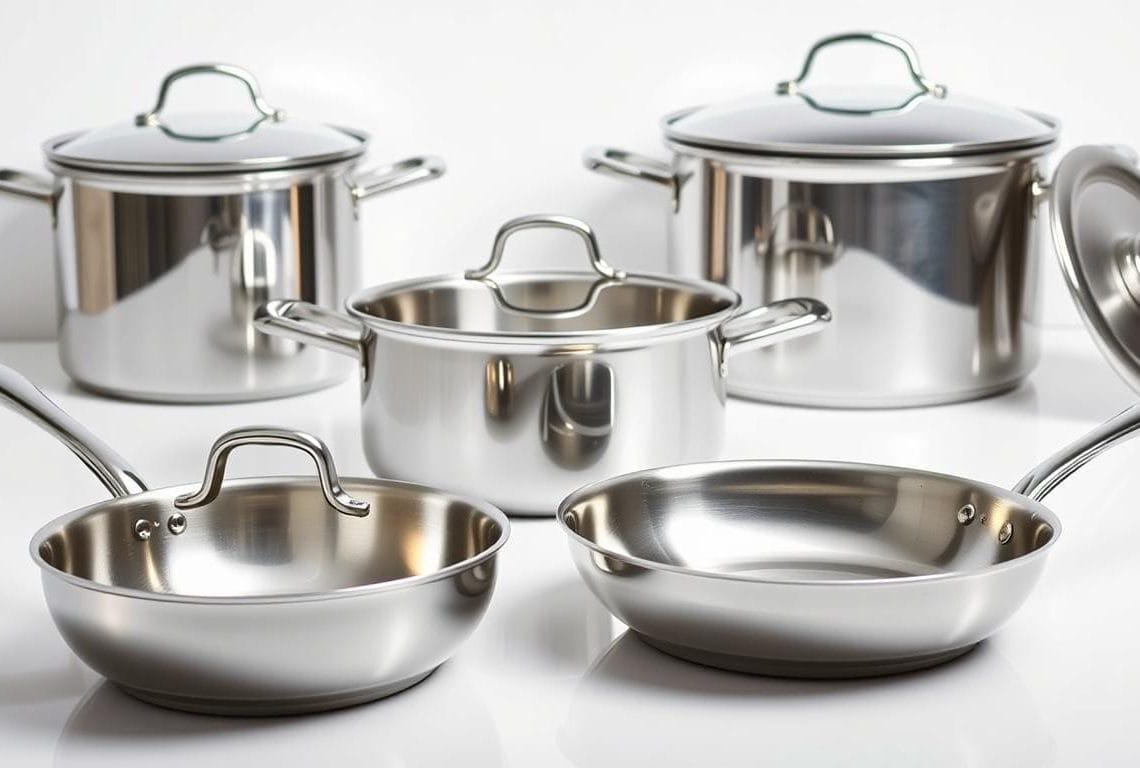
Cladding and cores: 3-ply vs 5-ply
3-ply offers fast response and lighter weight. It suits most home cooks who want quick control for frying and sauces.
5-ply adds thermal stability and edge-to-edge consistency but increases heft. Seek an aluminum core for even heat and fewer hot spots across the surface.
Cooktop and oven compatibility
Confirm magnetic bases for induction and clear oven-safe ranges for high heat finishes. Look for handles designed to stay cooler and lids that survive oven temps you use most.
Size and set strategy
Pair a 10‑ or 12‑inch skillet with a 3‑quart sauté pan, 1.5‑ and 3‑quart saucepans, and a 6‑ to 8‑quart stockpot. Ensure lids fit key pieces and consider helper handles for heavy pots.
Price, warranty, and long-term value
Weigh upfront cost against warranty and expected lifespan. Durable sets often yield better value by avoiding early replacement and preserving performance for frequent frying, roasting, and daily food prep.
For a quick comparison of recommended sets, see this concise guide: recommended steel cookware set options. In addition to these options, it’s important to consider the features that make each set unique, such as heat distribution and durability. For more detailed insights into specific products, check out our best stainless steel pots review, which highlights the most reliable choices on the market. This will help you make an informed decision that suits your cooking needs. These sets have been evaluated based on durability, heat distribution, and ease of maintenance. If you’re looking to invest in quality cookware that will last for years, explore the best stainless steel cookware options available. With the right set, you can enhance your cooking experience and achieve professional-level results at home.
Care, seasoning, and safety tips for stainless steel that last years
Smart cleaning and heat control extend service life and improve cooking results.
Make sure pans and pots cool before washing—plunging a hot piece into water risks warping and harms long-term performance.
Day-to-day care: use warm water, mild detergent, and a soft sponge. Dry fully to prevent watermarks on the surface of stainless steel pieces.
For stuck food, add water with a drop of dish soap, bring to a brief simmer, let cool, then wipe. A sprinkle of baking soda lifts stubborn films without harsh scrubs.
Seasoning is optional: rub a thin layer of neutral oil, heat to just smoking, cool, and wipe. Manage heat—many pans sear well at medium to medium-high—this saves time and protects lids and handles.
Check handle fasteners periodically and use mitts for a cool touch. For daily safety, note that stainless avoids PFAS concerns tied to some nonstick surfaces, making it a reliable choice for years of cooking and kitchen tests.