Question: Does stainless steel turn green when you least expect it — or is the stain from something else?
Most homeowners will not see genuine stainless steel develop lasting green stains under normal use. The alloy relies on a thin, self-healing chromium oxide film that blocks rust and keeps the surface bright.
When discoloration or faint green marks appear, they often come from low-grade metal mixes, copper deposits, chlorides near pools, or harsh cleaners. These agents sit on the surface and cause spotting — not a complete material failure.
This article promises clear chemistry, practical diagnosis, and step-by-step fixes. Homeowners, metalworkers, and facility managers will find quick wins: pick grades 304 or 316, avoid chloride-heavy cleaners, rinse well, and dry fully. With routine care and the right polish, the finish stays professional and bright.
Quick answer: what you’re really seeing when stainless steel looks green
Is that green stain the metal or something else? A slim green film on a polished surface most often comes from copper-bearing sources, not a change in the base alloy.
https://www.youtube.com/watch?v=nzdsOo6QKYU
Stainless vs. copper verdigris: don’t confuse the chemistry
Copper, brass, and bronze form verdigris — visible green carbonate — when air, moisture, or salt accelerate oxidation.
By contrast, the chromium oxide barrier on stainless steel is microscopic and transparent. That passive film protects the metal from visible corrosion.
When a “green tint” is actually surface contamination
Shared workspaces and kitchens transfer tiny particles from copper fixtures, cooking pans, or toolkits. Those particles can oxidize and leave green residues on the surface.
Chlorine cleaners, salt spray, or pool chemistry can weaken the passive layer, letting contaminants bind and appear as if the metal itself turns green.
- If the green wipes away with a mild cleaner, it’s likely superficial.
- Check nearby copper or brass items, cleaner labels, and recent chemical exposures to isolate the source.
- When in doubt, test a small area with soap and water before assuming a substrate change.
What stainless steel is made of and why it resists discoloration
What keeps the finish bright is an ultra-thin chromium-rich film that repairs itself after minor damage.
The basic composition is simple: an iron-based alloy with at least about 10.5% chromium. That chromium forms a microscopic chromium oxide film — the passive oxide layer that blocks oxygen and moisture from attacking the metal.

Chromium’s passive film: the self-healing Cr2O3 layer
This passive film reforms when air is present. Minor scratches close up as the chromium oxidizes again. The result: sustained corrosion resistance and a bright surface after routine wear.
Role of nickel and molybdenum in corrosion resistance
Nickel stabilizes the austenitic structure. That boosts toughness and makes the alloy easier to form and weld.
Molybdenum — found in grade 316 — helps resist chlorides and pitting. For poolside or coastal use, 316 outperforms many other common grades.
- Composition summary: iron + chromium = core resistance.
- Common grades: 304 (≈18% chromium, 8–10.5% nickel) and 316 (≈16% chromium, 10–14% nickel + molybdenum).
- Practical tip: match grade to environment to reduce staining and deposits.
Even so, the passive film is not invincible: strong chlorides or harsh acids can pit or damage the surface. For guidance on corrosion behavior and care, see stainless steel and rust.
does stainless steel turn green
Quick verdict: High-quality kitchen and marine alloys seldom show lasting emerald stains under normal care.

Reality check: Premium 304 and 316 grades rarely have true green discoloration. Most visible films come from external sources — salt spray, pool chemistry, or copper residues — that sit on the surface and mimic a change.
Budget grades such as 201 and 430 lack the same chromium and nickel balance. These alloys are more prone to pitting and corrosion when exposed to chlorides or heavy sweat. That raises the chance that light-colored spotting will appear.
- Typical culprits: chlorides from cleaners, coastal spray, pool chemicals, and copper contact.
- Assess the environment: frequent salt, sweat, or tool contact suggests an upgrade to 316 or tighter maintenance.
- Good news: most spots wipe away with proper cleaning, rinsing, and drying — they are reversible.
Common triggers that create greenish stains on stainless surfaces
Many stains blamed on the alloy actually start as surface deposits from nearby materials or chemicals.
Chlorides, salt air and pool chemistry
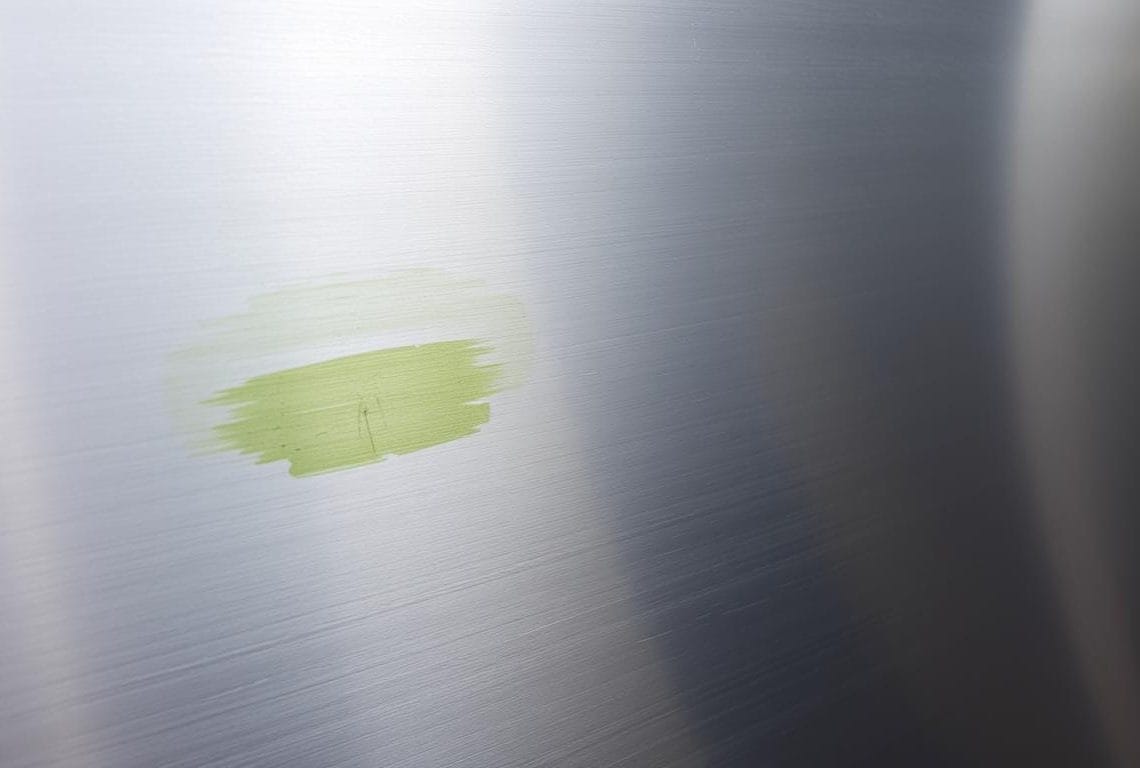
Chlorides from bleach, pool chemicals, and coastal spray attack the chromium oxide layer. This chemical reaction weakens protection and lets spots form on outdoor fixtures and near pools.
Cross-contamination from copper and brass
Contact with copper or brass fittings transfers tiny particles. Those particles undergo oxidation and leave a green deposit that sits on the surface.
Moisture, humidity and poor drying
Repeated wetting without full drying concentrates salts and contaminants. Trapped moisture creates micro-environments that promote localized staining and early corrosion.
Heat tint and high-temperature oxidation
Cooking and grills can push temperatures above 500°F, causing heat tint—yellow, brown or blue hues from altered surface oxide. In aggressive cases, discoloration on pans may need specific cleaners.
- Handle: separate dissimilar metals to avoid transfer.
- Rinse: wash off pool or bleach splashes promptly and towel-dry.
- Inspect: check coastal and chlorinated sites often to catch spots before they set—protect outdoor steel accordingly.
How to prevent stainless steel from turning green
A short routine—clean, rinse, dry—goes a long way toward preserving a finish in everyday use. Simple steps protect the microscopic protective layer and keep corrosion resistance high.
Daily care: gentle cleaners, rinse well, and dry fully
Use mild soap and warm water with a soft cloth or microfiber. Wipe in the direction of the grain to remove oils and deposits.
Rinse thoroughly to remove residues, then dry immediately with a microfiber towel. Drying prevents trapped moisture and salt from concentrating on the surface.
What to avoid: bleach, harsh chlorides, and abrasive pads
Avoid bleach, muriatic/hydrochloric acid cleaners, and any chloride-heavy products that can compromise the chromium oxide layer.
Do not use abrasive pads or wire brushes. Scratches thin the protective film and raise the chance of staining or localized corrosion.
- Apply a protective polish or wax periodically to act as a barrier against pollutants and chlorides.
- For poolside or coastal installations, choose grade 316 hardware for superior resistance and longer life.
- Always read cleaner labels and test in an inconspicuous area before treating brushed or satin finishes.
Step-by-step: cleaning and restoring green spots
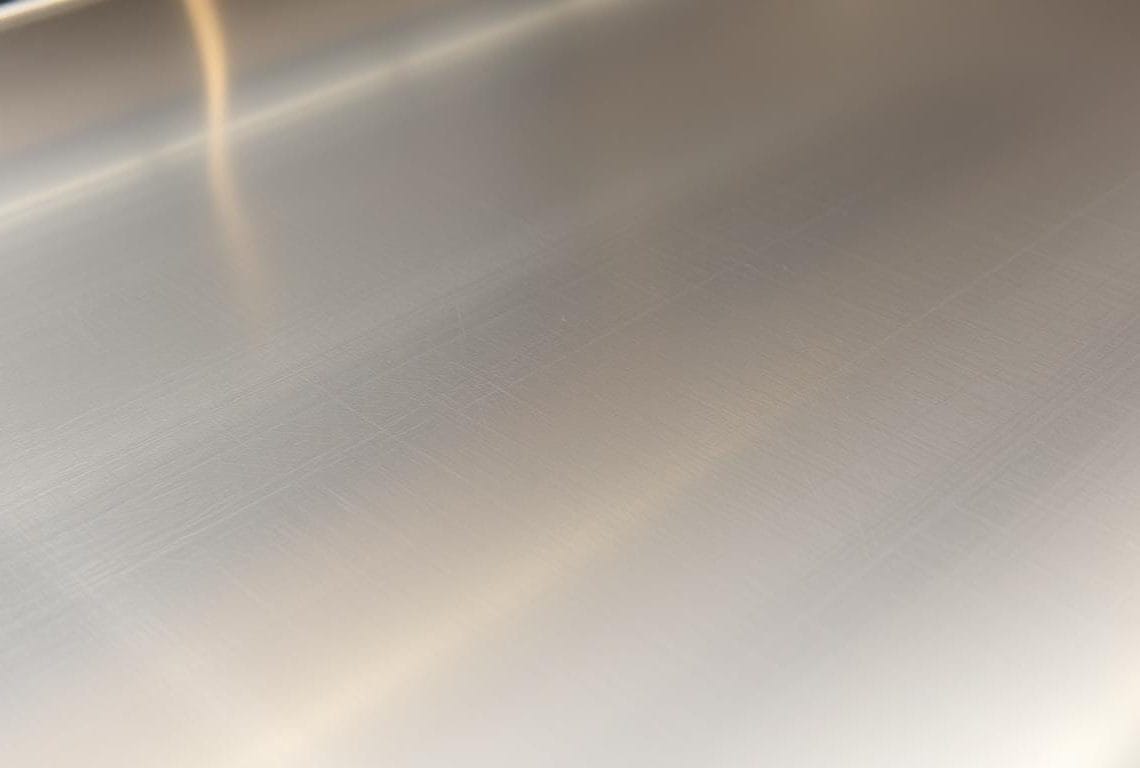
A targeted cleaning sequence restores most finishes without aggressive scrubbing or harsh chemicals. Start with low-risk steps and escalate only when needed to protect the finish and the microscopic oxide layer.
Basic clean
Remove loose debris, then wash with mild soap and warm water. Wipe with a microfiber in the direction of the grain to protect surface texture.
Rinse thoroughly with warm water and dry immediately. Quick drying prevents water marks and fresh deposits from setting on the protective layer.
Stubborn stains
For persistent residues, make a baking soda paste, apply, and let it sit briefly. Scrub gently with the grain using a microfiber pad, then rinse and dry.
If deposits resist, use Bar Keepers Friend or a stainless-rated cleaner (examples: 3M Stainless Steel Cleaner and Polish, Weiman Wipes). Always spot-test first and follow product instructions to avoid an adverse reaction.
Finish and protect
After cleaning, apply a dedicated polish or clear sealant to repel contaminants and slow future discoloration.
- Seal high-exposure areas—patio hardware, pool railings, and coastal fixtures.
- Spot-test on brushed finishes before full application.
- For appliance guidance, consult the manufacturer or use Windex guidance as a reference point.
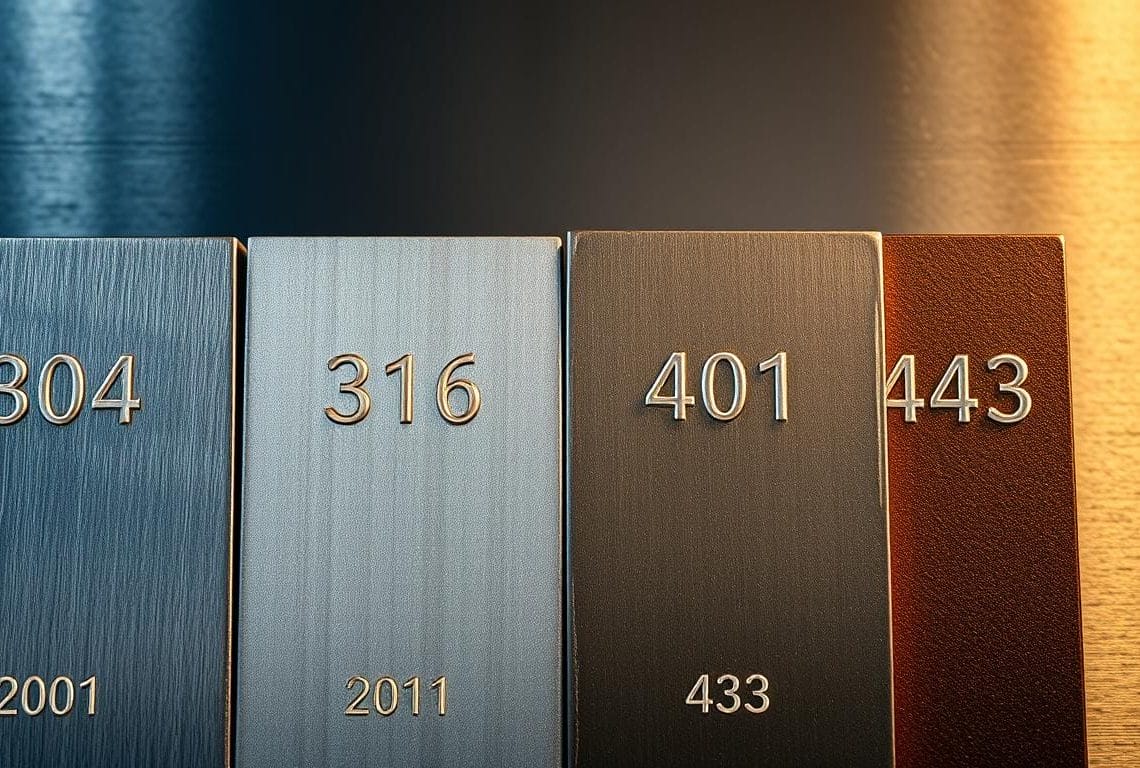
Grades that matter: 304 vs 316 vs 201 and 430
C: For outdoor rails and pool fittings, a small alloy change yields big gains in longevity and finish retention.
Why 316 excels in marine, poolside, and coastal environments
316 includes molybdenum, which boosts chloride resistance and reduces localized corrosion.
This grade keeps finishes cleaner near salt, pools, and coastal air. Use 316 for rails, fasteners, and pool fittings to cut maintenance.
When budget grades raise risk of discoloration
Grade 304 offers solid all-around corrosion resistance for kitchens and indoor use. It has balanced chromium and nickel content for everyday tasks.
By contrast, 201 and 430 are cost-focused alloys. 430 lacks nickel and 201 has reduced nickel content—both can show staining or early surface residues in humid or chloride-rich sites.
- Choose 316 for coastal, poolside, or outdoor hardware.
- Use 304 for indoor appliances and sinks.
- Avoid 430 for beachfront fixtures; verify material specs before purchase and consult a stainless types guide when in doubt.
Jewelry and skin reactions: why skin can turn green
When jewelry leaves a tint on skin, the culprit is usually surface chemistry and mixed metals.
Sweat, acidity, lotions, and low-grade alloys
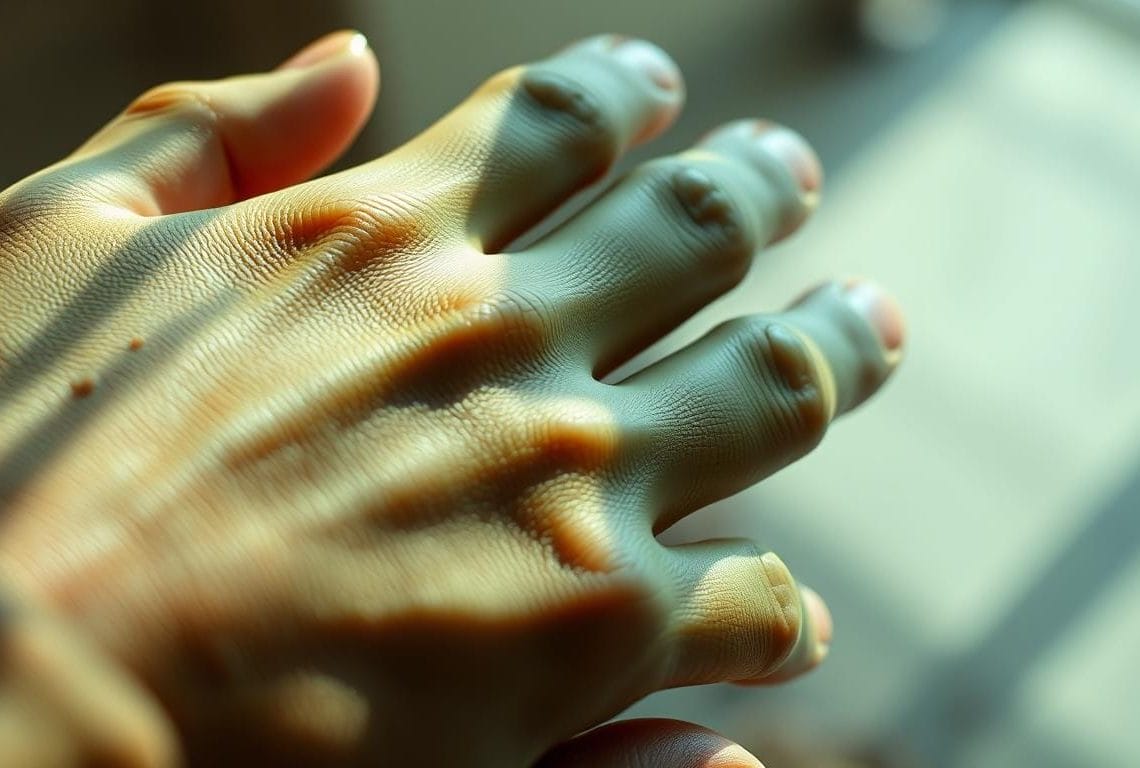
“Green fingers” normally happen when moisture, salt, or perfumes interact with cheaper alloys or plated pieces. Coastal humidity and heavy sweating speed the reaction.
Lotions and fragrances raise acidity and leave salts on skin. That creates a short chemical change that transfers residues from the metal to the skin.
Choosing hypoallergenic options and simple wear tips
Select 304 or 316 pieces for better resistance—these grades resist surface leaching and often test kinder for people with mild sensitivities. Still, nickel sensitivity can occur in some users.
- Remove rings for workouts, showers, and pool time.
- Rinse and dry jewelry after exposure; store in a dry case.
- Apply a clear barrier coating for favorite items or choose medical-grade metals if reactions persist.
Minor discoloration that wipes away usually signals residue, not an allergy. For persistent marks or itching, consult a clinician and consider higher-grade pieces to prevent future skin staining.
Home hotspots: kitchens, bathrooms, and outdoor fixtures
Home fixtures face varied exposures—cooking acids, cleaners, and outdoor spray—that challenge finish properties. High-use zones concentrate residues and moisture, making surface films and light discoloration more likely.
Kitchens and sinks: acidic foods, detergents, and copper residue
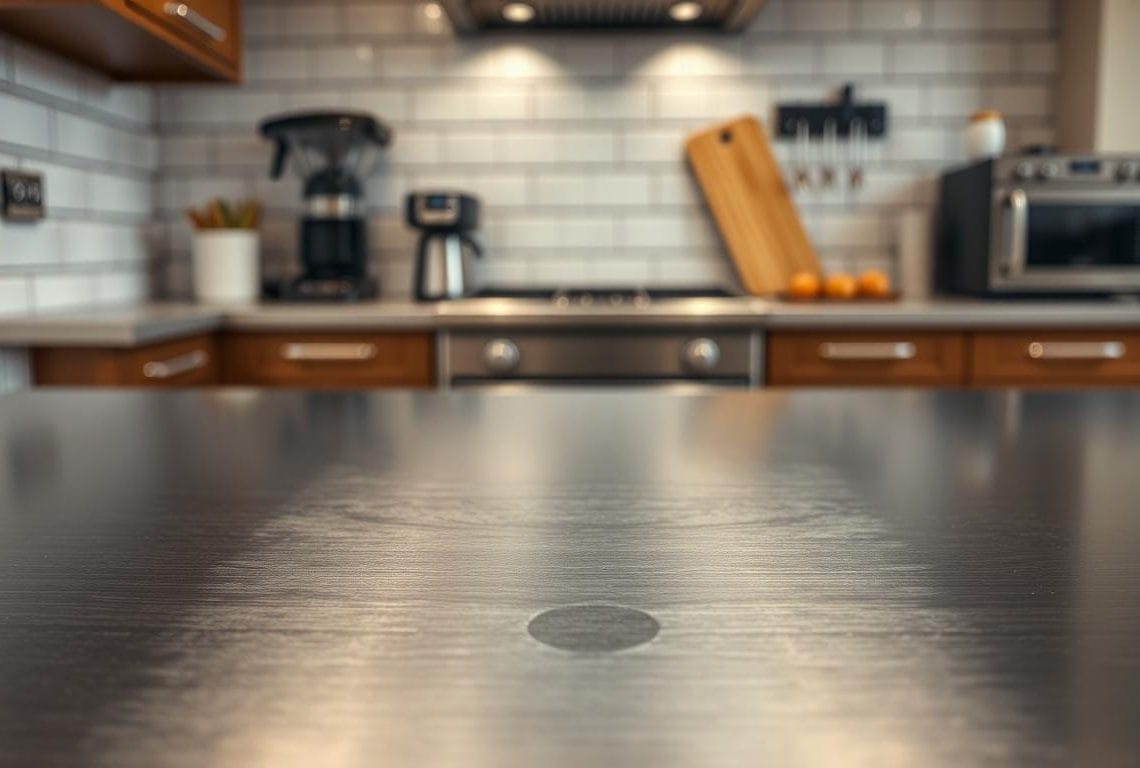
Acidic foods and strong dish detergents can dull or etch a finish, letting residues cling and show rainbow or faint stains.
Particles from nearby copper plumbing often migrate to sink bowls and faucet bases, leaving visible deposits that mimic true corrosion.
Patios and grills: rain, pollutants, and salt spray exposure
Outdoor hardware faces rain, airborne pollutants, and salt spray. Budget-grade components—especially 430—are more prone to spotting and loss of luster.
After use, rinse and towel-dry patio fixtures and grill lids to limit moisture-driven oxidation. For coastal or de-icing salt locations, upgrade to 316-grade stainless steel and steel fittings for longer life.
- Common sites: sink rims, drainboards, backsplash seams, grill lids, outdoor railings.
- Routine: rinse after contact, towel-dry, and avoid mixing dissimilar metals that transfer particles.
Industrial and pool environments: special precautions
When exposure is constant—high chlorine, acids, or humid oxygen-rich air—protective layers can fail quickly.
Managing chlorine, acids, and high-oxygen atmospheres
Acids such as sulfuric or hydrochloric produce a rapid chemical reaction that can breach the passive layer on metal surfaces. High oxygen and humidity speed oxidation and raise localized corrosion risk.
In pool areas, even high-grade stainless steel can show staining over time. Keep chlorine within recommended ranges, rinse fittings after splash exposure, and avoid prolonged wetting.
Inspection schedules, coatings, and environmental controls
Set routine inspections: document condition monthly in high-risk zones and quarterly elsewhere. Early spotting stops small issues from becoming failures.
- Engineering controls: improve ventilation, install dehumidifiers, and add splash containment to limit exposure time.
- Coatings: use epoxy or polyurethane in splash zones and reapply per manufacturer intervals—typically every 12–24 months.
- Maintenance: use industrial-grade cleaners compatible with site chemistry and follow safety protocols for handling aggressive agents.
These steps protect material properties and maintain long-term resistance. For critical equipment, consider material upgrades and documented inspection logs to extend service life of both pool and industrial installations.
Troubleshooting guide: diagnose the cause, pick the fix
A quick diagnosis saves time: inspect nearby metal items, cleaners used, and humidity levels first. This narrows the likely source—contact transfer, chemical splash, or trapped moisture.
Identify contact, chemicals, or humidity drivers
Check for nearby copper or brass, recent pool or bleach use, and signs of prolonged damp storage. Note spots that wipe away easily versus marks that resist gentle cleaning.
Select the right cleaner, barrier, or material upgrade
Map symptom to solution: light film—clean with mild soap or a baking soda paste, rinse, and dry. Persistent deposits—use Bar Keepers Friend or a stainless-specific abrasive cleaner, then apply polish or wax to protect the finish.
- Quick checklist: dissimilar metal contact; cleaner history; pool chemical exposure; storage humidity.
- Symptom → fix: light film = soap/baking soda; stubborn tint = rated abrasive cleaner + protection.
- Repeat failures: consider upgrading from 201/430 to 304/316 or add a protective coating program.
- Record keeping: document conditions and responses so future issues are easier to diagnose.
- Prevention: rinse, dry, and protect — far cheaper than repeated restoration.
For more detailed maintenance steps and a targeted plan for poolside or coastal exposure, consult the maintenance guide for green deposits. That resource links material choice, composition stainless notes, and practical tips for long-term corrosion resistance.
A clear path to stainless that stays stainless
Pick the right alloy for the job: use 316 for marine and poolside hardware and 304 for everyday kitchens. Matching grade to exposure cuts future repairs and saves money.
Keep a simple routine: clean with mild soap, rinse thoroughly, and dry immediately. Avoid chloride-heavy products and abrasive pads that strip the chromium stainless steel film.
Address any greenish stains quickly: remove deposits, then polish or apply a protective wax. For outdoor fittings, schedule periodic protection and inspections.
Bottom line: select the proper material, follow basic maintenance, and use coatings where needed — and the finish will stay bright for years.