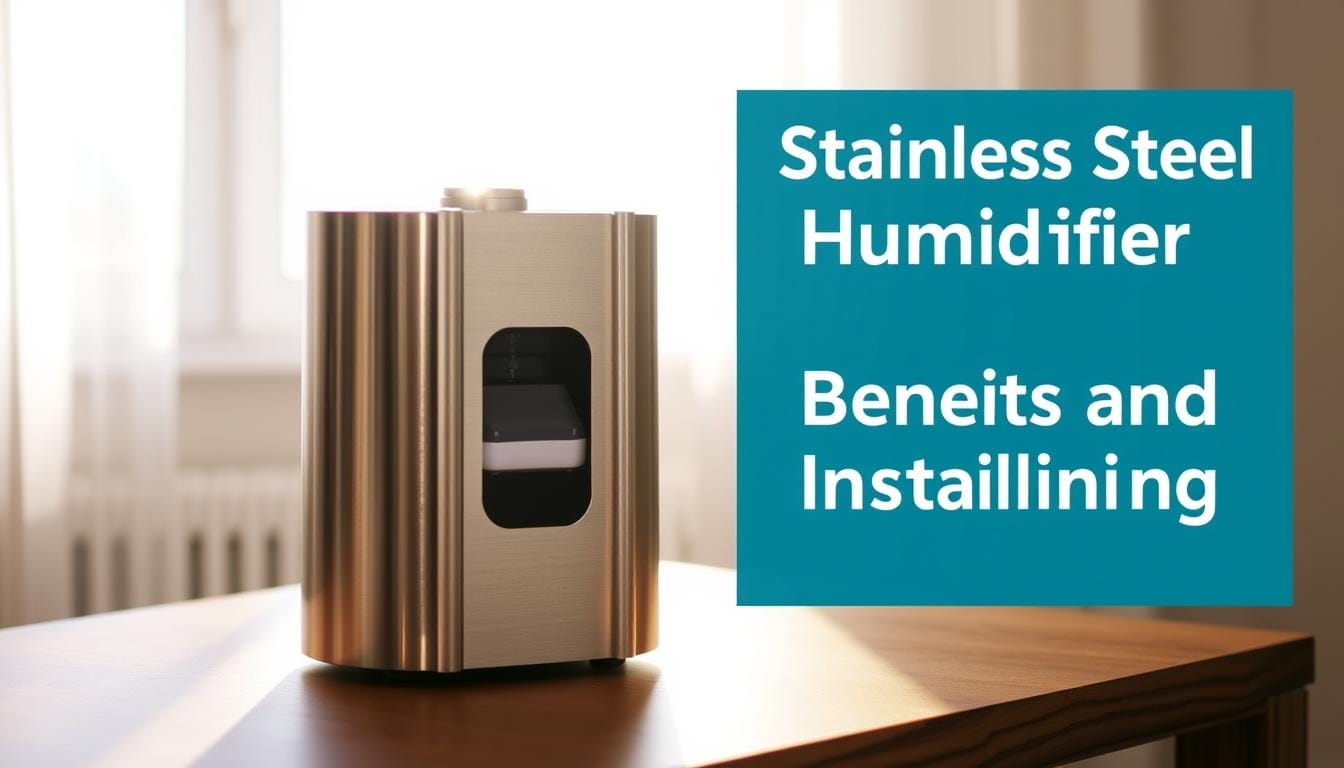
Can a metal-forward tank really make your air safer and your life easier?
This guide answers that question with practical steps and clear product notes. It explains how a durable, boil-to-sterilize interior cuts microbial risk and keeps moisture delivery consistent over years. The intro also compares models and shows which features matter for daily use.
Readers will learn quick placement, fill, and first-run tips so a unit covers the right square footage and tank capacity. Expect comparisons from Carepod’s boil-sterilize tanks to ultrasonic and evaporative designs like Dreo, Levoit, Venta, and premium combined purifier options.
Key takeaways: keep indoor humidity at 40–60% for comfort and respiratory health; prefer RO or bottled water to reduce white dust; follow a simple maintenance cadence—daily rinse, every-other-day wipe, weekly deep clean—to protect air quality.
Why stainless steel matters for home air quality
A durable metal interior makes a measurable difference in household humidity, cleaning, and long-term air quality. The right material reduces biofilm buildup and keeps moisture delivery consistent. That protects respiratory comfort and skin health while simplifying routine care.
Health perks: moisture balance, fewer irritants, better sleep
Dermatology guidance advises keeping indoor humidity at 40–60%. That range eases dry skin and reduces airborne irritants that can disturb sleep. A reliable tank material helps maintain stable humidity overnight, so people breathe easier and rest better.
Interiors vs plastic: durability and hygiene advantages
Nonporous interiors resist scratches and biofilm better than porous plastics. Carepod’s three-part assembly avoids hidden nooks and is dishwasher-safe. Its parts can be boiled for 1–2 minutes to reach 99.9% sterilization—no harsh chemicals needed.
- Consistent moisture output preserves air quality and device performance.
- Easy-access design lowers cleaning time and the chance of missed areas.
- Dishwasher-safe and boil-to-sterilize options simplify the regular cleaning cadence professionals recommend.
stainless steel humidifier
When durability meets simple access, maintenance becomes predictable and effective. Carepod One and the Cube Plus X50V center on a corrosion-resistant, dishwasher-safe tank and a three-piece assembly that makes routine care straightforward.
Filter-free interiors remove recurring filter buys and lower places where minerals and biofilm hide. The Cube Plus X50V adds a humidistat, warm/cool settings, sanitize mode, night mode, and timers for room-ready convenience.
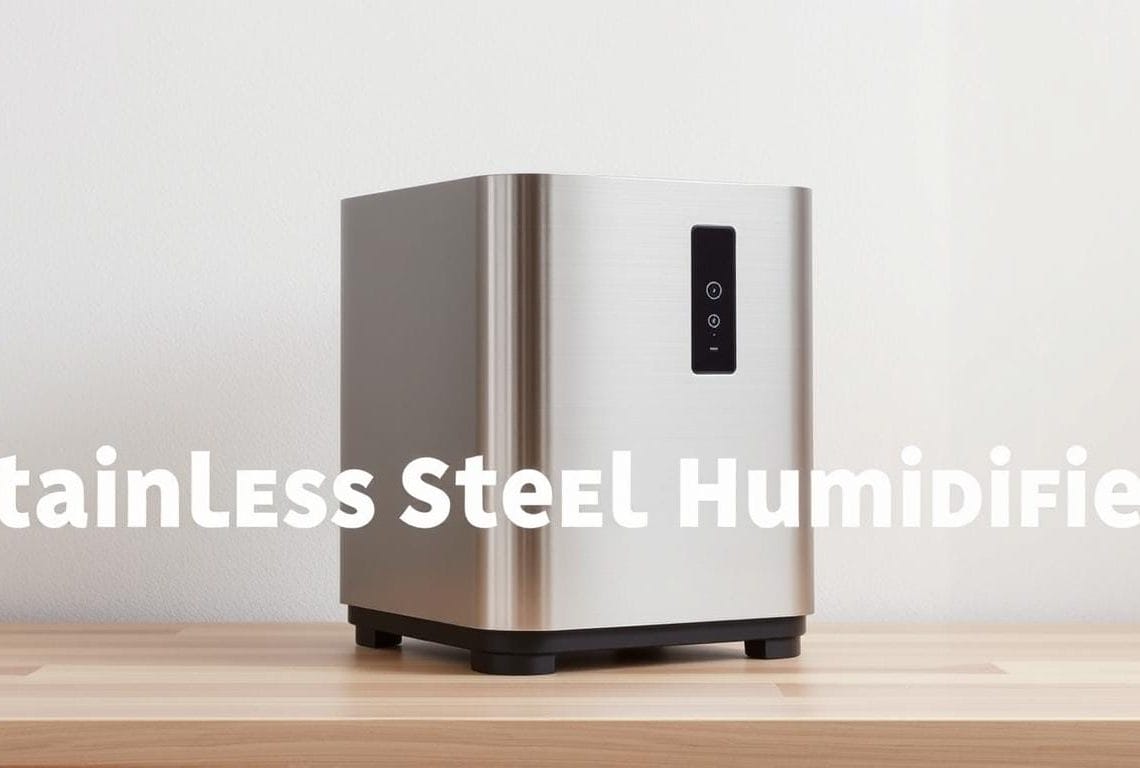
- Design: top-fill tank, clear fill marks, and a leak-resistant base for predictable run time.
- Cleaning: three easy parts—rinse daily, dishwasher-safe pieces, and boil-to-sterilize when needed.
- Features: quiet night modes, timers, and auto humidity control that suit bedrooms and family rooms.
- Water: pairing the tank with RO or bottled water reduces mineral residue and white dust.
Prioritize build quality and clear maintenance guidance when comparing models. For a deeper look at coverage and specs, see the full stainless steel humidifier review and product notes.
How stainless steel designs make cleaning truly easy
A simple, tool-free cleaning routine can make a big difference in indoor air quality. Carepod models disassemble into three parts—wand, water tank, and lid—so users spend minutes, not hours, on upkeep.

Dishwasher-safe parts and boil-to-sterilize methods
Quick wins: the wand rinses by hand, while the tank and lid tolerate brief boiling for 1–2 minutes to reach 99.9% sterilization.
This chemical-free method restores the interior and protects household health during peak illness seasons.
Wide openings and smooth-walled tanks let a sponge or dishwasher reach every surface. That reduces hidden buildup and shortens cleaning time.
- Smooth assemblies cut biofilm risk and simplify routine cleaning.
- Filter-free design avoids soggy filters that harbor microbes and odors.
- Three-part reassembly snaps together without tools or fragile gaskets.
The practical way this helps: fewer surprises—no musty smell or sputtering output—and more consistent mist quality from a device you actually maintain. For related parts and fittings, see the suction plate reference here.
Product roundup: our top stainless steel picks and notable alternatives
This selection highlights editor favorites and practical rivals across mist types, capacity, and cleaning ease. Use it to match models to room size, maintenance style, and budget.
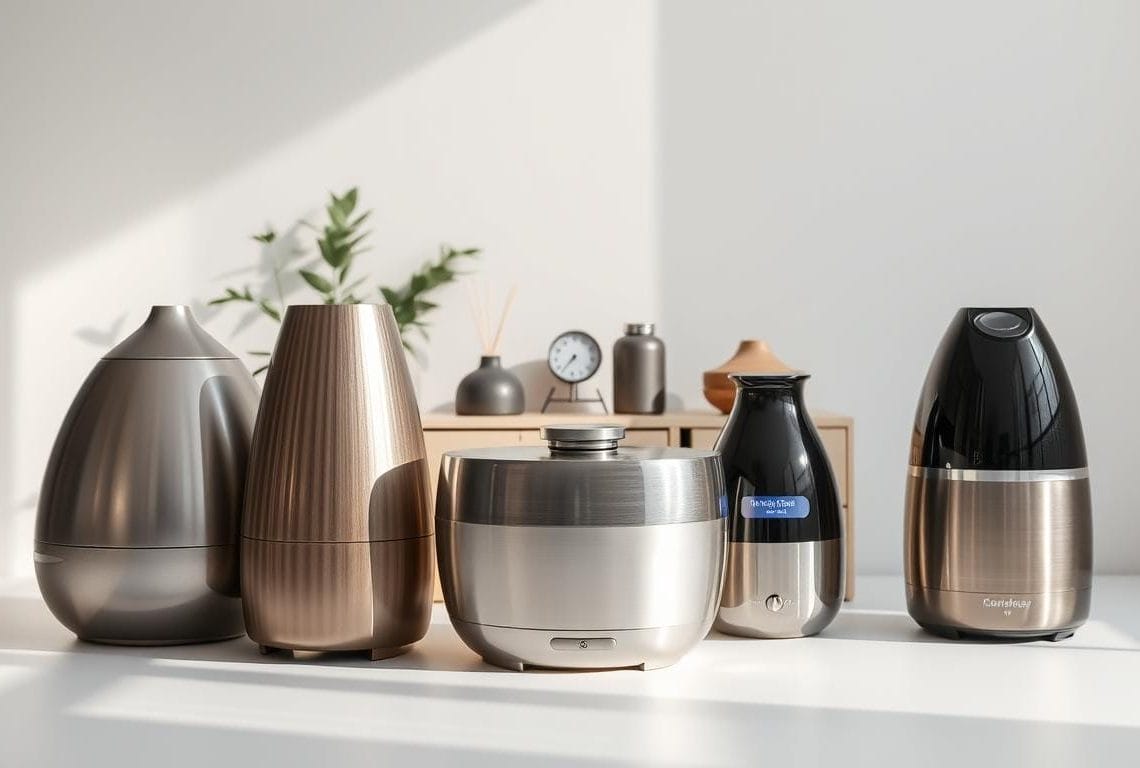
Editor’s stainless picks
Carepod One: filter-free tank, three-part design, dishwasher-safe parts — easiest to clean but carries a premium price.
Cube Plus X50V adds a humidistat, night mode, timers, and sanitize mode; note: warm setting raised vapor ~1°F after 4 hours while drawing ~4x energy.
Evaporative and hybrid options
- Venta LW25 Original — a 7 L evaporative humidifier covering ~430 square feet; won’t over-humidify and needs biweekly care.
- Dyson PH03/PH04 — hybrid air purifier plus humidification with HEPA, OLED, and premium build; high price but smooth performance.
Value ultrasonics
- Dreo HM524S — 6 L top-fill tank, accurate humidistat, dimmable display, optional mineral cartridge; best value for output and features.
- Levoit OasisMist 450S — quiet ultrasonic with “Hotspring Mist,” easy to clean; larger Levoit models may be harder to fill.
Sizing tip: match tank capacity and coverage (e.g., 430–700 sq ft) to avoid frequent refills. For many buyers, higher upfront price offsets lower running costs and better long-term quality.
Key features to compare: tank, filter, and humidification systems
Tank capacity, cleaning access, and the underlying mist system define how a unit performs day to day. These choices determine run time, care rhythm, and the best rooms to place each model.

Tank capacity and top-fill convenience
A larger tank extends run time: the Dreo HM524S’s 6 L top-fill reduces refills and eases cleaning. The Levoit OasisMist 450S holds 4.5 L and suits bedrooms. Smaller tanks work, but heavy output may need mid-night refills.
Filter-free vs wick and HEPA approaches
Filter-free designs cut recurring costs and let owners boil parts for deep cleaning. Wick-based evaporative systems like the Venta need periodic wick or disc care. Hybrid models with HEPA—such as Dyson PH03—add air cleaning but require filter replacement schedules.
Ultrasonic, evaporative, and warm steam options
- Ultrasonic: quiet, high output—use RO or mineral cartridges to limit white dust.
- Evaporative: self-limiting output, steady coverage for larger spaces.
- Warm steam: adds comfort in cold climates but raises energy use and burn risk near kids or pets.
Tip: Match claimed coverage to your spaces and pick features that fit the maintenance routine you’ll keep.
Installation basics: unbox, place, fill, and set your first run
Start by setting up your unit on a firm surface, then run a short test to confirm airflow and moisture spread. Inspect parts and rinse the tank and top components with warm water to remove residues from manufacturing.

Best placement for even coverage
Place the device on a stable, elevated surface at least one foot from walls. This promotes circulation and keeps nearby surfaces dry.
Keep it away from direct sunlight, heat vents, and sensitive electronics. Aim the nozzle toward open air—not curtains or furniture—to avoid condensation.
Water choices and first-fill tips
Fill the tank with RO or bottled water to cut white dust. If relying on tap water, consider a compatible mineral cartridge such as some Dreo models accept.
For top-fill designs, pour slowly to the max line and secure the lid. For removable tanks, carry with two hands and check gaskets before inverting.
- Set an initial target level around 45–50% RH and start on medium output.
- Run a full cycle to observe refill intervals and mist spread in the room.
- After the first session, empty leftover water, wipe edges, and let parts air-dry to prevent odors.
Routine: refill nightly, quick morning rinse, and a weekly deeper cleaning to keep performance reliable.
Step-by-step: how to install and set up a Carepod stainless model
Follow a short, ordered setup to get a Carepod model running safely and efficiently in minutes.
Start clean and deliberate. Unbox on a flat surface and inspect parts. The three-piece assembly—wand, water tank, and lid—snaps together without tools.
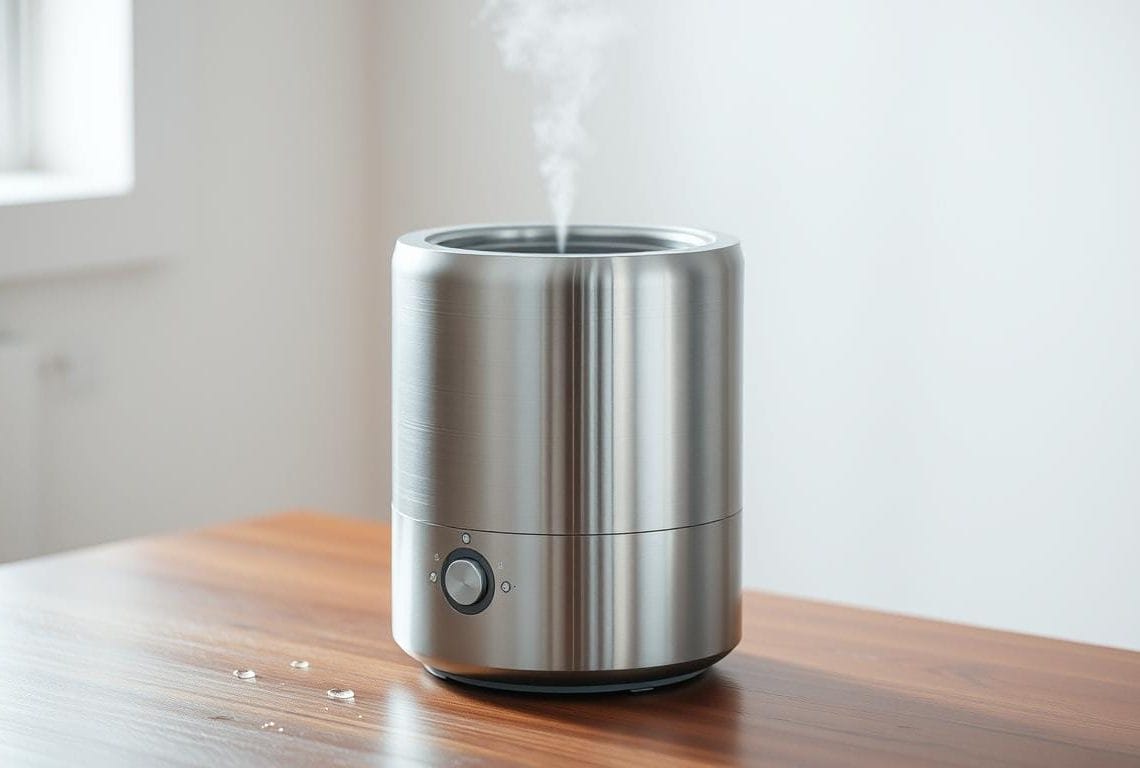
Assemble, fill, and choose your mist level
- Place the base on a level table. Seat the tank into the body and snap the lid in place. Insert the wand until it clicks.
- Rinse the tank, then top-fill with RO or bottled water to the max line. Secure the lid to avoid splashes during operation.
- Power on and pick a mist setting. Start on medium to balance output and run time while you monitor room response.
Night mode, timer, and warm/cool options for bedrooms
For sleep, engage night mode to dim or extinguish LEDs. Set a 6–8 hour timer to match typical sleep cycles and keep comfort steady.
Cube Plus X50V owners: use timers (4/6/8 hours), warm/cool mode, or the sanitize cycle judiciously. Warm mist feels cozy but check placement and output first.
- Recheck RH after 30–60 minutes and adjust to the 40–60% target.
- After the first run, empty remaining water and air-dry the tank for a few minutes before reassembly.
- Weekly cleaning: disassemble, hand-wash the wand, and boil the tank and lid 1–2 minutes for 99.9% sterilization.
Sizing your humidifier: room square feet, tank size, and run time
Match a unit’s output to the real dimensions of your room to avoid uneven moisture and wasted water.
Measure first: multiply length by width to get square feet, and note ceiling height. Small bedrooms under 250 square feet need less output than living rooms that span 350–450 feet.

Use coverage guidance from proven models: Carepod One suits rooms up to 500 sq ft; Cube Plus X50V covers roughly 700 sq ft; Venta LW25 handles ~430 sq ft and the LW45 ~600 sq ft. Larger tanks—such as the 6 L Dreo HM524S—translate to longer run time between refills.
- Measure area and ceiling height: taller rooms need more output to lift humidity evenly across the space.
- Match tank to use: a mid-size tank works for 350–450 sq ft living rooms; 6 L tanks often run many hours on medium without refills.
- Open layouts: for spaces over 500 sq ft, choose higher-capacity units or multiple models to avoid damp spots.
- Overnight goal: pick a tank and output that sustain at least 8 hours at your target level so morning RH stays above 40%.
Proper sizing saves water trips, keeps humidity steady, and helps the unit run quieter at lower settings. Recheck RH trends across several nights and adjust tank size or output as needed.
Controls and smart options: app, auto mode, and sleep-friendly lights
Control options shape how much effort you spend day to day—choose an interface that fits your routine. A clear display and reliable sensors let a unit hold a target level without constant checks.

Practical notes: the Dreo HM524S includes an accurate onboard humidistat, a dimmable display, and an optional app. That combination offers schedule and remote tweaks, but many owners prefer local buttons for speed and privacy.
- Humidistat accuracy: a good sensor enables set-and-forget operation—verify with a separate hygrometer if precise control matters.
- Auto shutoff & dimming: automatic tank shutoff protects the unit and pairing with a blackout display keeps bedrooms dark at night.
- App vs dial: apps add scheduling and remote access, yet simple physical controls often win for quick changes and fewer privacy concerns.
- Sleep features: true sleep mode mutes beeps, dims lights, and ramps output gently so sleepers stay undisturbed.
Prioritize features that protect air quality and sleep, not just flashy extras. Use time-based schedules for bedtime routines and enable lockouts if children or pets are likely to change settings.
Maintenance that protects air quality: cleaning cadence and methods
Simple habits—rinsing, wiping, and a weekly deep clean—preserve performance and indoor air. A short routine prevents biofilm and odors and keeps mist output steady over years.

Daily: empty any standing water, give the tank a quick rinse, and leave the lid ajar to air-dry. These small steps preserve air quality and cut odor buildup.
Every other day: wipe interior surfaces with a soft cloth, clear the mist outlet, and inspect the base for mineral film before it hardens.
- Weekly deep clean: disassemble and hand-wash parts. For models with boil-safe components, boil the tank and lid 1–2 minutes for 99.9% sterilization, then hand-wash the wand or oscillator.
- Discard leftover water before each refill; fresh water prevents biofilm and stabilizes output.
- If using a mineral cartridge, inspect and replace per the maker’s schedule and clean seals so they seat properly.
Avoid harsh chemicals that leave residues. Track cleaning time on a calendar or set reminders—this predictable maintenance keeps devices running longer and protects the air you breathe.
Real-world performance notes from current models
Real-world runs reveal how placement, sensors, and water choice shape performance more than headline specs.
The way a unit moves moisture matters: some evaporative models spread air more evenly while certain ultrasonics push strong local mist and leave corners drier.
Distribution and accuracy: hygrometers, circulation, and “white dust”
Independent tests showed clear variation: a Levoit Sprout had about a 10% RH gap across one room. An Aircare Mantra’s built-in sensor read roughly 7% off compared to a reference meter.
Tip: verify onboard readings with a separate hygrometer. That step exposes sensor bias and helps place the unit where it truly balances humidity.
White dust stems from minerals in water. Using RO or bottled water—or an optional mineral cartridge—reduces residue on nearby surfaces.
Noise levels, warm-mist effectiveness, and energy use
Noise differs by system: evaporative fans can be audible in bedrooms; many ultrasonics run nearly silent at low settings.
- Dreo HM524S: accurate humidistat and strong output—reliable control without constant tweaking.
- Dyson PH03/PH04: smooth, quiet performance but a premium price that may not suit every budget.
- Carepod Cube X50V: warm mode raised vapor temp only ~1°F after hours while drawing far more power—use sparingly.
In short: balance distribution, sensor accuracy, and a clean maintenance routine. That combination delivers better air and more consistent humidity than chasing a single feature or spec.
Budget and value: price tiers, warranty, and long-term costs
Comparing lifetime costs reveals which models truly save money over several seasons.
Look beyond the sticker price. Consider the cost of consumables and the time spent on upkeep. Carepod offers a 30-day return window and a 1-year warranty, which helps reduce risk during the trial period.
Price tiers vary: Dyson sits at the premium end, while the Dreo HM524S is a budget pick with strong features and large tanks. Filter-free, metal-lined designs avoid recurring filter buys and cut annual ownership costs.
- Budget picks: Dreo HM524S offers solid controls and dimmable displays at low price points.
- Ongoing costs: wick or HEPA systems require regular filter replacements—factor those into yearly budgets.
- Warranty & returns: a 30-day return and 1-year coverage give confidence while you assess fit in your room.
- Hidden expenses: cleaning supplies, demineralization cartridges, and RO or bottled water can add up over years.
Practical way to compare: tally purchase price plus projected consumables over two to three heating seasons. A right-sized unit running at lower settings often saves energy and lasts longer, delivering better value over years.
Air purifier combos vs separate devices
In tight layouts, a single tower that blends filtration and moisture can simplify life and cut clutter.
Hybrid units merge a HEPA air purifier with a humidifier and a fan into one system. Dyson PH03/PH04 are examples: they combine HEPA-grade filtration, humidification, an OLED display, and a magnetic remote. These models work well but cost more than buying two separate devices.
Pros and cons of hybrid purifier-humidifiers for limited space
Hybrids reduce device clutter and improve circulation. That makes them attractive for small apartments and other compact spaces.
- Advantages: consolidated footprint, shared airflow, and simplified controls—good when outlet and shelf space is limited.
- Trade-offs: higher upfront price, scheduled filter replacements, and more complex servicing than a standalone unit.
- Practical tip: if humidity is the main need, a dedicated, easy-clean humidifier may deliver longer runtime and simpler upkeep.
Evaluate options by primary need: choose a combined system for year-round purification with seasonal moisture, or separate models to optimize cost, noise, and maintenance.
Design and user experience: form factor, cleaning access, and tank openings
Good design makes daily care fast and predictable. A unit that favors access—wide lids, clear handles, and simple buttons—cuts time spent on upkeep. That helps owners keep output steady and protects indoor air quality.
Practical details matter: Carepod’s three-part assembly plus a wide tank opening lets a hand and sponge reach every surface. Models with tiny fill holes force bottle-brush-only cleaning and often accumulate hidden residue.
Look for ergonomic controls: dedicated buttons for night mode, timers, and mist levels reduce menu-diving. Dimmable displays or blackout options protect sleep while still showing status at a glance.
- Wide openings allow full-hand access for visual inspection and fast scrubbing.
- Fewer parts and clear assembly paths lower user error and broken clips.
- Top-fill or solid handles make daily refills one-handed and prevent spills.
- Compact footprint fits tight rooms—just keep intake and outlet clear to avoid noise and reduced performance.
Well-executed design details add up: they deliver a quieter, cleaner, and more reliable way to care for a humidifier and keep household routines simple.
Best picks by need: cool mist, evaporative humidifier, or warm mist for night use
Choose the right mist type to match your bedroom habits and the household’s humidity goals. Options vary by noise, run time, and how they handle excess moisture.
Sleep mode and night settings for bedrooms
For quiet nights: cool mist ultrasonics with a true sleep mode and dimmable displays reduce disturbance. They run quietly and maintain a steady humidity target.
- Dreo HM524S: 6 L tank, accurate humidistat, gentle lighting—ideal for set-and-forget nightly use.
- Levoit OasisMist 450S: cool mist performance with a mild warming option for comfort without full steam or noise.
- Set night settings to disable LEDs and beeps and aim for ~45–50% RH.
Evaporative picks to avoid over-humidifying
Evaporative humidifier models like the Venta LW25 self-limit output. They reduce risk of damp surfaces and regulate in variable rooms.
- Choose mid-size tanks for 8+ hours of run time in a typical bedroom.
- If you favor warmth, balance energy and safety—cool mist plus placement often meets comfort needs.
- Pick models that allow a fast morning rinse so nightly use stays simple.
Your next steps: choose the right model and breathe better tonight
Your next steps: choose the right model and breathe better tonight.
Start with the one room you use most and match coverage, tank size, and run time. Consider Carepod stainless models for quick, boil-to-sterilize cleaning. For value, look at the Dreo HM524S; for quiet bedrooms try the Levoit OasisMist 450S. Choose an evaporative pick like the Venta LW25 for open living areas, or a Dyson PH03/PH04 if you want combined purification.
Practical way forward: pick your water strategy—RO or bottled—to cut white dust. Set a simple cadence: morning rinse and a weekly deep clean. Keep a small hygrometer in key rooms and adjust until the air stays in the 40–60% comfort band. With the right unit, placement, and routine, better home air takes minimal time.