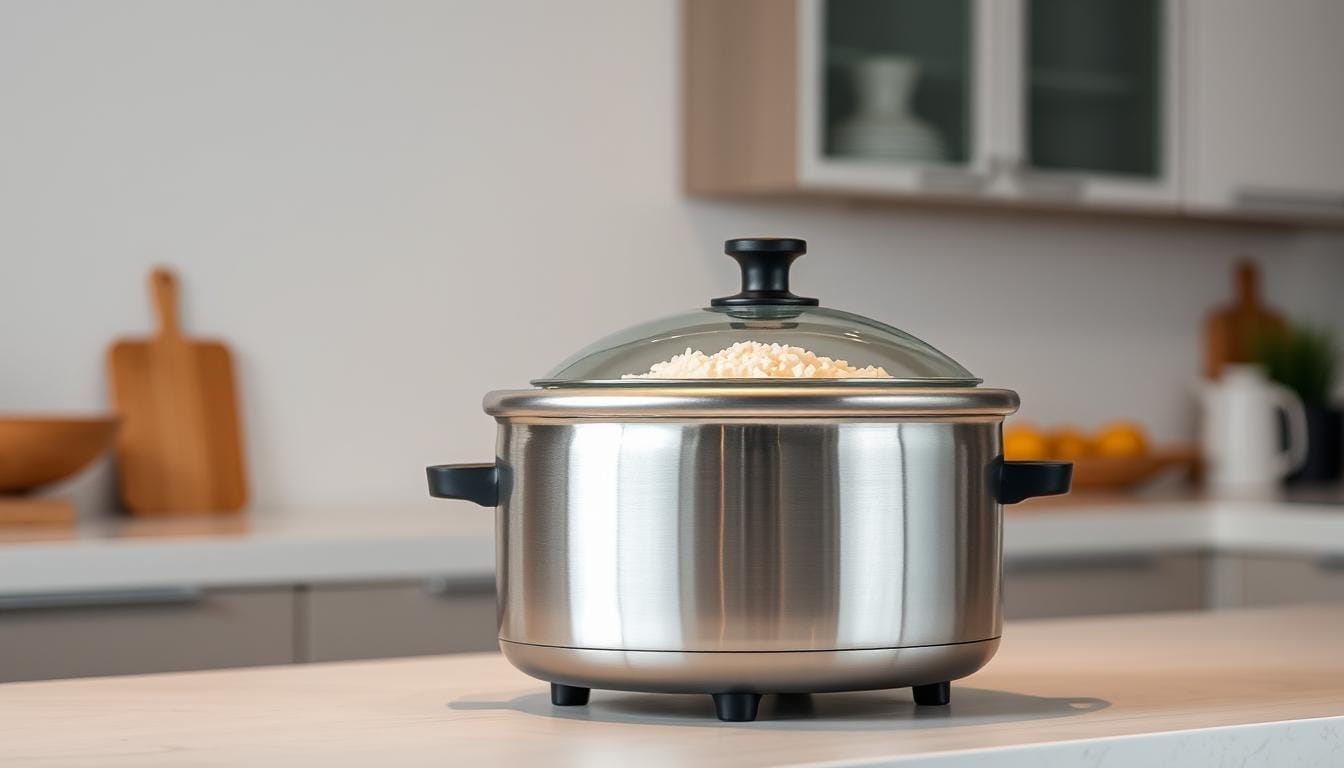
Can one appliance truly give home cooks perfect grains every time—fast, clean, and with minimal fuss? This guide answers that question by comparing top models and practical features for United States kitchens.
The roundup highlights clear winners: Hamilton Beach for speed and value, Zojirushi Induction for precision and texture control, and the Neuro Fuzzy for consistent Japanese-style results. It also covers Cuckoo’s customization, KitchenAid’s integrated scale, Instant’s large-capacity batch options, and Aroma’s all-steel inner pot simplicity.
Why this matters: Choosing the right rice cooker affects cook times, portion capacity, and final texture. The guide shows how inner pot materials, water ratios, and program options drive repeatable results in everyday cooking.
Readers will learn how to match a model to household needs, avoid overfilling, and maintain the pot for long life. Expect hands-on tips, measurement standards, and troubleshooting so people can get great rice with less guesswork.
Why choose a stainless steel inner pot for cooking rice
A durable, food-safe inner pot keeps flavors pure and makes daily cooking more reliable. Aroma’s Select model uses 100% food-grade 304 stainless steel in the inner pot, and that choice matters for taste and longevity.
Food-grade 304: durability and clean eating
The 304 construction resists pitting, peeling, and flaking, so the surface stays homogenous and safe for contact with food. This reduces worries about coatings wearing off and simplifies long-term maintenance.
Non-reactive surface vs nonstick coatings
A non-reactive pot preserves subtle flavors in white and sushi-style grains. It also tolerates routine scrubbing and periodic vinegar cycles to remove starchy film without releasing residues into food.
- Even heat: a thicker bottom promotes consistent gelatinization of starches when paired with a calibrated heater and lid sensor.
- Versatility: mixed grains and beans won’t retain odors or stains, so one pot cooks oats today and jasmine tomorrow without ghost flavors.
- Included accessories: models often ship with a 180 mL rice measuring cup and paddle to standardize portions.
In short: for households that cook several times a week, a homogenous inner pot offers predictable results, easier cleaning, and long-term food safety under a sealed lid environment.
Understanding how rice cookers work for perfectly cooked rice
Heat, measured water, and a temperature sensor are the core elements that deliver consistent results. Inside the appliance, the inner pot sits on a heated plate. Water boils, steam forms, and grains absorb liquid until the surface runs dry.
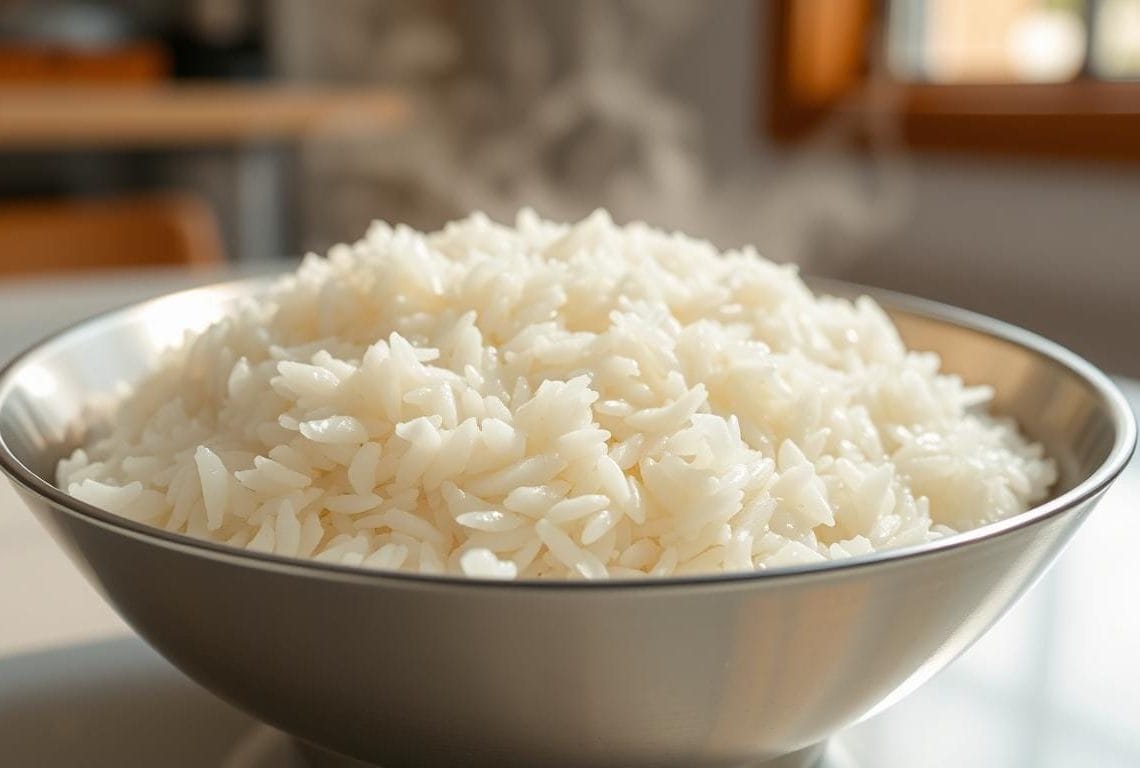
From boil to sensor switch: cook to Keep Warm every time
The switch from cook to Keep Warm is temperature-driven. When the pot temperature rises above 212°F, the sensor detects the change and flips to Warm automatically. That tells you the rice has finished cooking.
- Typical timing: one cup of white rice takes about 25 minutes, but time varies with quantity and grain type.
- Keep Warm holds serving temperature—roughly 158°F–194°F—so food stays ready without burning.
- Measure water carefully: too little water triggers early shutoff; too much prolongs cooking and alters texture.
Maintain a flat, clean contact between pot bottom and heater and keep the lid seal and steam vent clear. Resting rice for a few minutes on Warm helps steam equalize before fluffing. Follow these steps and the device will deliver finished cooking reliably every time.
Stainless steel rice cooker
From one-touch models to induction-driven machines, options span basic to pro-level performance.
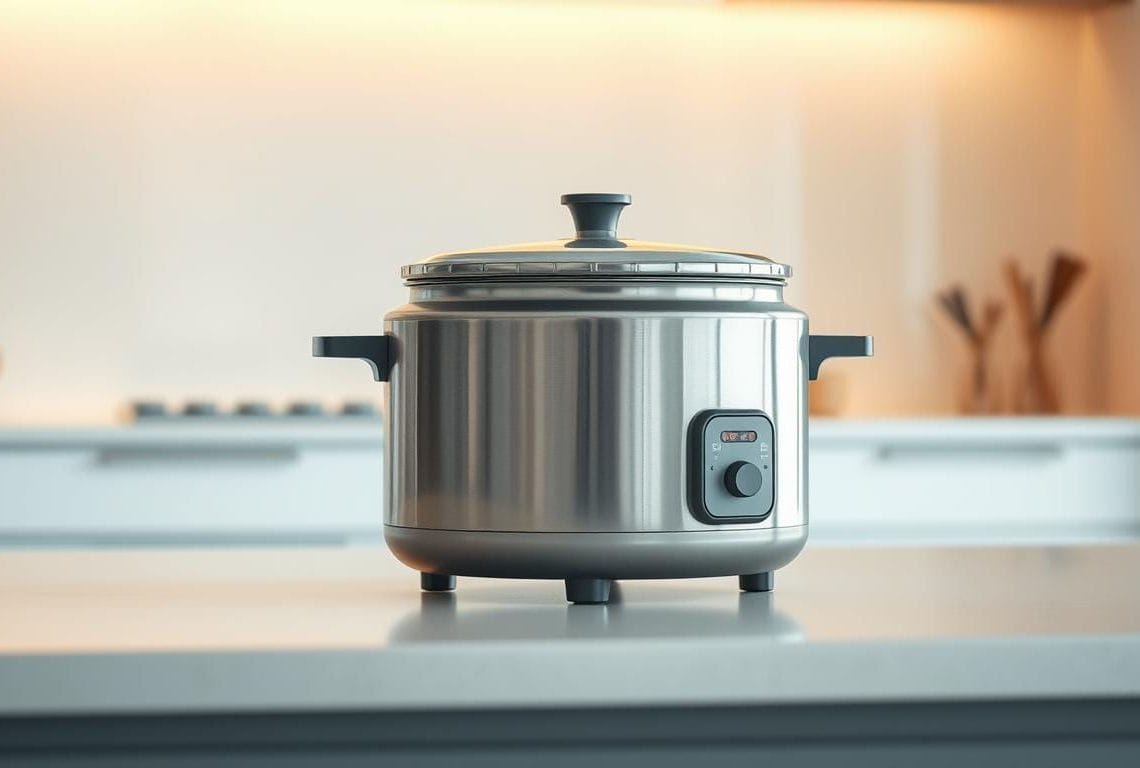
A range of control systems: entry-level cookers deliver one-touch cooking and automatic Keep Warm. Premium model choices add fuzzy logic, timers, and induction heating for finer texture control.
Buyers should match capacity to use: small households often prefer a 2–6 cup cooked yield. Larger families or entertaining need 12–20 cup options. Aroma Select offers common 2–6 and 2–14 cooked sizes with a 304 inner pot and one-touch Keep Warm.
- Durability and taste: metal interiors resist coating wear and keep mixed grains neutral.
- Ease of care: removable lids, vents, and included accessories—measuring cup and paddle—simplify daily use.
- Heating method: induction heats the whole pot for even gelatinization; plate-based units still perform if measurements are precise.
Choose a model that fits daily routines: simple panels for reliable daily drivers or advanced features for frequent multi-grain cooking.
Key buying factors: capacity, cook time, presets, and Keep Warm
Choosing the right capacity and control features makes daily meal prep more reliable and less wasteful.
Start with how much you cook: 3- and 6-cup cooked options suit one to two diners. An 8-cup serves small families. A 12-cup fits four to five people. For catering or batch prep, 14–20 cups meets large needs.
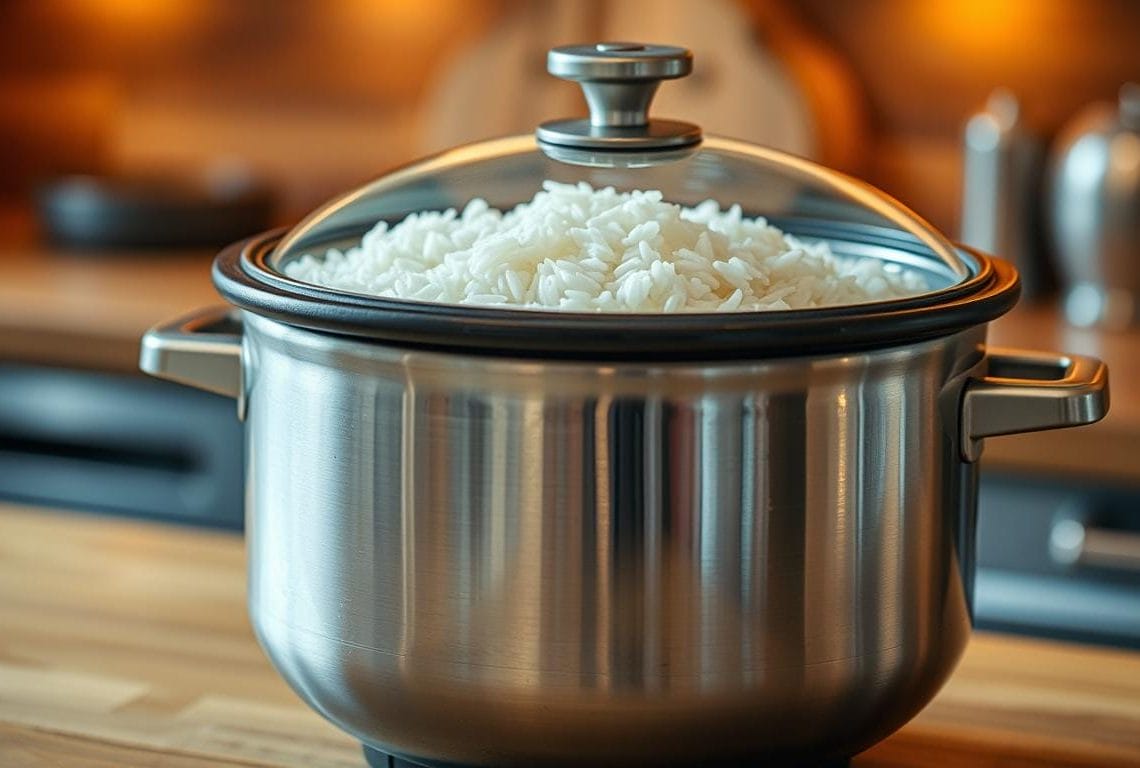
Capacity and maximum capacity considerations
Respect the maximum capacity line etched inside the pot to avoid overflow and poor texture. Exceeding that mark reduces even heating and can confuse sensors.
Cook time and temperature control
Cook time depends on technology: quick-cook programs cut minutes for speed but may trade texture. Fuzzy logic and induction models prioritize temperature precision for consistent results.
Presets for grains and meal types
Look for dedicated settings for white rice, brown rice, sushi rice, and mixed grains. Brown rice benefits from longer soak and tailored temperature curves; sushi rice presets tune hydration for stickiness.
Keep Warm ranges and food safety
Keep Warm should hold roughly 158°F–194°F. That range keeps food safe and moist but avoid reheating on Warm. Limit holding to 12 hours for best safety and texture.
- Match capacity to daily habits: small (3–6), medium (8–12), large (14–20).
- Follow pot maximums to maintain sensor accuracy and even cooking.
- Prefer models with timers, delay start, and clear displays if timing matters.
Aroma Select Stainless Rice & Grain Cooker: all-steel inner pot value
Aroma’s Select model focuses on fuss-free operation and a durable inner pot for everyday meals. The unit ships with a 100% food-grade 304 stainless inner pot and simple one-touch controls that automate boil, simmer, and automatic Keep Warm.
Hands-off function: use the included 180 mL measuring cup, add water, press the switch, and a typical 1 cup white rice finishes in about 25 minutes. The model comes in two capacity options: 2–6 or 2–14 cups cooked.
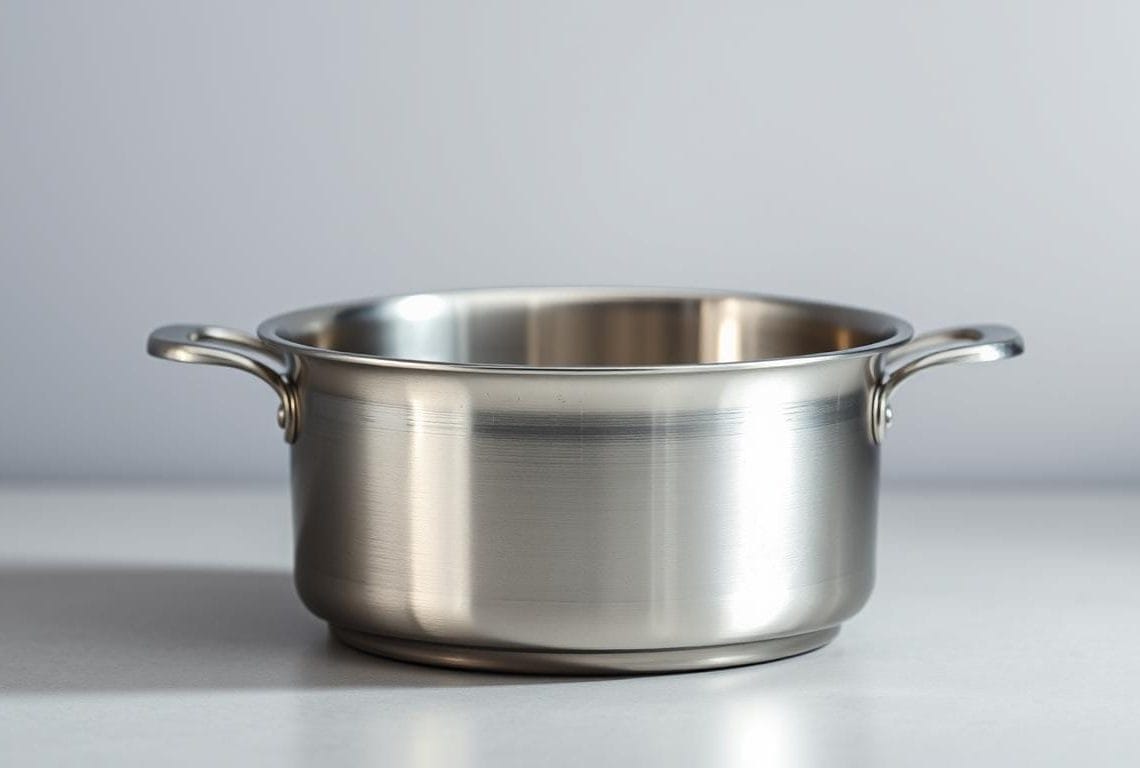
The Select is more than a basic rice cooker. It handles grains, oatmeal, soups, pasta, and even hard-boiled eggs without extra pots. Automatic Warm holds servings ready while you prep sides.
- Accessories: 180 mL cup and serving spatula standardize portions and simplify serving.
- Power & size: 6-cup is 300W; 14-cup is 500W — compact footprints fit small counters.
- Care & warranty: the smooth pot surface cleans fast; occasional vinegar cycles remove film. One-year limited warranty provides basic coverage.
For value-focused buyers, this model pairs a resilient pot with straightforward controls and reliable Warm stability. It’s a sensible entry point for households that want multi-function food prep without complex menus.
Best overall performance pick: Hamilton Beach Rice Cooker insights
Hamilton Beach combines speed, simplicity, and value. The model finished large batches in about 30 minutes in our test while keeping grains fluffy and distinct. Its compact controls make daily use straightforward—ideal for busy kitchens that need fast, reliable results.
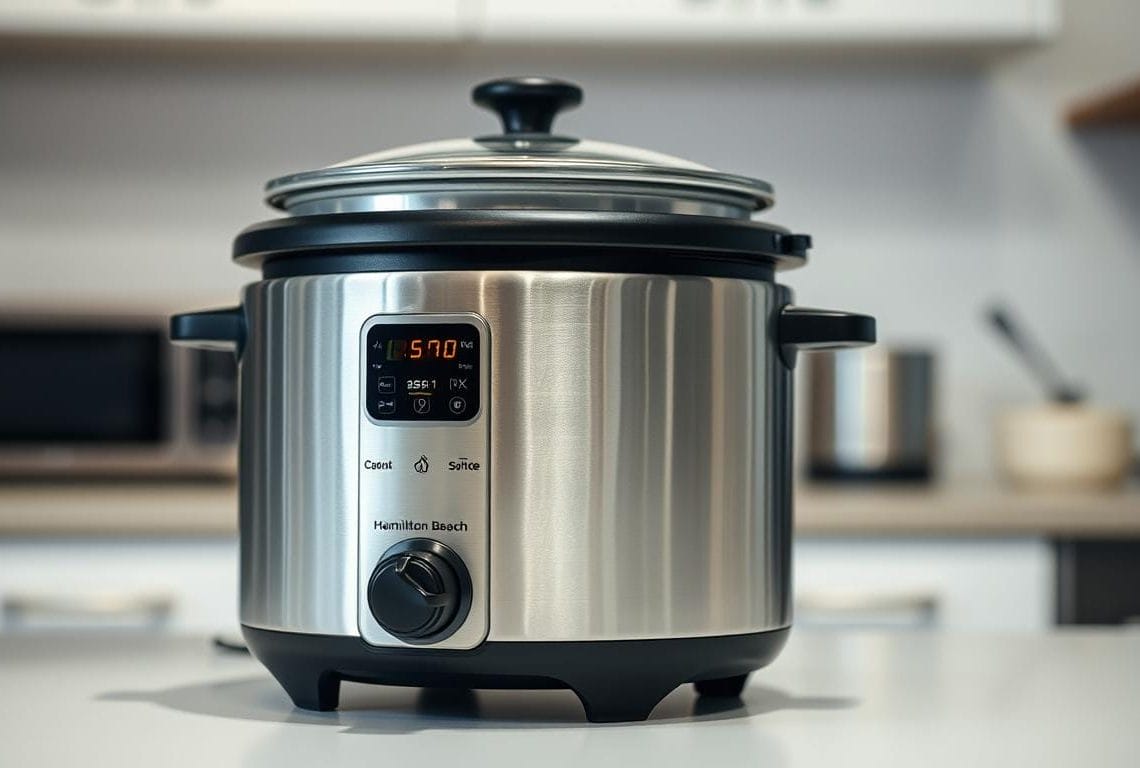
Speed, value, and results across white and brown rice tests
Fast cycles: White Rice and Quick White Rice settings often beat more complex cookers on time without sacrificing texture. A full 7-cup uncooked load (14 cups cooked) reached done status in roughly 30 minutes in real-world trials.
Versatile functions: Steam and heat/simmer add utility for vegetables and one-pot meals. Included accessories—a steamer basket, paddle, and measuring cup—boost value compared with pricier models.
Where it excels and trade-offs in larger batches and hinged lid
This model is best for households that prioritize pace and affordability. However, larger batches can dry or brown along the pot edge, so avoid maxing out capacity and fluff rice promptly after the cycle.
- Simple panel: two white rice modes plus steam and warm—easy to learn and repeat.
- Accessory set: steamer basket enables simultaneous veg steaming while grains cook below.
- Practical caution: the hinged lid can drop when lifted — open carefully when steam is present.
- Brown rice tips: increase water slightly and allow a short rest on Warm to improve chew and hydration.
Zojirushi Induction Heating Rice Cooker: precision for Japanese rice
Zojirushi’s induction model focuses on control over heat and texture for traditional Japanese grains. Induction coils turn the pot itself into the heating element, producing uniform temperature distribution that benefits short-grain and sushi rice.

Induction, texture control, and Extended Keep Warm
The unit offers three texture settings—regular, soft, and firm—so cooks can tune mouthfeel for each batch. A dedicated GABA and polished-grain function supports specialty preparations.
Extended Keep Warm lowers hold temperature to reduce drying and maintain service-ready quality over longer time spans.
Timing accuracy, inner lid, and cleaning ease
The display estimates total cook time and counts upward during Warm, helping coordinate sides and plating. A removable inner lid and smooth ceramic pot reduce starchy build-up and speed cleaning.
- Induction refines stickiness for consistent sushi rice without excess gumminess.
- Repeatable batches keep texture steady for service runs.
- Menus remain approachable despite advanced controls—short learning curve for most users.
Zojirushi Neuro Fuzzy: consistent results with fuzzy logic
Zojirushi’s Neuro Fuzzy blends microprocessor control with patient heat curves to prioritize texture over speed. The NS-ZCC10 adapts continuously during a cycle, so small measurement or water differences rarely spoil a batch.
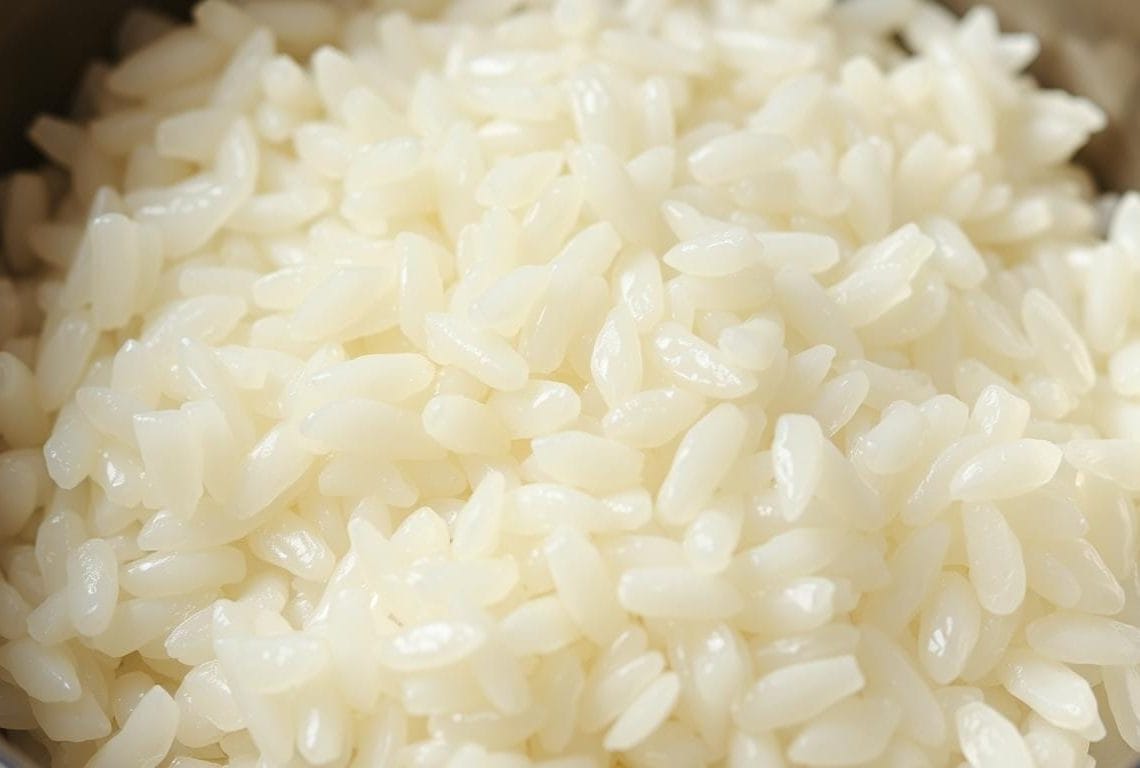
Why sushi, basmati, and short-grain shine on this model
The Neuro Fuzzy’s chip makes real-time adjustments that stabilize starch gelatinization and produce plump, intact grains. In practical testing, sushi rice comes out with clean separation and easy shaping.
Long-grain basmati also fares well—light and aromatic rather than clumped. Short-grain styles retain body and shine, which helps plating and texture-sensitive dishes.
Slower cook times vs quality: who should pick this model
Expect longer cycles: about 44–46 minutes for a 3-cup white batch and roughly 1 hour 38 minutes for brown rice. Quick-cook mode trims minutes but yields a firmer bite.
Choose this model if texture and repeatable results matter more than speed. It keeps food warm up to 12 hours, and the removable inner lid plus handled pot make cleaning and serving straightforward.
- Continuous microprocessor adjustment stabilizes texture across grains.
- Handles plating-ready sushi rice and delicate basmati with equal skill.
- Longer cycles trade time for superior, restaurant-style results.
- In tests it tolerated near-double water additions and still delivered decent outcomes.
Cuckoo Micom: customizable “My Mode” for dialed-in texture
For cooks who want to tune chew and moisture, the Cuckoo Micom puts soak time and temperature on the menu.

GABA and brown rice tuning: soak and temperature adjustments
The 6-cup Micom model offers a dedicated GABA function and a brown rice preset that extend soak and warm cycles. That helps germ activation and improves chew and mouthfeel for whole grains.
The My Mode stores custom soak durations and target temperature. Once a profile is saved, repeatability improves and routine meals take less time to set up.
- My Mode: fine adjustments for water and soak time to match preferred texture.
- Presets: sushi rice, porridge, and quinoa expand versatility without extra pans.
- LED display and self-clean make maintenance and monitoring straightforward.
Notes from tests: jasmine sometimes ran a touch sticky or clumpy. Small iterative changes to soak and heat usually refine results toward the desired profile.
For a practical deep dive on Cuckoo options and the top models, see this roundup: Cuckoo Micom model guide.
KitchenAid Grain & Rice Cooker: the most foolproof experience
An integrated scale and an auto-dosing reservoir remove routine measuring errors, giving busy households a reliable path to consistent results.
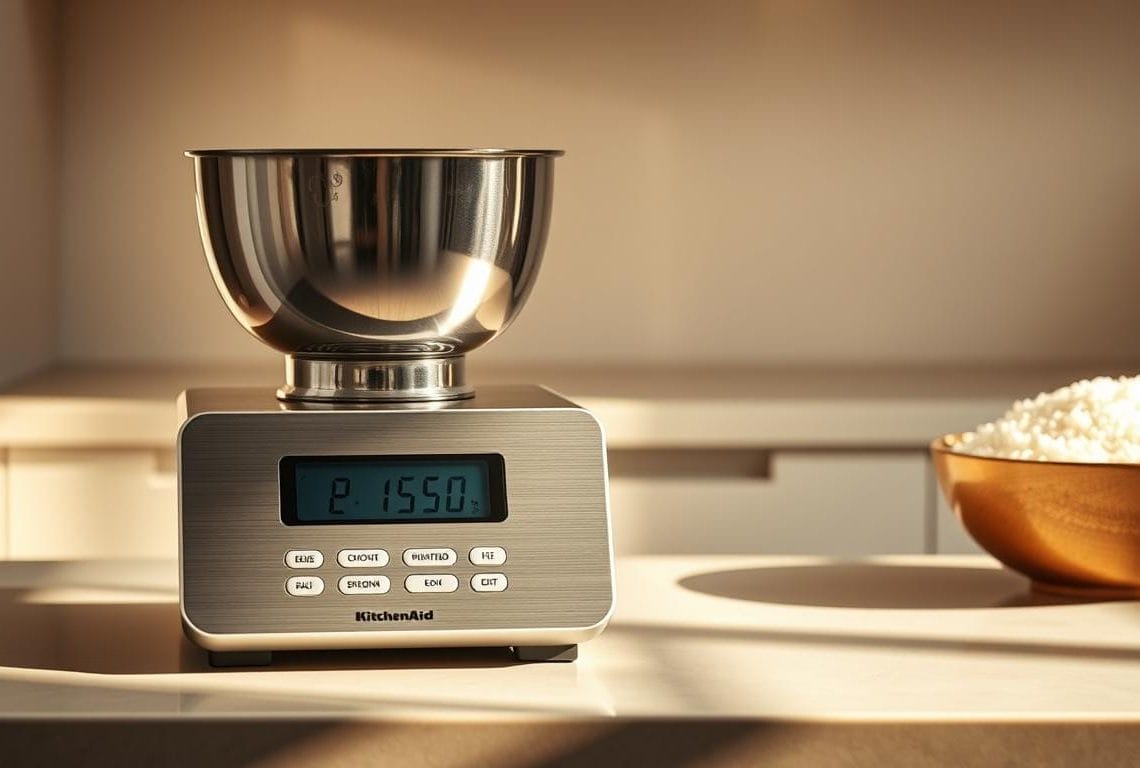
Integrated scale and auto water dispense for accurate rice water
The scale under the pot weighs rice precisely, and the unit dispenses the correct amount water from its reservoir. This eliminates manual cup counting and reduces variability across batches.
The setup saves time and helps people who prefer a set-it-and-forget-it approach. Small and medium loads produced distinct, minimally clumpy grains in testing.
Preset breadth for grains and beans: versatility for busy people
The appliance includes 21 automated functions, with six dedicated bean presets and multiple grain settings. Presets cut down on guessing the right program or time for less common grains.
- Scale-based dosing simplifies ratios so users need not memorize amounts.
- Automation handles timing across dinner prep and batch lunches.
- Choose capacity carefully—matching size ensures even heating and best texture.
Summary: For households that juggle grains and legumes, KitchenAid’s design reduces user error and saves hands-on time. For buyers interested in inner pot choices, see the best stainless steel inner pot guide for compatible options.
Best budget large-capacity: Instant 20-cup Multigrain Cooker
For cooks who batch-prep, the Instant 20-Cup Multigrain model delivers large yields without premium cost. It’s a budget-friendly option designed for families and meal-prep routines that need volume and flexibility.
Batch cooking, sauté/slow cook flexibility, and intuitive controls
Capacity: With up to 20 cups cooked capacity, this model fits weekly meal prep and crowd feeding. Users should always observe the maximum capacity line to avoid boil-overs and uneven heating.
- Interface: The control panel mirrors other Instant appliances, so learning time is short and starts are fast.
- Multi-function use: Built-in sauté and slow cook functions let cooks brown aromatics, then add grains and broth—one pot, fewer dishes.
- Planning and timing: Time to completion varies with volume and grain type; plan batches to avoid last-minute rushes.
- Value and adoption: This model offers strong value-per-cup and pairs well with common Instant accessories and habits.
- Practical note: Allow space for storage—large-capacity appliances need a dedicated counter or pantry spot.
Bottom line: As a budget large-capacity option, the Instant 20-Cup Multigrain cooker gives households reliable output, flexible functions, and straightforward controls for consistent weekly portions.
Small and mini picks: fast results for one to two people
For one- and two-person kitchens, compact units often beat full-size machines on speed and convenience. These small models focus on quick cycles, a tiny footprint, and simple controls.
Three-cup speedsters proved fastest in testing: a three-cup small unit finished jasmine in almost half the time of larger appliances. A clear lid let testers watch bubbling and judge doneness without lifting the cover, which preserved steam and cut overall time to finish.
Three-cup speedsters and see-through lids for monitoring
Small cookers often use a single button and short cycles. That simplicity makes them reliable for daily single-cup or two-cup cooking.
Mini keep-warm convenience when cooking a cup at a time
The Dash Mini (1.5 cups dry max) switched to Keep Warm automatically after cooking and held serving temperature for staggered plating. For solo cooks, auto warm saves reheating and keeps texture steady while mains finish.
- Three-cup models excel at speed and portion control for one to two people.
- See-through lid reduces interruptions and preserves steam.
- Minimal controls—often one button—plus reliable rice warm switching make use simple.
- Follow cup markings to avoid overflow; headspace is limited in mini pots.
How to measure cups and water for white rice, brown rice, and sushi rice
Accurate measuring is the simplest step toward repeatable, restaurant-quality results. Use the included measuring cup and consistent rinsing to control texture and avoid soggy or dry outcomes.
Rice measuring cup (180 mL) vs U.S. cup (240 mL)
Identify the small rice measuring cup supplied with most units: it equals 180 mL. A U.S. cup is 240 mL.
Why it matters: using a 240 mL cup adds too much water and risks soggy grains. When in doubt, rely on the inner-pot markings that match the 180 mL cup.
Amount of water: practical ratios
Follow these baseline amounts for predictable results:
- White rice: 1 rice-cup grain + 2 rice-cups water (Aroma guidance).
- Brown rice: 1 rice-cup grain + 2¼ rice-cups water to account for the bran layer.
- Sushi rice: rinse thoroughly and use the white-rice ratio, then fine-tune by tablespoons if needed for stickiness without gumminess.
Rinse grains under cool water until runoff runs clear to remove surface starch. Do not rinse with warm water—warm rinsing can start gelatinization and produce uneven textures when you cook rice.
Tip: Keep the same cup system and measuring tools with the appliance. Consistency in starting volumes improves repeatability and makes it easier to scale batches or adjust for altitude.
Keep Warm done right: temperature, texture, and serving time
Use Keep Warm as a holding function—not a reheat cycle. Set the appliance to preserve heat after the food has reached safe doneness. Proper practice keeps servings ready and prevents quality loss.
Safe ranges, holding limits, and quick checks
Temperature guidance: aim for about 158°F–194°F to keep food hot without scorching the pot bottom. Only engage Warm after the meal is finished cooking.
- Hold window: limit Warm to under 12 hours—longer holds dry grains and change texture.
- Avoid reheating: do not heat cold food on Warm—use a cook cycle or microwave, then return to Warm if needed.
- Minimize lid openings: repeated lid lifts drop heat and extend minutes to service; plan plating to reduce interruptions.
Practical tips for steady texture
If the top trends toward dry rice, gently fold and fluff to redistribute moisture. For large volumes, stir every 20–30 minutes to balance condensation and the hotter bottom layer.
- Track elapsed time on models that display it—serve while texture remains tender and aromatic.
- Keep the steam vent and inner lid clean to avoid hot spots during holds.
- Use Extended Warm when available—its lower settings help preserve moisture for longer service windows.
Cleaning and maintenance: deep-cleaning a stainless steel inner pot
Deep cleaning an inner pot keeps performance consistent and extends appliance life. Use a vinegar cycle to lift starch film and neutralize odors, then treat removable parts separately.
Vinegar cycle method
Combine 1 cup distilled white vinegar with 1 cup water in the inner pot. Run a 30-minute cook cycle (use a manual timer if needed).
When the cycle ends, switch to Warm for 10 minutes to let heat work the solution into residues. Wash the pot with warm, soapy water and dry thoroughly.
Inner lid care and removable parts
Remove the inner lid and condensation collector. Soak both parts 2–3 hours in warm, soapy water to dissolve buildup in crevices.
Gently scrub with a soft brush and rinse. Dry completely before reassembly—moisture under the lid can affect temperature tracking and cook time.
Final tips and routine maintenance
- Wipe the cooker interior with a slightly damp cloth—keep water away from sensors and wiring.
- Clear the steam vent periodically to prevent sputtering during cook cycles.
- Inspect lid gaskets for flexibility; replace worn seals to retain steam evenly.
- Rinse the pot after each use to reduce the frequency of deep cycles and keep food-contact accessories clean.
Troubleshooting for better results every time
Troubleshooting begins with measurements, seals, and simple cleaning steps. Start with the basics: rinse grains, confirm markings, and check the lid seat. Small fixes often solve persistent problems and restore predictable performance.
Spitting, bubbling, and overflow: rinse starch and follow water lines
Persistent bubbling and overflow usually mean excess surface starch or filling past the inner water lines. Rinse until runoff is clear and obey the pot markings to reduce foam and sputter.
Spitting from the steam vent can indicate too much water or a clogged path. Clean the vent and use the included 180 mL measuring cup for consistent rice water ratios.
- Rinse grains until water runs clear.
- Never exceed maximum capacity—leave headspace to prevent boil-over.
- Clear the vent and avoid overfilling with water.
- Use the correct measuring cup and match inner-pot markings.
Early shutoff or long cook time: minimum/maximum capacity and lid seal
If the unit switches to Warm too soon, confirm you didn’t exceed maximum capacity and that you added enough water for the grain type—cooking brown grains needs extra liquid and time.
A long cook time may point to an unsealed or misaligned lid. Ensure the lid seats fully and that the pot sits flat on the heater plate. Some models also require a minimum mass to engage sensors—check the manual.
Clicking, timer changes, and sensor behavior across models
Clicking is often normal heater cycling. Still, keep the heating plate clean and the pot bottom dry and centered to reduce odd noises or uneven heating.
- Timer increases typically occur when too much water is used or when cooking brown on a white mode—select the correct program.
- If tests keep misfiring, measure with the included cup and use the inner marking numbers.
- Track grain type, rinse steps, and water volumes so you can repeat successful batches every time.
Quick tip: keep a small notebook of settings and outcomes—notes speed troubleshooting and improve consistency over time.
Make your pick with confidence today
Decide whether speed, texture control, or volume matters most, then narrow choices to a few strong models.
For fast, everyday value, choose Hamilton Beach. For precision and extended Warm holds, Zojirushi Induction leads. For repeatable sushi and basmati results, the Neuro Fuzzy is the top pick.
If customization is essential, Cuckoo’s My Mode tunes soak and temperature. If automation saves time, KitchenAid’s scale and auto-water dosing remove guesswork. For large batches on a budget, the Instant 20-cup delivers capacity and simple controls. For an all-metal inner pot at entry price, consider Aroma Select.
Match capacity to household size and use the included measuring cup and inner markings to standardize water—consistent measuring is the fastest route to repeatable results. Pick the model that fits how people cook and you’ll save time and avoid surprises.