Can a single pan really replace a drawer full of cookware and still deliver restaurant-grade sears?
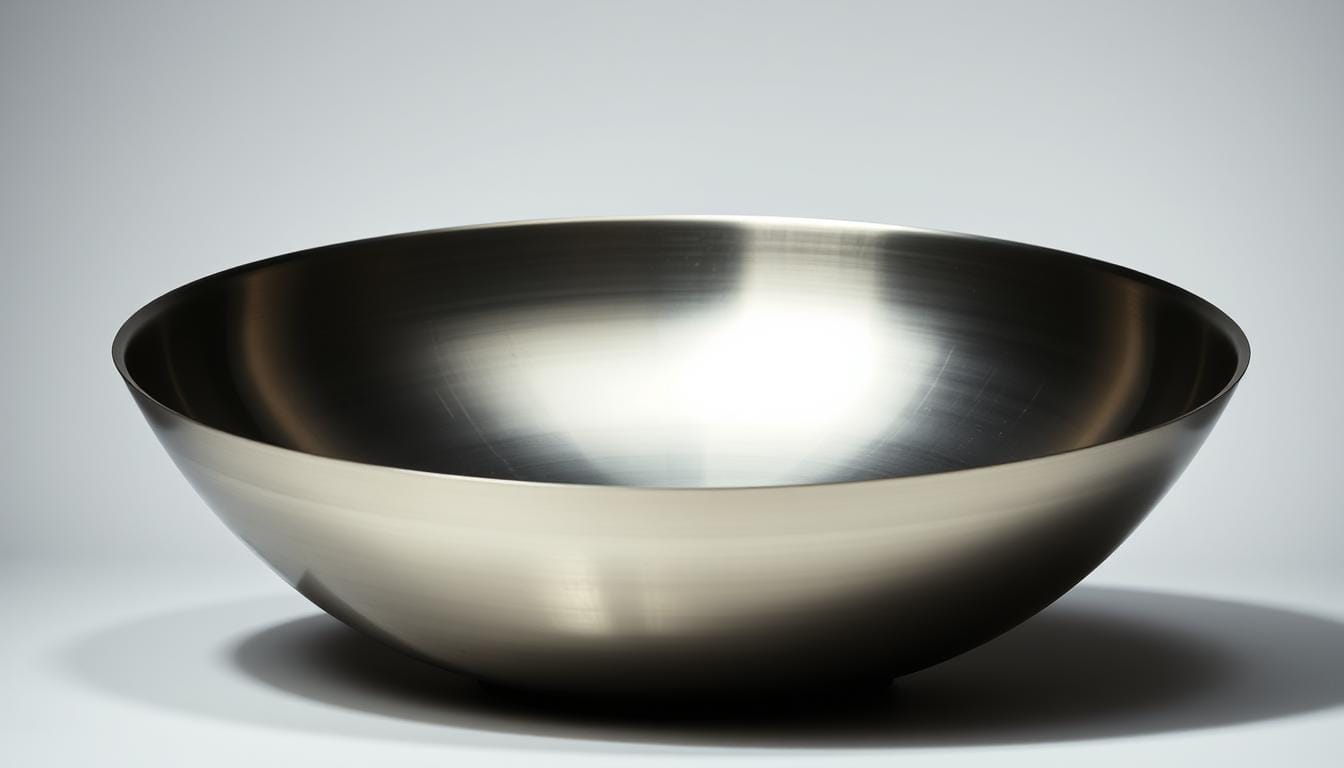
Home cooks and metal workers need clear answers. This guide explains what makes a top-tier stainless steel wok a true workhorse: clad construction for even heat, a non-reactive surface that preserves flavor, and geometry built for classic stir-fry technique.
Readers will see how a 14-inch tri-ply ProBond product—with a pure aluminum core, sealed flared rims, domed lid, and oven safety to 600°F—differs from lighter 5-ply pans in weight, heat response, and cleaning ease.
Expect concise buying criteria: flat-bottom contact for American ranges, ergonomic handles, and rivet designs that cut down on sticking and scrubbing. The overview sets realistic performance limits and care tips, so purchases match real cooking needs.
Why Choose a Stainless Steel Wok for High-Heat Cooking Today
For high-heat work, cookware must combine rapid energy spread with a surface that won’t alter delicate flavors. A quality pan with a clad aluminum core moves burner energy across the base and walls fast. That quick transfer gives quick sears and keeps vegetables crisp-tender.
Durability and flavor purity matter: a non-reactive interior preserves bright sauces and acidic ingredients without metallic notes. Tri-ply bodies with sealed rims and flush rivets cut down on trapped residue and make scrubbing easier.
Versatility is a practical win. One pan handles stir-frying, shallow- and deep-frying, sautéing, and finishing dishes under high broil temperatures. Add a fitted lid and it steams or braises without swapping pots.
- Fast, even heat from a pure aluminum core for reliable browning.
- Safe with metal tools and resistant to warp at high burner outputs.
- Flat-bottom contact for steady performance on home ranges.
With proper preheat and oil technique, this construction gives dependable release and builds fond for deep, layered pan sauces.
Clad Construction That Delivers: Tri-Ply and 5-Ply Explained
How a pan is layered changes sear quality, heat spread, and everyday handling. The core decision is simple: faster response or greater mass for retention. ProBond’s tri-ply uses a pure aluminum ProCore to move energy quickly across the interior and cut hot spots.
Tri-ply vs. five-ply: tri-ply sandwiches aluminum between stainless faces to speed heat flow and give consistent sears. Five-ply adds layers for stability and added retention at a modest increase in weight.
Cold-forged bases concentrate thickness where burners contact the pan. Thicker bases and rims boost durability. Thinner sidewalls keep the pan nimble for tossing and one-handed work.

- ProCore tri-ply: about 35% greater conduction than typical clad builds.
- Korean 5-ply examples: full-clad bodies and rivet-free interiors for easy cleaning.
- Interior grade 18/10 resists corrosion and accepts metal utensils.
When choosing, weigh performance versus weight: thicker builds suit long sears and batch cooking; lighter constructions favor quick weeknight stir-fries and fast thermal response.
Heat Performance and Limits You Can Trust
High-heat control is a practical advantage for serious home cooks. A tri-ply pan with a pure aluminum core reacts quickly to burner changes, so searing and sautéing become predictable rather than guesswork.
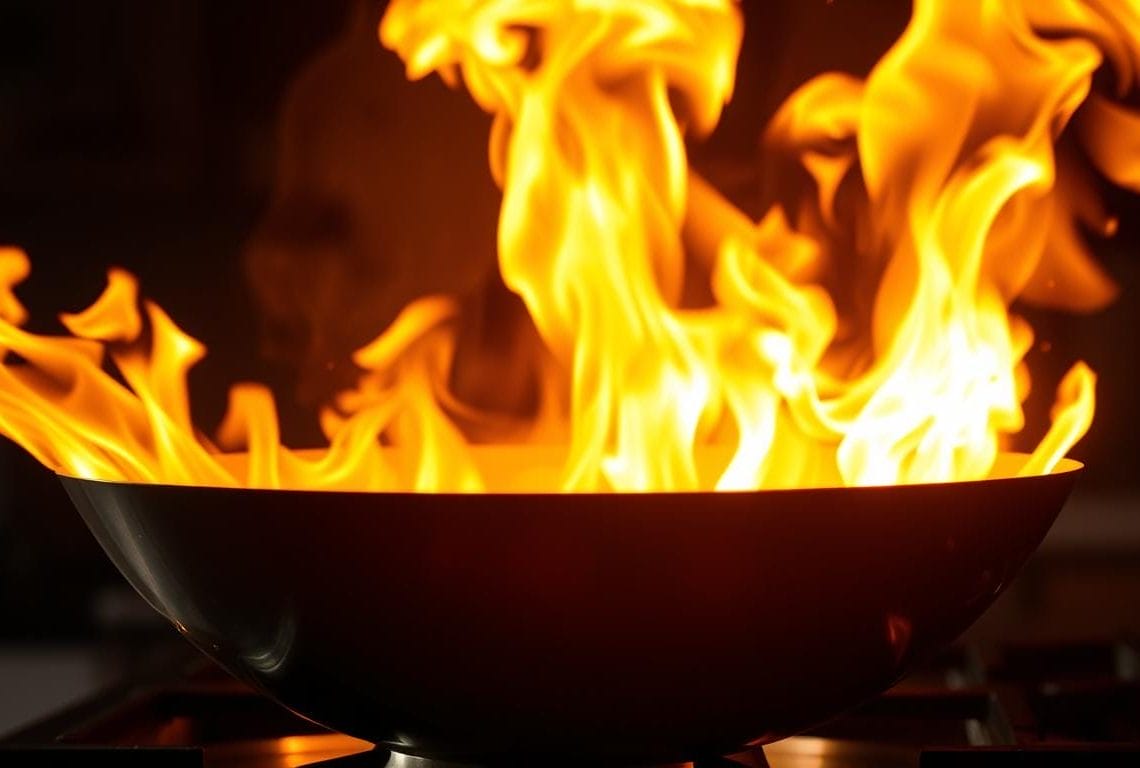
Oven and broiler safe to 600°F: that rating lets the cook move a dish from stove to broiler for finishing without swapping pans. Thickened bases also reduce hot spots on powerful gas burners.
- Oven and broiler safe up to 600°F — ideal for charring or crisping after a stove-top finish.
- Rapid response from the aluminum core translates small burner tweaks into fast surface changes.
- Durable interior accepts metal spatulas used in classic wok technique and builds fond for pan sauces.
- Sealed rims and true dishwasher-safe construction prevent delamination after repeated high-heat cycles.
For best results: preheat the pan, add oil, then ingredients. This sequence maximizes browning, minimizes sticking, and makes deglazing or flambéing safer and more effective.
stainless steel wok Features That Matter in Daily Use
Practical features make the difference between a pan that hides grime and one that cleans in minutes. Daily use rewards designs that limit crevices and channel spills away from seams.
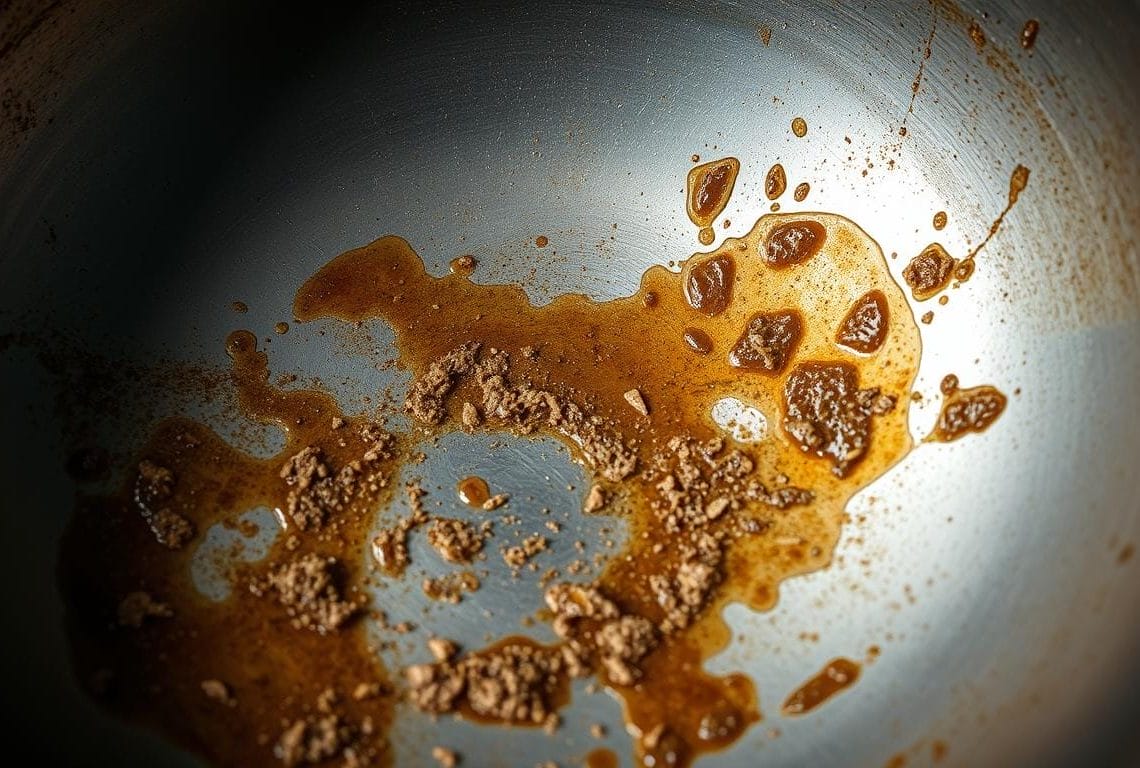
Flush-rivet and rivet-free interiors reduce food buildup where sauces and starches collect. Italian tri-ply examples use dual flush rivets for faster, more sanitary cleaning.
An 18/10 interior balances corrosion resistance and polish. It tolerates metal spatulas and heavy use, so steel tools won’t score the surface during tosses.
- Sealed, flared rims offer drip-free pouring and resist pitting—key to durable construction and dishwasher safety.
- PFAS/PFOA/PTFE-free builds remove polymer concerns; technique replaces coating for release and browning.
- Ergonomic handles and heat-dissipating designs improve leverage and reduce wrist strain during long cooks.
Choose models with smooth welds, flush hardware, and a domed lid to steam or braise without swapping pans. These small choices cut sink time and protect performance day after day, keeping food quality high and maintenance simple.
Induction, Gas, and Beyond: Cooktop Compatibility
A pan’s base and flat contact area determine whether induction will snap to power or stumble. Clad pans with a magnetic base work across gas, electric, ceramic, and induction. That magnetic layer is the key to reliable induction activation.
Practical detail: a 14-inch model with a 7.5-inch flat bottom aligns well with typical U.S. coil sizes and transfers energy efficiently. Flat-bottom geometry also stabilizes the pan on smooth tops and grates, preventing rocking during tosses.
- Gas: thicker forged bases bridge hot jets and protect aromatics while still delivering sear heat to proteins.
- Induction: contact area matters—confirm the flat diameter matches the burner to avoid weak ramps or shutoff on portable hobs.
- Materials: non-magnetic alloys won’t trigger induction—look for explicit induction-ready specs.
For users who split time between ranges, choose a model optimized for induction to ensure snappy power ramps and even coverage across the cooking surface. With any heat source, preheat before adding oil to improve release and browning.
Sizes, Weight, and Capacity: Find Your Fit
Choose a size that fits your household and cooktop to get consistent results. Diameter, flat contact area, and mass affect stability and how the pan holds high heat.
Common diameters: 9.5″, 11″, and 14″
For solo cooks and small kitchens, a 9.5-inch model offers fast preheat and compact storage.
Couples usually prefer 11 inches for flexibility; families and batch cooks benefit from a 14-inch pan and larger capacity.
Capacity and flat-bottom contact area for stability
Look at the flat contact diameter: a 14-inch example lists a 7.5-inch flat bottom and about 7.5 quarts of usable volume. That contact area matters on induction and smooth tops for even energy transfer.
Lightweight handling vs. heavy-duty balance
Weight dictates control: lighter sidewalls make tossing easy, while a thicker base keeps steady heat during searing and multiple portions.
- Deep-fry needs: choose a deeper bowl with headroom to maintain oil temperature when adding cold food.
- Price note: larger diameters often cost more due to extra material and larger lids—compare total kit weight with and without the lid.
- Practical check: measure cabinet and oven clearances; overall height with the lid affects storage and oven finishing.
Lids, Handles, and Ergonomics for Better Control
Controls and fit matter: a well-designed lid and balanced handles change how a cook performs under high heat. Small design choices speed transitions and reduce spills.
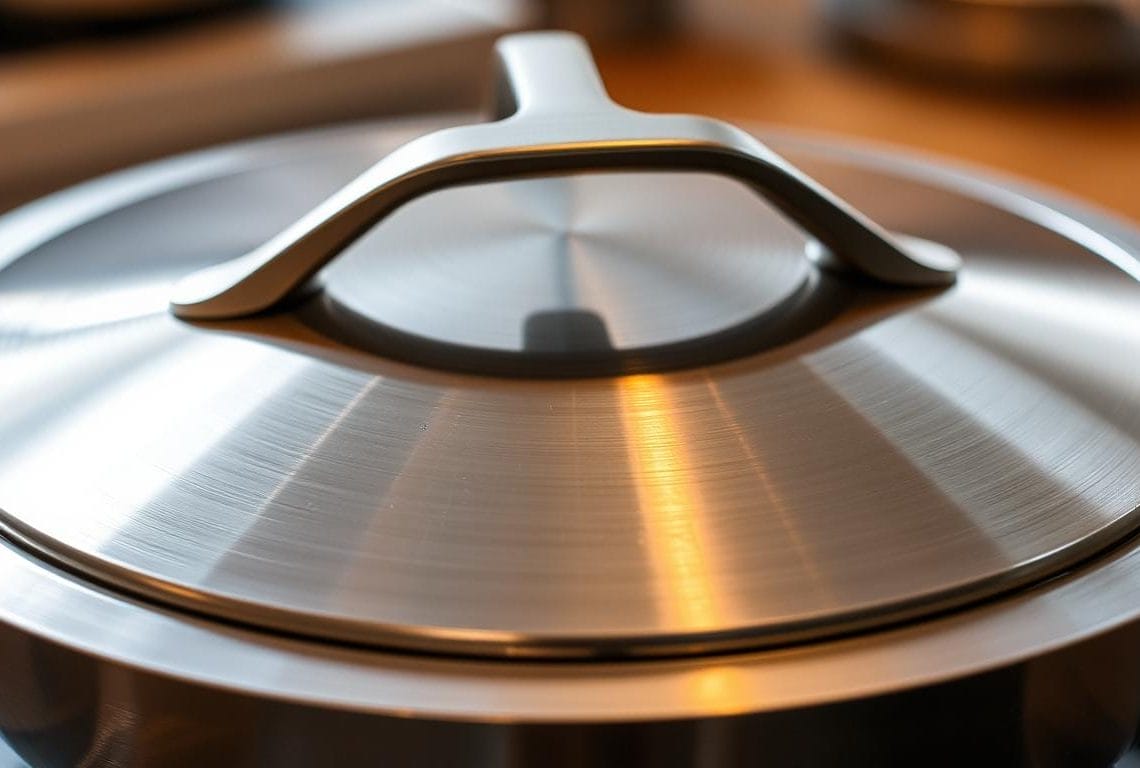
Domed lids for steaming and braising
Domed stainless lids trap steam higher above the food, creating room for dumplings or a small roast while keeping moisture in. A tight fit reduces evaporation for faster braises; a vented option prevents boil-overs when steaming.
Stay-cool handles and better lift angle
Ergonomic grips—like Chef Thomas Keller Insignia handles with vents and improved lift angles—lower wrist strain when moving pans to the oven. Flush-rivet construction eases cleaning and removes snag points when sliding a spatula.
- Side helper handles stabilize heavy 14-inch models during transfers.
- Universal lids cut clutter and fit multiple pans for less waste.
- Handle metallurgy and spacing affect heat transfer; vented or split designs stay cooler longer.
- heat-resistant cookware handles are worth checking for long cooks.
Surface Safety: PFAS, PFOA & PTFE-Free Choices
Health-minded cooks now ask blunt questions about coatings and high heat. Many modern clad pans advertise PFAS-free builds. That includes models marketed as pfoa and PTFE-free for peace of mind under intense searing.
Non-reactive interiors matter: a stainless steel wok keeps tomato sauces, wine reductions, and citrus glazes tasting bright. No polymer layer means no breakdown at high temperatures and no flaking when you deglaze or scrape.
- Buyers often prefer cookware without PFAS, PFOA, or PTFE—clad metal pans meet that need while handling high heat.
- Advanced finishes—like NanoBond titanium layers—add a harder, ultra-smooth surface that resists scratches without polymers.
- Proper technique—preheat, add oil, then food—yields natural release and protects the surface for long life.
For a quick guide to verified non-toxic options, consult a curated list of the best non-toxic cookware at best non-toxic cookware. Confirm that the core, exterior, and finish all support the interior’s safety and heating behavior.
Cleaning, Care, and Preventing Buildup
A quick, consistent care routine prevents stubborn residue and preserves finish.
Dishwasher-safe designs with sealed rims keep water out of the metal layers and prevent delamination and pitting after repeated cycles. When a manufacturer labels a pan dishwasher safe, confirm sealed rims and flush rivets—those details matter.
Everyday cleanup
After cooking, let the pan cool slightly, then fill with warm water for a brief soak. Use a nylon scrubber to lift fond and avoid harsh abrasives that scratch the interior.
Stubborn residue strategies
For stuck-on buildup, mix equal parts vinegar and water, bring to a simmer in the pan, then let cool and sprinkle baking soda before gently scrubbing. A powdered cleanser such as Bar Keepers Friend with a soft pad removes staining and oil buildup efficiently.
Keep the interior bright
Dry thoroughly after washing to prevent water spots. Polish occasionally with a dedicated stainless cleaner to restore luster. Because the pan accepts metal utensils, cooks can safely scrape to deglaze—just avoid gouging with sharp edges.
- Prevent food buildup: preheat until oil shimmers before adding ingredients.
- Avoid: steel wool or aggressive wire pads that damage the finish.
- Deep clean: periodic intensive soaks remove oil near rims and handles and preserve a uniform appearance.
Price, Value, and What Affects Cost
Price signals construction choices—cores, forging, and finishing—that affect daily use.
Quality often costs more up front but pays back in longevity and performance. Tri-ply pans with pure aluminum cores and cold-forged bases usually command higher price because of tighter tolerances and better heat behavior.
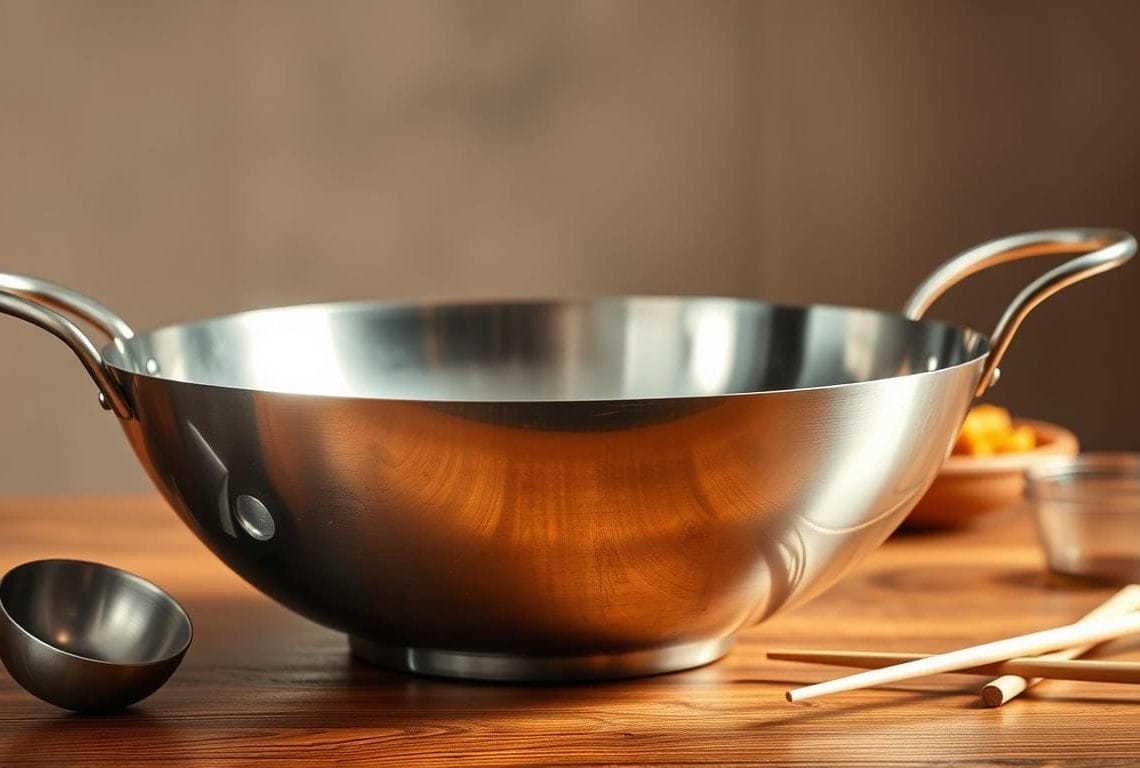
Country of origin matters: Italian-made tri-ply often adds refined polishing, sealed rims, domed lids, and lifetime warranties. Korean 5-ply models aim for value with rivet-free interiors and shorter return windows.
- Construction vs. price: thicker bases and precision machining raise cost but improve sears and evenness.
- Lids included: domed lids and universal lid systems add clear value across collections and reduce long-term expense.
- Weight trade-offs: heavier bases hold heat; lighter walls ease tossing—both affect manufacturing cost and the final price.
- After-sale support: lifetime warranties signal confidence; 30–45 day returns favor budget-conscious buyers.
Compare apples to apples: verify whether the listed price includes lids, induction-ready bases, and dishwasher-safe sealing. For oven safety and finish details, check a focused guide on pan oven ratings at are stainless steel pans oven safe.
Shipping, Returns, and Warranty for Peace of Mind
Clear shipping and return policies remove guesswork and protect buyers during the first weeks of ownership. Knowing thresholds, timelines, and coverage helps choose the right pan and avoid surprises.
Free ground shipping thresholds in the United States
Expect free ground shipping once orders pass brand-specific minimums: commonly $99 for premium Italian-made clad or $50 for some Korean-made kits. Note: many brands cannot ship to PO boxes. International purchases usually require a separate contact or channel.
30–45 day return windows and how they work
Return windows typically run 30 to 45 days. Confirm whether items must be unused or may be lightly tested before authorization. If gifting, verify whether return privileges transfer to the recipient and check delivery estimates so the item arrives on time.
Lifetime warranty coverage and what it means
Lifetime warranties on select Italian tri-ply products cover defects in materials and construction — not misuse or overheating. Keep your receipt and register the product when possible. Claims usually require proof of purchase and photos.
- Combine policy details: compare shipping thresholds, returns, and warranty to judge total ownership value.
- Exchanges: ask whether the brand supplies return labels or if you must arrange shipping.
- Orders: track delivery estimates and save confirmation emails for any claim.
Compare Leading Stainless Wok Collections
Choosing between collections is often a matter of workflow and feel rather than raw heat. Both ProBond and Insignia use the same tri-ply ProCore with an 18/10 interior and a pure aluminum core that boosts conduction by about 35%.
ProBond vs. Insignia: construction and finish differences
ProBond favors cold-forged bases and thicker rims with thinner sidewalls for durability plus nimble tossing. It ships with a signature stainless lid and a polished-rim-to-brushed-body aesthetic.
Insignia keeps the same core but prioritizes ergonomics: Chef Thomas Keller’s stay-cool handle and an improved lift angle. Its universal lid system reduces clutter for cooks who own multiple pans.
Nano-enhanced surfaces vs. classic stainless interiors
Surface choice matters: classic interiors deliver predictable release and full deglazing performance. NanoBond adds molecular titanium nano-layers that are up to 400% harder than plain metal, offering an ultra-smooth finish for extra scratch resistance.
- Both collections: induction compatible, dishwasher safe, made in Italy, lifetime warranties.
- Pick ProBond for forged geometry and a dedicated lid; pick Insignia for handle ergonomics and a pro look.
Compare construction details and decide which features—handle, finish, or lid strategy—align with your kitchen workflow. For a fitted lid option, see this dedicated guide on a compatible model: stainless steel wok with lid.
Bring Pro-Level Stir-Fry Home: Choose Your Stainless Steel Wok Now
Decide by cooking style: a roomy, forged 14-inch tri-ply model with a domed lid suits frequent high-heat sears and large batches. It is oven/broiler safe to 600°F, induction-ready, dishwasher-safe, and backed by a lifetime warranty with 45-day returns and free U.S. ground shipping over $99.
Smaller kitchens? A 9.5-inch 5-ply option gives nimble handling, a rivet-free interior, PFAS/PFOA/PTFE-free claims, and value pricing at $84.89 with free shipping over $50 and a 30-day return window.
Before you buy, confirm must-haves: induction activation, sealed rims, oven safety, and a fitted lid. Compare total price and shipping to get the best overall product value.
Ready to cook? Pick the pan that matches your range, volume, and budget—and start building restaurant-quality sears at home.