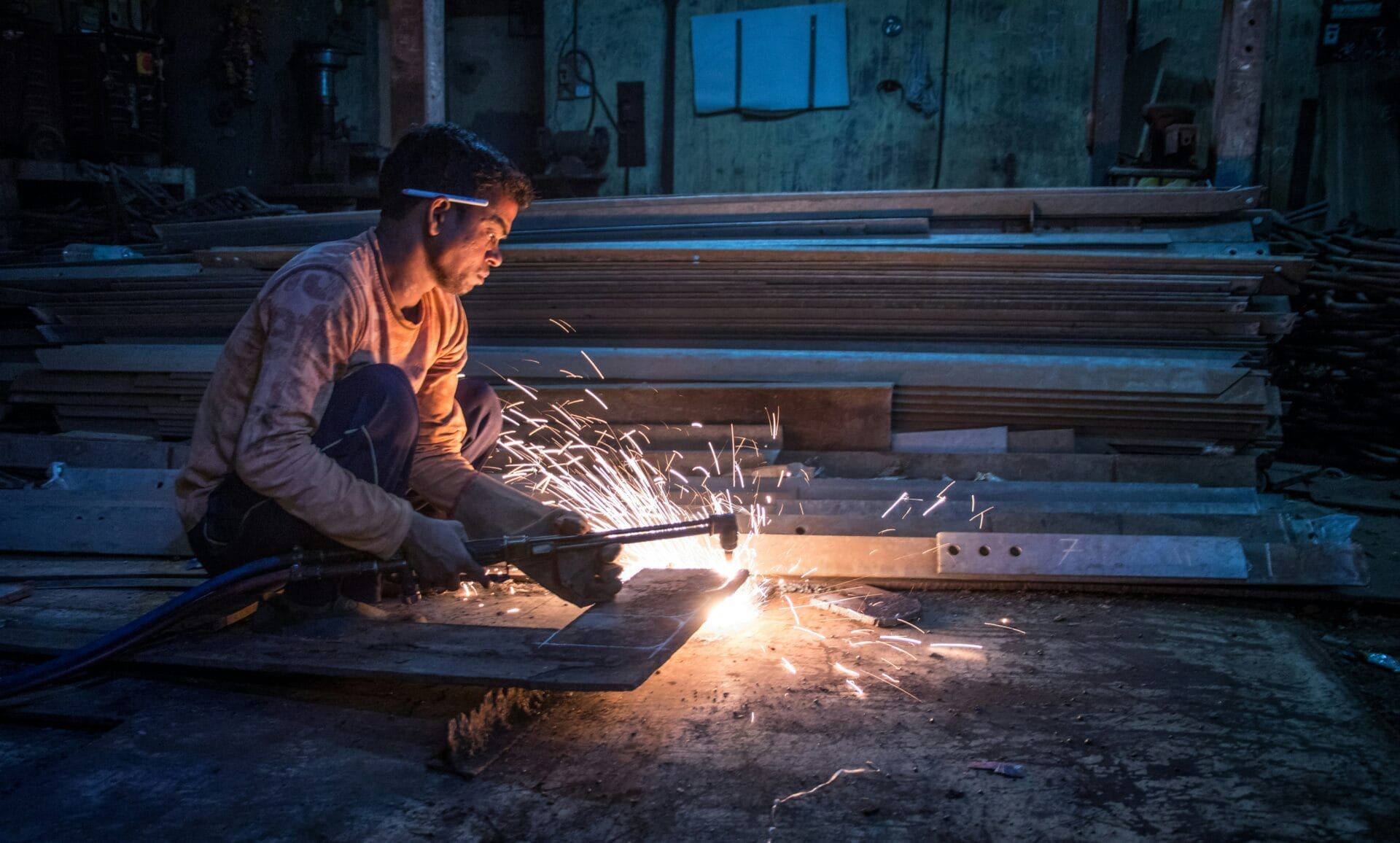
MIG welding stainless steel is a process that is entirely feasible when adhering to specific procedural and material requirements. The effectiveness of this welding method relies on a precise understanding of stainless steel’s metallurgical properties and the corresponding adjustments necessary for the MIG process. It is not an identical operation to MIG welding mild steel, and expecting similar results without modification will likely lead to undesirable outcomes.
Understanding Stainless Steel for MIG Welding
Stainless steel, recognized for its corrosion resistance and aesthetic appeal, presents unique challenges during welding. Its chromium content, which forms a passive layer for corrosion protection, is susceptible to alteration under elevated temperatures.
Chromium Carbide Precipitation
One of the primary concerns when welding stainless steel involves chromium carbide precipitation. When stainless steel is exposed to high temperatures for extended periods, chromium can combine with carbon to form chromium carbides. These carbides typically precipitate at the grain boundaries within the heat-affected zone (HAZ) of the weld. This process diminishes the chromium content in the surrounding metal matrix, thereby reducing its resistance to corrosion, a phenomenon often referred to as ‘weld decay’. Maintaining controlled heat input is crucial to mitigate this effect.
Thermal Conductivity and Expansion
Stainless steel exhibits lower thermal conductivity and a higher coefficient of thermal expansion compared to mild steel. The lower thermal conductivity means that heat tends to concentrate in the weld area, rather than dissipating rapidly throughout the material. This characteristic necessitates careful management of heat input to prevent overheating and distortion. The higher thermal expansion can lead to increased distortion and residual stresses within the welded component as it cools. Welders must anticipate these behaviors and implement strategies to counteract them, such as proper clamping and skip welding techniques.
When considering the feasibility of welding stainless steel with a MIG welder, it’s essential to understand the properties of the material and the techniques involved. For those looking to delve deeper into the specifics of stainless steel, including its applications and weight calculations, a related article can provide valuable insights. You can explore this further in the article on stainless steel pipe weight per foot, which can be found here: stainless steel pipe weight per foot. This information can be particularly useful for ensuring proper material selection and welding practices.
Essential Consumables for Stainless Steel MIG Welding
The selection of appropriate consumables is paramount for achieving a sound and corrosion-resistant MIG weld on stainless steel. Utilizing consumables designed for mild steel will inevitably compromise the weld’s integrity and properties.
Stainless Steel MIG Wire
The choice of filler wire is critical and must be matched to the specific grade of stainless steel being welded. For instance, welding 304-grade stainless steel typically calls for 308L or 308LSi wire, while 316-grade stainless steel often requires 316LSi wire. The “L” in the designation denotes a low carbon content, which further helps in minimizing chromium carbide precipitation. The “Si” indicates higher silicon content, which acts as a deoxidizer and improves the fluidity of the weld puddle, leading to a smoother bead profile and reduced spatter. It is not uncommon for specialty stainless steel grades, such as duplex or super duplex stainless steels, to necessitate even more specific filler metals to maintain their unique metallurgical characteristics.
Shielding Gas Composition
Shielding gas plays a vital role in protecting the molten weld pool from atmospheric contamination, which includes oxygen and nitrogen. For MIG welding stainless steel, the most commonly recommended shielding gas is 100% argon. Argon provides excellent arc stability and good penetration, while also minimizing the oxidation of chromium in the weld metal.
Another viable option is a gas mixture of 98% argon and 2% carbon dioxide (CO2). The small addition of CO2 can enhance arc stability and penetration, and it can also help to produce a slightly flatter weld bead profile by providing a mild oxidizing agent that cleanses the weld surface. However, higher concentrations of CO2 are generally avoided as they can lead to increased carbon pickup in the weld, potentially compromising corrosion resistance and promoting carbide precipitation. For materials like duplex stainless steels, specific argon/helium mixes with minor CO2 additions might be recommended to achieve particular heat input and metallurgical control.
Heat Control and Welding Parameters
Effective heat control is arguably the most critical aspect of MIG welding stainless steel due to its sensitivity to temperature. Inadequate heat management can lead to a host of problems, including carbide precipitation, distortion, and reduced mechanical properties.
Voltage and Wire Feed Speed Adjustments
The relationship between voltage and wire feed speed dictates the arc length and heat input. For stainless steel, welders typically aim for a shorter arc length to concentrate the heat more effectively and reduce the overall heat input into the base metal. This often translates to slightly lower voltage settings compared to mild steel welding. The wire feed speed must be synchronized with the voltage to maintain a stable arc and a consistent weld puddle. Incorrect settings can lead to an erratic arc, excessive spatter, or insufficient fusion. Striking the right balance is achieved through practice and careful observation of the weld puddle dynamics.
Travel Speed and Technique
Travel speed directly influences the amount of heat imparted to the workpiece. A faster travel speed generally reduces the heat input, which is beneficial for stainless steel. However, too fast a travel speed can result in insufficient penetration and cold laps. Conversely, a travel speed that is too slow will lead to excessive heat input, increasing the risk of distortion and carbide precipitation. Welders typically employ a steady, deliberate travel speed without weaving extensively, unless the joint geometry necessitates it. Small, controlled stringer beads are frequently favored over wide weaves to minimize the heat-affected zone.
Interpass Temperature Control
For thicker sections or multi-pass welds, controlling the interpass temperature is essential. Allowing the material to cool sufficiently between passes prevents the accumulation of excessive heat, which can lead to larger HAZs and increased carbide formation. The specific interpass temperature limits are often dictated by the stainless steel grade and the application, and these limits should be strictly adhered to. Infrared thermometers are often used to monitor and ensure that the material is within the acceptable temperature range before the subsequent pass is laid.
Weld Quality and Post-Weld Considerations
The quality of a MIG weld on stainless steel is not solely determined by the welding process itself, but also by the appearance of the weld and any necessary post-weld treatments. Proper execution of the MIG process generally yields welds that are visually appealing and structurally sound.
Clean and Spatter-Free Results
When performed correctly with the appropriate shielding gas and parameters, MIG welding stainless steel produces welds that are characteristically clean and have minimal spatter. This is a significant advantage, as it reduces the amount of post-weld cleanup required, thereby saving time and labor. The effective protection offered by the shielding gas prevents oxidation and contamination, contributing to the visually appealing metallic luster of the weld bead. A smooth bead profile is also indicative of good parameter settings and proper technique.
Post-Weld Cleaning and Passivation
While the weld itself may be clean, the immediate vicinity of the weld and the heat-affected zone can sometimes show discoloration (heat tint). This heat tint is an indication of surface oxidation, which, if left untreated, can compromise the corrosion resistance of the stainless steel. Post-weld cleaning, often involving mechanical brushing with stainless steel brushes (never carbon steel brushes, which can embed iron particles and cause rust), grinding, or chemical pickling, is often necessary to remove these oxides. Following cleaning, a passivation process might be employed. Passivation is a chemical treatment, typically using nitric acid or citric acid, that helps to fully restore the chromium-rich passive layer on the surface of the stainless steel, thereby maximizing its corrosion resistance.
If you’re exploring the possibilities of welding stainless steel with a MIG welder, you might find it helpful to read about the differences between fingerprint-resistant and standard stainless steel. Understanding these variations can impact your choice of materials and the welding process. For more insights, check out this informative article on fingerprint-resistant vs stainless steel.
Advancements in MIG Welding for Stainless Steel
Technological advancements in welding equipment have further enhanced the capabilities of MIG welding for stainless steel, offering improved control and quality.
Pulsed MIG Welding Advantages
Pulsed MIG welding is a significant advancement that offers numerous benefits when working with stainless steel. In pulsed MIG, the welding current cycles between a high peak current and a lower background current. The peak current provides the necessary energy to melt and transfer metal across the arc, while the background current maintains the arc without imparting excessive heat. This controlled heat input minimizes several common issues associated with conventional MIG welding on stainless steel.
One key advantage is a substantial reduction in spatter. The precise control over droplet transfer during the peak current phase virtually eliminates spatter, leading to cleaner welds and reduced post-weld cleanup. Pulsed MIG also results in an improved bead appearance, often mimicking the finely rippled look of a TIG weld. Furthermore, the lower average heat input makes pulsed MIG particularly effective for welding thinner materials without burn-through and allows for greater control in out-of-position welding (vertical up, overhead), which can be challenging with conventional MIG. It also helps to control distortion and mitigate carbide precipitation.
Material-Specific Parameter Databases
Modern MIG welding machines, particularly synergic units, often come equipped with pre-programmed parameter databases for various materials and thicknesses, including different grades of stainless steel. These databases provide a starting point for voltage, wire feed speed, and pulse settings, streamlining the setup process and helping welders achieve optimal results more quickly. While these settings serve as a guideline, fine-tuning is often required based on the specific application, joint configuration, and welder’s technique. The ability to program and recall specific settings also contributes to consistency in production environments.
Comparison to TIG Welding for Stainless Steel
While MIG welding is a viable and efficient method for stainless steel, it is useful to understand its position relative to other welding processes, particularly TIG welding, which is often considered the gold standard for stainless steel.
When MIG Excels
MIG welding holds an advantage in situations requiring higher deposition rates and speed. For production environments, repair work where speed is essential, or for welding thicker sections of stainless steel, MIG can be significantly faster than TIG welding. Its ability to produce clean welds with good penetration and minimal spatter, especially with pulsed MIG, makes it a suitable choice for many general fabrication tasks involving stainless steel. The relatively lower skill ceiling required for basic MIG operation compared to TIG also means a wider pool of welders can effectively utilize the process for stainless steel.
Advantages of TIG Welding
TIG welding (Gas Tungsten Arc Welding) is often preferred for applications demanding the highest levels of precision, aesthetic finish, and metallurgical control on stainless steel. TIG offers independent control over heat input (via foot pedal or hand control), filler metal addition, and arc length, allowing for extremely fine adjustments. This granular control is invaluable for creating pristine, spatter-free welds with minimal discoloration and virtually no distortion, particularly on thin-gauge materials. For critical components, sanitary applications, or projects where the visual appearance of the weld is paramount, TIG welding remains the preferred method. While MIG welding is effective for occasional stainless repairs, the more extensive and frequent stainless steel projects, especially those with stringent quality requirements, often benefit from the control and finish quality inherent to the TIG process. The learning curve for TIG welding is generally steeper, requiring a higher level of dexterity and coordination.