
Stainless steel and aluminum are two metals often compared in many fields. Stainless steel has a tensile strength of 515 MPa to 1300 MPa. Aluminum’s strength ranges from about 100 MPa to 400 MPa. This shows a big difference in their strength.
Choosing between stainless steel and aluminum depends on their unique traits. Aluminum is lighter, making it great for saving weight. Stainless steel is stronger, perfect for tough tasks. Aluminum is cheaper, making it popular in cars and buildings.
Both stainless steel and aluminum have their own benefits and drawbacks. Stainless steel resists corrosion well, thanks to chromium. Aluminum is good at conducting heat, useful in electronics and heat exchangers. Understanding these differences helps in making better choices.
Understanding the Fundamental Properties of Both Materials
When we compare stainless steel and aluminum, looking at their material composition is key. Stainless steel is made of iron, carbon, and chromium, with at least 11% chromium. Aluminum, on the other hand, is mostly pure, with 99% to 99.6% aluminum.
Stainless steel is known for being very strong, with high tensile strength and resistance to damage. Aluminum, while not as strong, has a better strength-to-weight ratio. Knowing these differences helps us choose the right material for different tasks.
The material composition of stainless steel and aluminum impacts their performance. Stainless steel’s chromium content helps it resist corrosion well. Aluminum, with its high thermal conductivity, is great for heat sinks and efficient heat dissipation.
Here are some main differences between stainless steel and aluminum:
- Corrosion resistance: Stainless steel is more resistant to corrosive environments.
- Strength: Stainless steel is stronger, but aluminum has a better strength-to-weight ratio.
- Thermal conductivity: Aluminum conducts heat well, while stainless steel does not.
In summary, knowing the basic properties of stainless steel and aluminum is crucial. By looking at their material composition and properties, we can make better choices for our needs.
Weight and Density Comparison
When we look at stainless steel weight and aluminum weight, we must think about their density comparison. Aluminum is much lighter than stainless steel. This makes aluminum great for places where you don’t want a lot of weight.
The density comparison shows a big difference. Aluminum has a density of about 2.7 g/cm³. Stainless steel’s density is between 7.9-8.0 g/cm³. This big difference means stainless steel is much heavier than aluminum for the same size.
For example, a 4ft by 4ft aluminum sign weighs about 40lbs. But the same size in stainless steel weighs around 120lbs. This shows how important it is to think about stainless steel weight and aluminum weight when designing. To learn more, visit stainless steel plate weight per square for more info.
Some important points to remember in the density comparison are:
- Aluminum is about 1/3 the weight of stainless steel
- Stainless steel is about three times heavier than aluminum for the same size
- Aluminum’s density is about 2.7 g/cm³, while stainless steel’s is between 7.9-8.0 g/cm³
Strength and Durability Factors
When we compare stainless steel and aluminum, stainless steel strength stands out. It has a tensile strength of 520 – 1100 MPa. Aluminum’s tensile strength is lower, ranging from 90 – 570 MPa. This big difference in aluminum strength makes stainless steel better for many uses, like things that need to last a long time.
Stainless steel strength is great because it can handle heavy loads and tough conditions. This makes it perfect for building and carrying heavy things. On the other hand, aluminum strength is not as high. But, it’s light, which is good for saving weight in cars and planes.
The durability factors of both materials also depend on how well they resist corrosion and wear. Stainless steel doesn’t rust easily, but aluminum can oxidize quickly when it gets wet. Knowing these things helps us pick the right material for a job, based on stainless steel strength and aluminum strength.
Corrosion Resistance Properties
When it comes to fighting corrosion, stainless steel corrosion resistance often beats aluminum corrosion resistance. This is because stainless steel forms a protective layer of chromium oxide. This layer regenerates itself when scratched. Aluminum, on the other hand, forms a thin film of oxide that protects it from corrosion.
Here are some main differences between stainless steel and aluminum:
- Stainless steel’s chromium oxide layer makes it more resistant to corrosion.
- Aluminum’s natural oxide film offers good protection but can be damaged by contact with other metals.
- Anodized aluminum gets even better protection through controlled oxidation during the anodizing process.
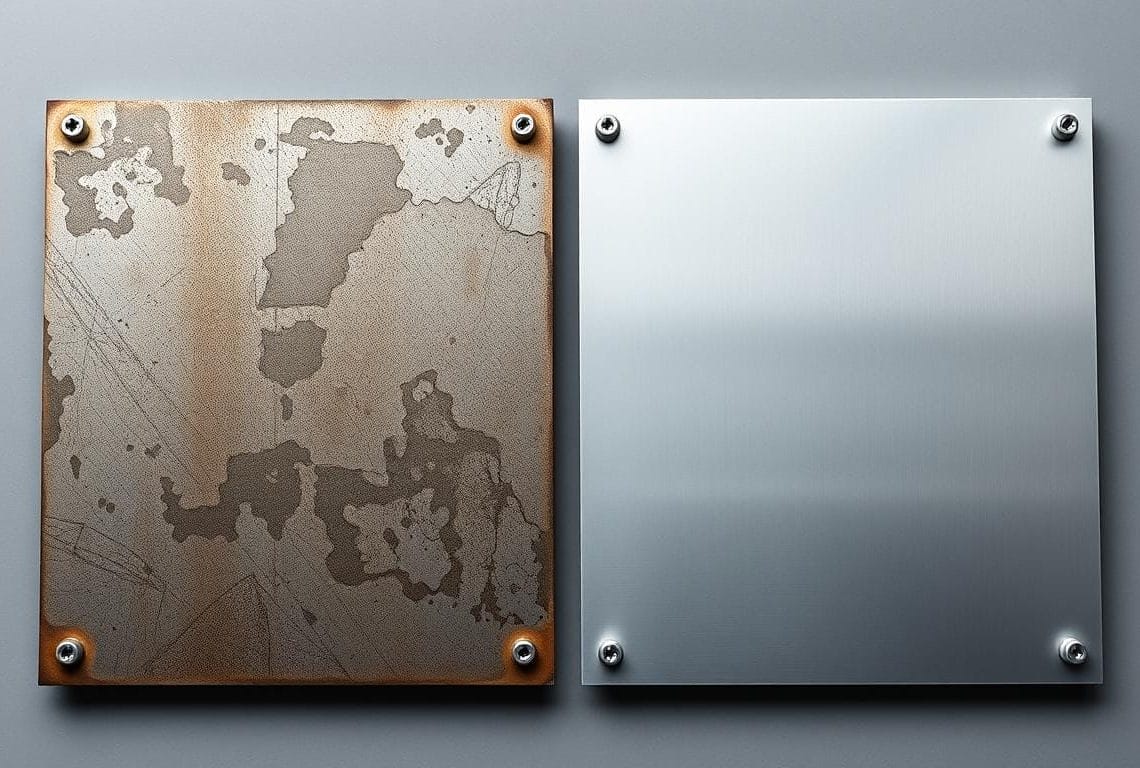
Stainless steel is great for places with lots of salt or moisture, like the sea. Aluminum is better for projects needing to be light, like in dry, less corrosive areas. Knowing how each material handles corrosion is key to picking the right one for your needs.
Temperature Performance and Heat Conductivity
Stainless steel and aluminum have different ways of handling heat. Stainless steel can handle very high temperatures, making it great for places where heat is a big issue. Aluminum, on the other hand, is good at spreading heat around.
Stainless steel can move heat at about 16 Watts/meter-K. Aluminum does it much better, at 237 Watts/meter-K. This big difference means they’re better for different uses, like in electronics, medical tools, and building equipment.
Aluminum’s heat moving ability changes with temperature, from 220 W/m·K at 527°C to 240 W/m·K at 0°C. Stainless steel’s ability to move heat stays pretty steady at different temperatures. Knowing how each material handles heat is key to picking the right one for your project.
When looking at stainless steel and aluminum, think about how they expand with heat, cool down, and resist heat. By looking at these points, you can choose the best material for your needs.
Cost Analysis: Stainless Steel vs Aluminum
The cost of stainless steel and aluminum can change based on use and industry. When looking at stainless steel cost and aluminum cost, we must consider initial costs, long-term value, and manufacturing costs.
Aluminum’s processing is more expensive because it needs a lot of electricity. But, its lightness and resistance to corrosion make it great for some fields.
Initial Material Costs
Stainless steel and aluminum’s initial costs are key in the cost analysis. Stainless steel is pricier than aluminum. But, its long life and resistance to corrosion can save money in the long run.
Long-term Value Assessment
Looking at both materials over time shows their benefits. Stainless steel lasts longer, which means less need for replacements. Aluminum’s lightness can also save fuel and improve safety in cars. Additionally, while both materials offer unique advantages, the ongoing debate surrounding the stainless steel vs titanium comparison highlights the importance of application-specific needs. Titanium, although more expensive, is known for its superior strength-to-weight ratio, making it an attractive option for specialized industries. Ultimately, the choice between these materials will depend on the specific requirements of each project and the long-term benefits they provide.
Manufacturing Expenses
Manufacturing costs are also important in comparing stainless steel and aluminum. Making custom aluminum shapes is cheaper because of lower tooling costs. This makes aluminum a good choice for custom parts.
In summary, the stainless steel cost and aluminum cost depend on many factors. These include initial costs, long-term value, and manufacturing expenses. A detailed cost analysis is needed to find the best material for a specific use or industry.
Manufacturing and Fabrication Processes
Stainless steel and aluminum fabrication have different methods and tools. Stainless steel is harder to shape than aluminum. Aluminum can be forged to be as strong as steel.
Stainless steel manufacturing involves cutting, bending, and welding. Its high strength and resistance to corrosion make it perfect for construction and marine use.
Aluminum fabrication is simpler because aluminum is very malleable. It can be cut, bent, and shaped easily. Aluminum is also light, making it great for reducing weight in projects.
Key differences between stainless steel and aluminum include:
- Material properties: Stainless steel is stronger and more resistant to corrosion than aluminum.
- Forming and fabrication: Aluminum is easier to shape than stainless steel.
- Applications: Stainless steel is used for heavy-duty tasks, while aluminum is for lightweight and precise needs.
In summary, choosing between stainless steel and aluminum depends on the project’s needs. Both materials have unique benefits. Knowing these differences helps pick the right material for a project. When evaluating options, it’s essential to consider factors such as weight, corrosion resistance, and cost. A stainless steel vs aluminum comparison reveals that stainless steel offers greater strength and durability, while aluminum is often lighter and easier to work with. Ultimately, understanding these trade-offs ensures a more informed decision that aligns with the specific requirements of the project.
Environmental Impact and Sustainability
Looking at the environmental impact of materials, stainless steel environmental impact and aluminum sustainability are key. Both have good and bad sides when it comes to being green. Stainless steel can be fully recycled, which cuts down on the need for new materials and energy use.
Aluminum, on the other hand, is also very recyclable and has a smaller carbon footprint than stainless steel. This makes it a better choice for those looking to reduce their environmental impact.
Most new stainless steel comes from recycled materials, which lowers the demand for raw stuff. The energy needed to make stainless steel is going down thanks to better manufacturing tech. For more on stainless steel versus aluminum, check out this guide.
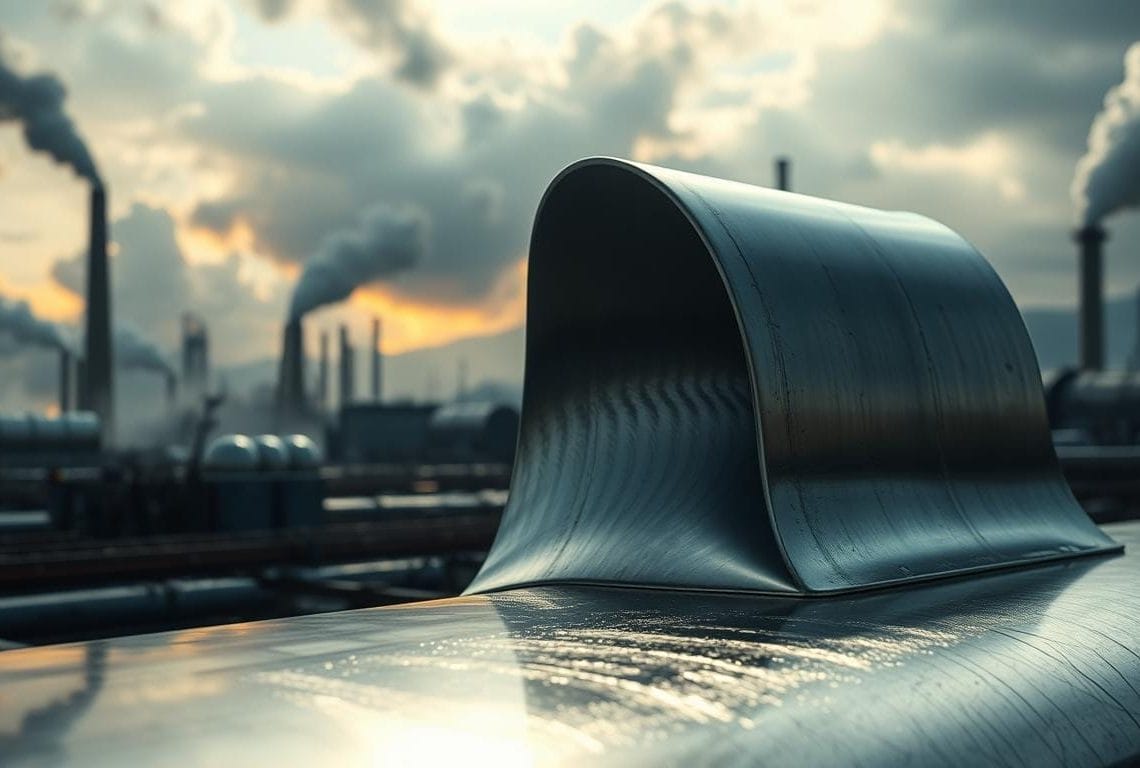
- High recyclability rates, reducing the need for raw materials and energy consumption
- Long service life, minimizing maintenance needs and reducing waste
- High strength-to-weight ratio, promoting efficiency gains and sustainability
In summary, both stainless steel and aluminum have their ups and downs for the environment. By picking the right material for the job, we can lessen our impact on the planet. For a closer look at costs, see this cost comparison.
Industry-Specific Applications
Stainless steel and aluminum have different uses in various industries. In the medical and food processing fields, stainless steel is preferred. It resists corrosion well and can handle tough cleaning. Aluminum, on the other hand, is great for the aerospace and automotive sectors. It’s light, strong, and resists corrosion, making it perfect for building durable yet light structures.
Stainless steel is known for its strength, resistance to corrosion, and ability to handle extreme temperatures. Aluminum, with its low density and high thermal conductivity, is also a top choice. The right material depends on the industry’s needs and the application.
Here are some examples of how industries use these materials:
- Medical equipment, like surgical tools and hospital furniture, often use stainless steel. This is because it resists corrosion and is easy to clean.
- In aerospace engineering, aluminum is key for making light yet strong aircraft parts, such as wings and fuselages.
- For food processing, stainless steel is used in equipment and machinery. It can handle harsh cleaning and extreme temperatures.
In summary, the choice between stainless steel and aluminum depends on the industry’s needs. Knowing the strengths and weaknesses of each material helps industries make the best choice for their specific requirements.
Maintenance Requirements and Longevity
Understanding the needs of stainless steel and aluminum is key. Stainless steel, with at least 10.5% chromium, needs less care than aluminum. It’s great for places where things need to last a long time.
Stainless steel can handle tough cleaners, but aluminum needs softer ones to avoid harm. Also, stainless steel stays strong and looks good for a long time, even in tough spots. Aluminum, being softer, might need more fixes.
Cleaning Protocols
- Stainless steel: can withstand harsh cleaning agents
- Aluminum: requires gentler cleaning methods to prevent damage
Repair Considerations
Stainless steel lasts longer and needs less upkeep than aluminum. This makes it a better value over time. Aluminum might seem cheaper at first, but it could cost more in the long run due to repairs.

Lifetime Expectations
Choosing between stainless steel and aluminum depends on your needs. Think about how much care each needs. Both can last for years, but stainless steel’s toughness and resistance to rust make it a top pick for lasting value.
Aesthetic Properties and Finish Options
When picking materials, stainless steel aesthetic and aluminum finish options are key. The look you want and where it will go matter. Stainless steel comes in finishes like brushed and polished, boosting its stainless steel aesthetic.
Aluminum, with finishes like anodizing, fights corrosion and helps paint stick better. This makes aluminum great for many uses, thanks to its aluminum finish options.
Important things to think about with stainless steel aesthetic and aluminum finish options are:
- Corrosion resistance: Stainless steel fights corrosion well, but aluminum needs a good finish to avoid it.
- Appearance: Both can look different, from brushed to polished, depending on the finish.
- Durability: The finish affects how long the material lasts.
In short, picking between stainless steel aesthetic and aluminum finish options depends on your project’s needs. Think about look, durability, and how it holds up to corrosion. This way, you can choose the right material for your project.
Safety Considerations and Regulations
When we talk about stainless steel safety and aluminum rules, there’s a lot to think about. Both materials have their own safety rules and regulations. For example, stainless steel is great for the food industry because it’s strong and easy to clean.
Aluminum, on the other hand, is popular in industrial settings because it’s light and doesn’t rust easily.
Some important safety rules for stainless steel and aluminum include:
- Following OSHA standards, like using metal ladders that don’t rust
- Meeting ANSI and ASSP rules for ladder safety
- Cleaning and sanitizing properly, mainly in food places
- Wearing protective gear to avoid injuries
Ignoring safety in steel and aluminum work can cause serious problems. Things like falls, burns, cuts, and crush injuries can happen. So, it’s crucial to have good safety plans in place.
Regular checks on equipment and keeping the work area clean can prevent accidents. With more stainless steel needed in food making, keeping safety in mind is key. This ensures everyone stays safe and follows the rules.
Market Trends and Material Availability
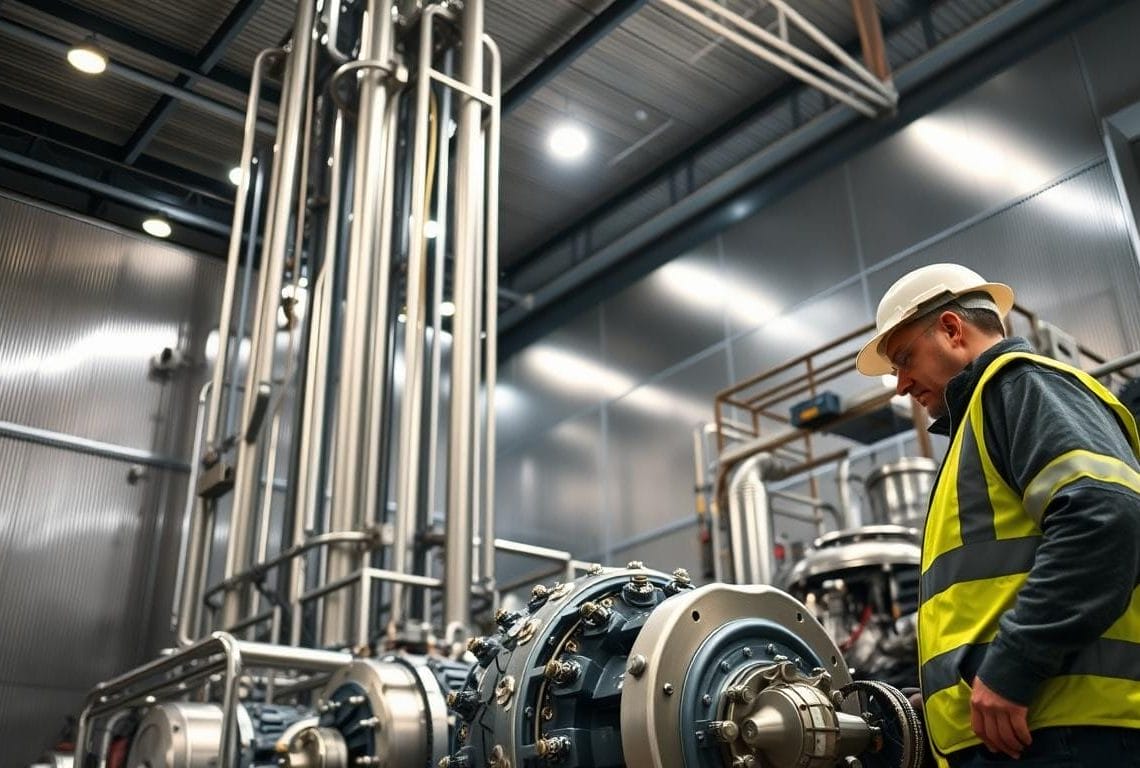
The demand for stainless steel and aluminum is rising. This is because they are versatile and resistant to corrosion. Stainless steel market trends show a growing need in construction, automotive, and healthcare. In contrast, aluminum availability is higher because it’s produced and recycled more widely.
Several factors affect the market trends and availability of stainless steel and aluminum. These include:
- Corrosion resistance: Stainless steel is great for harsh environments. Aluminum also resists corrosion but may not hold up in very acidic or alkaline conditions.
- Recycling rates: Stainless steel recycling has improved a lot. Aluminum recycling uses less energy because it melts at a lower temperature.
- Industry applications: Stainless steel is used in food processing, chemical processing, and car exhausts. Aluminum is found in aerospace, car engines, and building materials.
In summary, knowing about stainless steel market trends and aluminum availability is key for industries that use these materials. By looking at corrosion resistance, recycling, and where they’re used, businesses can make smart choices. This helps them stay competitive.
Common Misconceptions About Both Materials
When we talk about stainless steel and aluminum, it’s key to know the truth. People often think stainless steel is stronger and more durable. But, they also believe aluminum is cheaper and less versatile. Knowing the real story can help pick the right material for the job.
Many think stainless steel beats aluminum in durability. But, that’s not always true. Aluminum is light and resists corrosion, making it great for planes and cars. At the same time, people think aluminum is weak and pricey. But, it’s actually strong and can be affordable for many uses.
Some also think stainless steel costs more than aluminum. While top-notch stainless steel might be pricier, the price gap isn’t always big. Aluminum might start cheaper, but it can rust and wear out faster. This means more upkeep costs over time. It’s important to weigh these points when choosing materials.
In short, it’s crucial to debunk myths about stainless steel and aluminum. By knowing the facts, we can use their strengths better. This leads to better performance, savings, and efficiency in various industries.
Making the Right Choice: Material Selection Guidelines
Choosing between stainless steel and aluminum depends on your needs. Stainless steel is great for tough, long-lasting jobs because it’s strong and resists corrosion. Aluminum is better for when you need something light and good at cooling down.
Before making a choice, think about what you need. Look at the physical characteristics, performance requirements, and cost considerations of each. Knowing the strengths and weaknesses of stainless steel and aluminum helps you pick the right one for your project.