

Have you ever wondered why stainless steel sheet prices vary so much? It’s important to understand the stainless steel sheet metal world to make smart choices. This material is durable, resistant to corrosion, and looks great, making it key in many fields.
Prices are affected by many things, like how materials are sourced and demand. Finding a reliable stainless steel sheet supplier with competitive prices is vital for businesses. For example, a 0.035″ x 12″ x 12″ polished 304 stainless steel sheet costs $20.78. Knowing this can help save money and ensure quality for different uses.
To learn more about stainless steel sheet metal, check out Alloy 304. It’s known for being versatile and used in many ways. Knowing about different alloys, their resistance to corrosion, and finishes can improve your buying strategy.
Understanding Stainless Steel Sheet Metal Properties
Stainless steel sheet metal is known for its properties that make it great for many uses. It has excellent corrosion resistance and tensile strength. This means it lasts long and is very durable. It usually has at least 10.5% chromium, which helps prevent rust.
The most common type is austenitic, known for being very resistant to corrosion and easy to shape. Ferritic sheets are magnetic and often used in car exhausts because they have low carbon. Martensitic sheets have a lot of carbon, making them strong for heavy machinery. Duplex stainless steels combine qualities of both austenitic and ferritic types, offering enhanced strength and resistance to stress corrosion cracking. These variations allow for versatile applications, ranging from architecture to industrial equipment. Additionally, advanced sheet metal duct work solutions often utilize these stainless steels for their durability and ability to withstand harsh environmental conditions.
Duplex stainless steel combines the best of austenitic and ferritic, offering both high corrosion resistance and strength. Precipitation-hardening stainless steel gets stronger with heat treatment. It’s perfect for aerospace and defense. Knowing these properties helps choose the right stainless steel for different needs.
Benefits of Using Stainless Steel Sheets
Stainless steel sheets offer many benefits, making them great for different uses. They are very durability. They can handle tough weather and don’t rust easily, perfect for outside use. The chromium in them makes them shiny and helps fight off rust and stains.
Stainless steel is also easy to care for. A simple clean keeps it looking new, saving you money on upkeep. You can choose from finishes like brushed or mirror to match your style, making it good for looks and function.
Many industries love stainless steel sheets for their toughness. They can handle high heat and harsh chemicals well. This makes them top picks for food, medicine, and space industries. There are many types, but austenitic is most popular for its heat and corrosion fighting skills.
https://www.youtube.com/watch?v=zndEZkSQNAo
| Property | Austenitic Stainless Steel | Ferritic Stainless Steel |
|---|---|---|
| Chromium Content | 10.5% – 12% | 27%+ |
| Corrosion Resistance | High | Moderate |
| Weldability | Excellent | Good |
| Common Uses | Food service, aerospace | Automotive, decorative |
Factors Influencing Stainless Steel Sheet Prices
Knowing what affects the price of stainless steel sheets is key for both buyers and suppliers. Important factors include the cost of raw materials, global demand, and how things are made. The price goes up when there’s less of what’s needed, like iron ore and scrap.
How much energy it takes to make a metal also matters. Different metals need different processes, which changes the price. When big industries like cars need more, the price goes up because everyone wants the same materials.
Shipping costs add to the complexity. Changes in fuel prices can make shipping more expensive, which affects the price you pay. Prices can also go up when demand is high, because everyone wants the materials.
Don’t forget about government rules. Tariffs and quotas can make things harder to get, which raises prices. Economic forecasts also play a part. Prices for stainless steel can be influenced by many things, like how much is made and government rules.
| Factor | Influence on Price |
|---|---|
| Raw Material Costs | Directly impacts pricing based on availability and demand for scrap and primary materials. |
| Energy Costs | Affects production expenses leading to higher prices for finished products. |
| Global Demand | Increased demand in key industries raises overall material costs. |
| Shipping Costs | Fuel price variations can lead to price changes due to transportation expenses. |
| Government Regulations | Policies like tariffs and quotas may limit availability and inflate costs. |
Knowing about stainless steel market trends helps buyers make smart choices. It’s important to stay informed and plan ahead to deal with price changes.
Types of Stainless Steel Sheets Available
There are many types of stainless steel sheets for different uses. Two key types are 304 stainless steel and textured stainless steel. The 304 alloy is very versatile, often used in kitchens and food processing. It welds well and resists corrosion, making it very useful.
Textured stainless steel sheets offer a unique look and are durable. They come in various finishes, perfect for both architectural and artistic projects.
Stainless steel sheets can be as thick as 6mm (0.25 inches). Thicker sheets are called plates and are mainly for industrial use. Atlantic Stainless offers sheets in sizes like 4’ x 8’, 4’ x 10’, and 5’ x 10’. They also customize to fit specific needs. The metal thickness is often measured in gauges, with higher numbers indicating thinner material.
| Type of Stainless Steel | Common Uses | Thickness Range | Finish Types |
|---|---|---|---|
| 304 Stainless Steel | Kitchens, food processing, medical instruments | Up to 6mm | #4 “Brushed”, #8 Mirror Finish |
| Textured Stainless Steel | Architectural features, artistic projects | Up to 6mm | Varies with design |
Common Applications for Stainless Steel Sheet Metal
Stainless steel sheets are used in many ways. They are popular because they don’t rust and are very strong. In industries like cars, planes, and medical tools, they are perfect. They are strong but light, great for detailed designs.
In buildings, stainless steel sheets look good and work well. They are used on walls, railings, and for decoration. They make buildings look modern and strong. Also, in kitchens, they are used for countertops and backsplashes because they are easy to clean.
- Culinary Applications: Used for cookware, refrigerators, and dishwashers due to their resistance to rust and staining.
- Automotive Industry: Critical for crash testing and other structural components.
- Aerospace and Transportation: Essential for lightweight frameworks that withstand high stress.
- Marine Use: Grade 316 stainless steel is preferable in coastal environments due to superior corrosion resistance.
- Medical Equipment: Common in surgical instruments and devices due to hygienic properties.
- Manufacturing: Stainless steel sheets can be shaped into various forms for items like license plates and light bulb bases.
Stainless steel is also good for the environment because it can be recycled. As more people see its value, its use will keep growing. It’s key in making things today and in building designs.
Choosing the Right Stainless Steel Sheet Supplier
Finding the right stainless steel sheet supplier is key to getting top-notch results and on-time delivery. Look at the company’s reputation and what others say about them. Good suppliers offer a wide range of products to fit your project needs.
Quality is a must when picking a supplier. Look for those who check their products closely to ensure they work well every time. They should also let you get custom cuts and offer discounts for big orders.
Here’s a table with important things to think about when choosing a supplier:
| Criteria | Importance | What to Look For |
|---|---|---|
| Supplier Reputation | High | Years in business, customer reviews |
| Quality Assurance | Essential | ISO certifications, quality control processes |
| Product Range | Important | Variety of grades, thicknesses, and finishes |
| Customization Options | Beneficial | Ability to accommodate specific cuts, sizes |
| Pricing Structure | Variable | Bulk purchase discounts, transparent pricing |
Stainless Steel Sheet Metal: Material Grades Explained
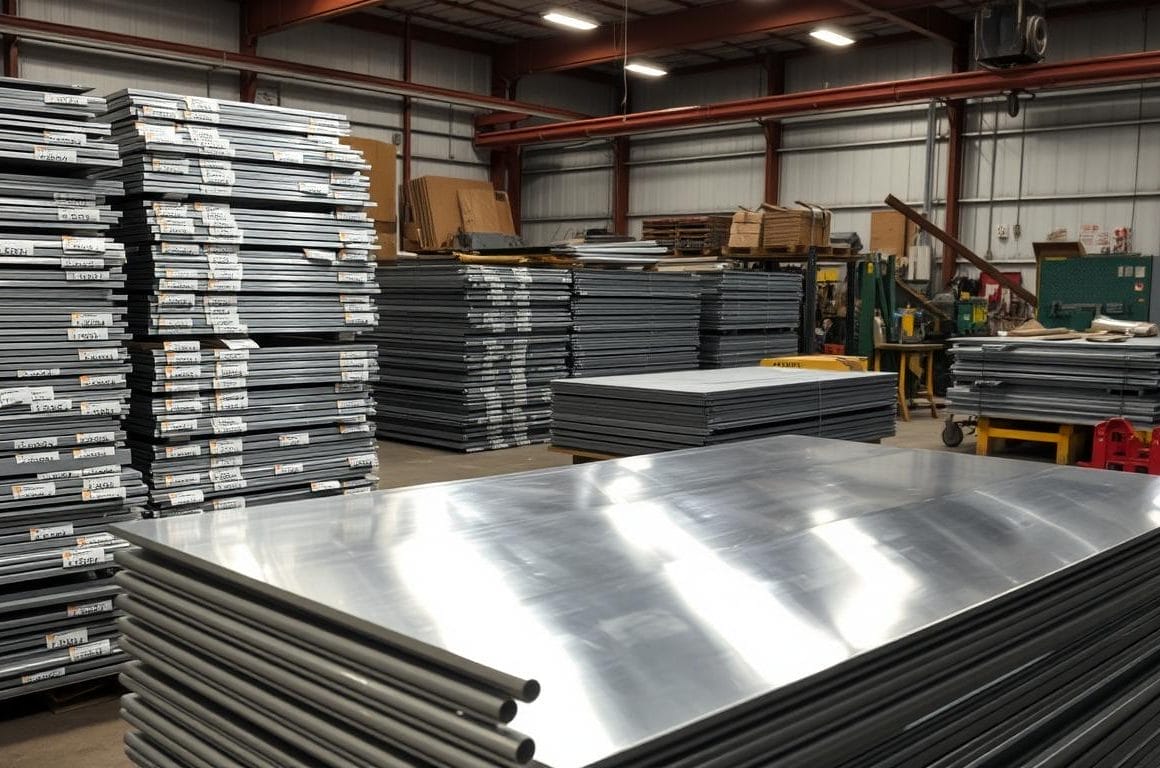
Understanding stainless steel grades is key to picking the right sheet for your project. Types 304 and 316 are two top picks across many industries. Type 304 is great for fighting corrosion, with about 18% chromium and 8% nickel. It’s perfect for places like chemical plants and kitchens.
Type 316, however, is better for harsh environments. It has 16% to 18% chromium, 11% to 14% nickel, and a bit of molybdenum. This makes it strong against chlorides and industrial cleaners. Type 317 is even more durable, with at least 3% molybdenum for the toughest spots.
Specifications are important when choosing materials. The ASTM-A276 standards cover the mechanical properties and uses of these steels. Here’s a quick look at some key specs:
| Grade | Chromium Content | Nickel Content | Molybdenum Content | Applications |
|---|---|---|---|---|
| 304 | 18% | 8% | 0% | Chemical processing, food industry |
| 316 | 16% – 18% | 11% – 14% | 2% – 3% | Marine, chemical processing |
| 317 | 16% – 18% | 11% – 14% | 3% (min) | Highly corrosive environments |
It’s vital for experts to match stainless steel grades with their project needs. This ensures the chosen steel not only meets but goes beyond the project’s standards.
Custom Stainless Steel Fabrication Services
Custom stainless steel fabrication is key in many industries. It helps meet specific design needs through custom cuts, shapes, and finishes. This customization boosts performance and function in fields like food service, healthcare, and plumbing.
Importance of Customization in Sheet Metal Projects
Customizing stainless steel parts is crucial for precise projects. It ensures each piece fits the project’s needs, improving efficiency and cutting down on waste. Companies like Aero Manufacturing focus on meeting customer needs with quality and speed.
Processes Involved in Custom Fabrication
Custom fabrication involves several steps for top-quality products. These include:
- Cutting: Laser cutting and other methods ensure accurate sizes.
- Bending: Shapes the steel as needed.
- Welding: Fuses parts together securely.
- Finishing: Makes the steel last longer and look better.
Aero Manufacturing shows how these steps work. They use 304 series stainless steel, made from 100% recycled materials. They offer fast shipping and no minimum order, helping customers plan better. For more info, check out stainless steel sheet insights.
How to Calculate Stainless Steel Sheet Quantities
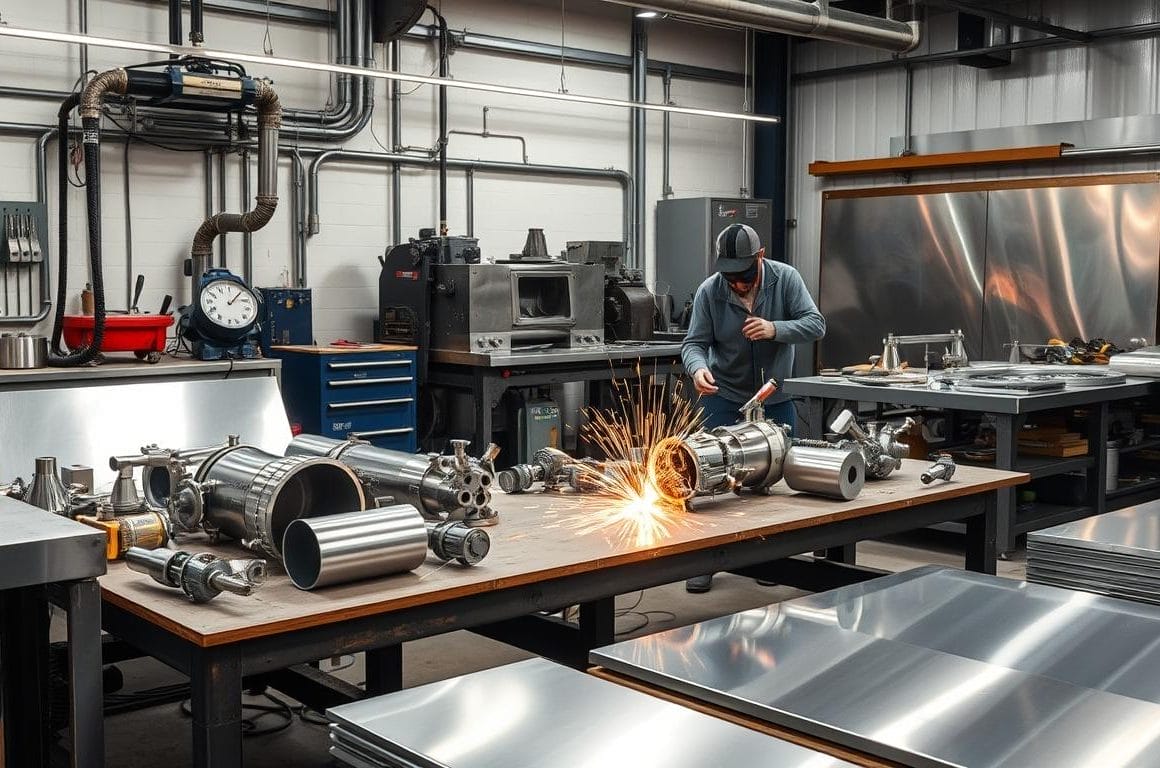
When planning a project, knowing how to figure out stainless steel sheet needs is key. You need to measure length, width, and thickness accurately. This ensures you have the right materials and keeps costs down.
To figure out weight, use this formula: Weight = L/1000 * W/1000 * T * S. Here, L is length in millimeters, W is width, T is thickness, and S is the material’s density. This helps you know how much steel you’ll need for your project.
When figuring out total area and material, remember to think about different types of stainless steel. Each project has its own needs, like:
- Choosing the right type of stainless steel for your project.
- Measuring dimensions carefully to avoid mistakes.
- Adding a 10% waste factor for cutting losses.
For more details on steel plate weight, check out this resource. It offers deeper insights for better project planning.
Here’s a simple table showing how weight changes with different dimensions:
| Length (m) | Width (m) | Thickness (mm) | Weight (kg) |
|---|---|---|---|
| 1.0 | 1.0 | 1.5 | 12.00 |
| 2.0 | 1.0 | 2.0 | 15.87 |
| 1.5 | 1.5 | 3.0 | 20.14 |
| 0.5 | 2.0 | 4.0 | 14.70 |
By using these methods, you can accurately determine the stainless steel sheet quantities for any project. Keeping track of these details makes planning easier and leads to better results.
Comparing Prices of Different Stainless Steel Sheet Suppliers
Looking at prices from various suppliers can show big differences. It helps businesses save money, especially with big orders. It’s not just about the price per pound. Other factors are important for planning your budget.
A 304 2B stainless steel sheet costs about $1.55 per pound. Scrap prices for 316 and 304 are $0.78 and $0.56 per pound, respectively. Stainless steel 316 is pricier but better for tough environments. This info helps decide which steel to use for different jobs.
Important factors in the pricing comparison include:
- Shipping fees
- Minimum order quantities
- Discounts for bulk purchases
- Material grade and features
To better understand, here’s a table comparing key elements of stainless steel grades:
| Stainless Steel Grade | Price per Pound ($) | Scrap Price per Pound ($) | Corrosion Resistance | Common Applications |
|---|---|---|---|---|
| 304 | 1.55 | 0.56 | Moderate | Kitchen appliances, heat exchangers, architectural paneling |
| 316 | Higher due to molybdenum | 0.78 | High | Food production, marine fittings, medical equipment |
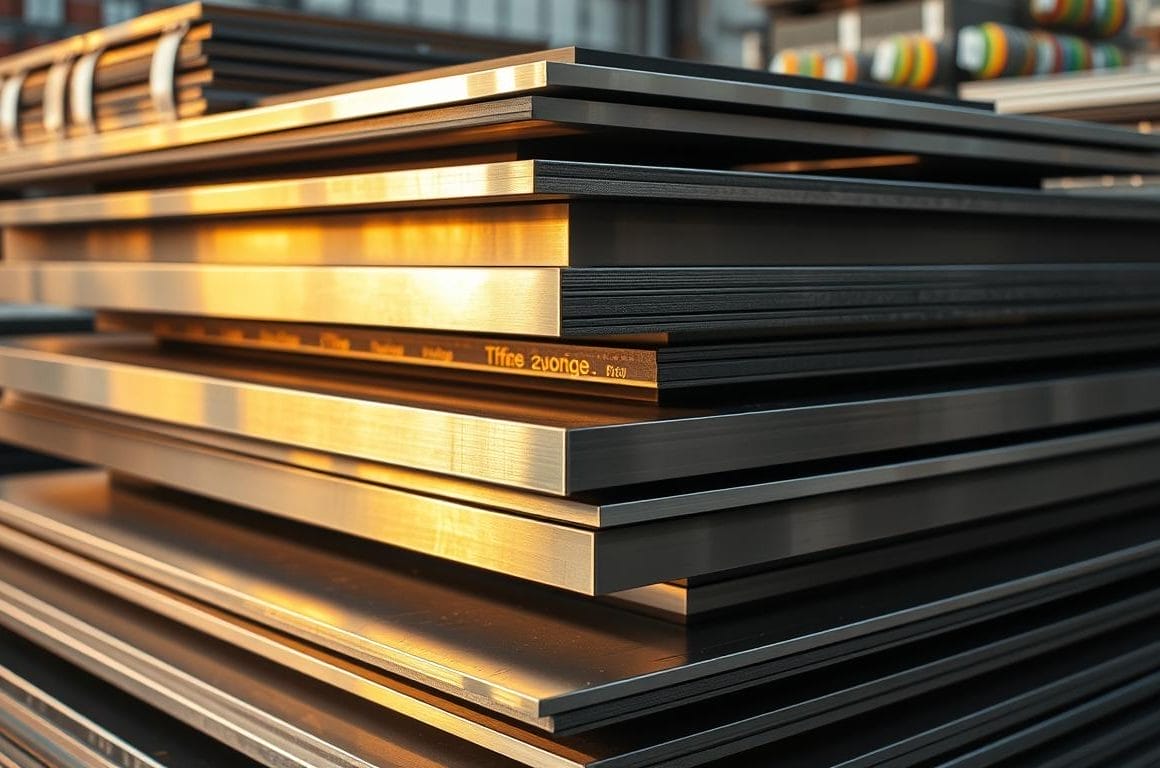
By looking at prices, quality, and uses, you can make smart choices. A detailed comparison helps get the best deal on stainless steel sheets.
Ordering and Logistics for Stainless Steel Sheets
Knowing how to handle stainless steel sheet logistics is key to meeting project deadlines. Suppliers offer different delivery choices to make ordering and getting materials fast. These choices can be from regular shipping to quick delivery, based on what the customer needs and how fast they need it.
Delivery Options for Stainless Steel Sheet Metal
Getting materials on time is crucial for keeping projects on track. Companies like Kloeckner Metals and Alliance Steel have many delivery options to meet customer needs. Some of these include:
- Standard delivery across the United States.
- Next-day delivery services to certain locations.
- International shipping solutions for global projects.
- Multiple transport methods including road, rail, and sea.
By looking at these delivery options, customers can pick the best one for their supply chain. This ensures stainless steel sheets arrive when needed.
Will Call Pickup and Immediate Availability
For urgent needs, suppliers often have will call pickup services. This lets customers pick up their stainless steel sheets directly from the supplier. The main benefits are:
- No shipping delays.
- Chance to check the quality before taking it.
- More flexibility for planning projects.
With good stainless steel sheet logistics, using will call pickup can make projects run smoother.
| Delivery Method | Estimated Time | Benefits |
|---|---|---|
| Standard Shipping | 3-7 days | Cost-effective for larger orders |
| Next-Day Delivery | 1 day | Fast response for urgent needs |
| Will Call Pickup | Immediate | Instant access to materials |
Stainless Steel Sheet Metal Cutting Techniques
Knowing how to cut stainless steel is key for great results in metal work. There are many ways to do it, like laser cutting, plasma cutting, and water jet cutting. Each method has its own benefits, depending on the project’s needs.
Tin snips work well for thin sheets of stainless steel. Power shears are better for thicker materials. Circular saws are versatile, and plasma cutters are great for cutting up to 2 inches thick. Choosing the right method can make your work more efficient and precise.
Here’s a quick guide to the best tools for cutting stainless steel sheets:
| Thickness | Recommended Cutting Tools | Typical Stainless Steel Grades |
|---|---|---|
| Thin Sheets (up to 1/8 inch) | Tin Snips, Aviation Snips | 304, 316, 430 |
| Medium Thickness (1/8 inch to 1/2 inch) | Angle Grinder, Circular Saw, Reciprocating Saw | 304, 316, 430 |
| Thick Sheets (over 1/2 inch) | Plasma Cutter | 304, 316, 410 |
Understanding these cutting techniques helps fabricators pick the best method for their projects. The choice of cutting method and stainless steel grade greatly impacts the quality and efficiency of the final product.
Environmental Considerations in Stainless Steel Production
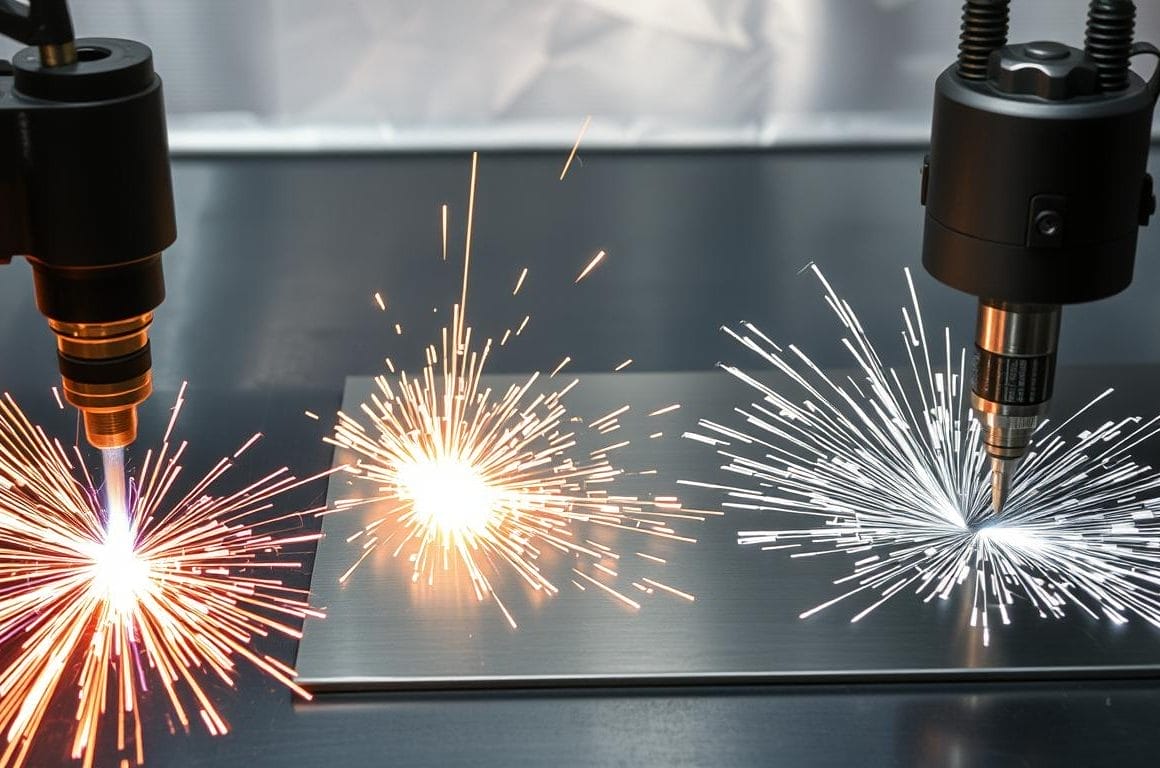
The environmental impact stainless steel has led to big changes in how it’s made. Companies now focus on sustainable production to save resources and cut down on waste. They use new tech to work more efficiently.
Most new stainless steel comes from recycled materials. This not only saves raw resources but also uses less energy with each reuse.
Thanks to new tech, stainless steel production is getting greener. Energy use has gone down as foundries get better at what they do. Stainless steel needs less raw material than other metals because it’s recycled a lot.
Even though making stainless steel still uses a lot of energy, things are getting better. Recycling rates are up, and products last longer. Over half of today’s stainless steel comes from recycled materials.
Companies are working with environmental groups to be more eco-friendly. They join committees and partner with governments to show they care about the planet.
Modern methods use electric furnaces that save energy. Stainless steel can be fully recycled, which means less need for new resources and less waste. Water is also recycled during making, showing how water is used wisely.
Stainless steel doesn’t pollute during production, unlike some other materials. It lasts a long time, which means less need to use new resources. Companies like Ulbrich are setting high environmental standards. They have ISO 14001:2015 certification and follow guidelines from groups like the Nickel Development Institute.
| Environmental Aspect | Details |
|---|---|
| Recycling Rate | Over 50% of stainless steel comes from scrap materials. |
| Energy Efficiency | Continuous technological advancements reduce energy requirements. |
| Water Recycling | Water used in manufacturing can be recycled up to 100 times. |
| Toxic Run-off | Stainless steel production does not produce toxic run-off. |
| Environmental Standards | Manufacturers adhere to standards set by associations. |
Market Trends Affecting Stainless Steel Sheet Prices
Market trends have a big impact on stainless steel sheet prices. Economic factors like changes in raw material costs and demand are key. Steel prices have dropped by 14% from last year but have now leveled off. Structural steel beam prices have also fallen, by almost 10% per ton.
Over the last three years, cold-rolled steel prices have been very volatile. They have sometimes changed by more than 50%. This big change affects the whole stainless steel market. In the first half of 2023, steel costs went down by about 25% from Q3 2022 and 35% from 2020. This change has had a big impact on supply and demand in many industries.
The average cost of metals in the RSMeans Data metals division has gone up by just under 22%. This shows the ongoing market trends stainless steel prices in different areas. In December 2023, stainless steel plate in the USA cost 3483 USD/MT. This is much higher than in China and Germany, which were 1856 USD/MT and 3128 USD/MT, respectively.
The stainless steel plate market is expected to grow. It will go from US$ 73.8 billion in 2023 to US$ 125.75 billion by 2032. This growth is because of more people moving to cities, making the demand for durable materials like stainless steel in construction higher.
The automotive sector’s needs are also driving the market. New manufacturing methods are making products better and more efficient. This helps the market grow.

| Market Indicator | Current Value (USD/MT) | Comparison (Previous Year) |
|---|---|---|
| USA Stainless Steel Plate | 3483 | Decreased by 14% |
| China Stainless Steel Plate | 1856 | Declined |
| Germany Stainless Steel Plate | 3128 | Stable |
| Global Stainless Steel Plate Market Size | $73.8 Billion | Projected growth to $125.75 Billion by 2032 |
Finding Reliable Metal Fabrication Services in the USA
Choosing the right metal fabrication services is key for businesses in different fields. Companies like The Federal Group and Metals USA offer a wide range of services. They include cutting, forming, and finishing, meeting various needs effectively.
Metal fabrication involves processes like shearing, laser cutting, and welding. Industrial metal fabrication focuses on precision and quality. The Federal Group uses advanced welding methods, ensuring high standards in every project.
Businesses should also look at the finishes available, like powder coating and anodizing. These finishes improve the look and durability of metal products. Working with experienced fabricators means getting cost-effective and high-quality solutions for stainless steel applications.
FAQ
What are the key properties of stainless steel sheet metal?
Stainless steel sheet metal is known for its great corrosion resistance and strength. It also has a high strength-to-weight ratio and is non-magnetic. These qualities make it a top choice for many industries, like food processing and construction.
How do market trends influence stainless steel sheet prices?
Market trends affect stainless steel sheet prices by changing raw material costs and demand. Economic changes and global events can also impact prices. Knowing these factors is key for businesses.
What types of stainless steel sheets are available?
You can find 304 and 316 grades of stainless steel sheets, each with its own benefits. There are also textured sheets and different thicknesses and finishes for various needs.
Why is choosing the right stainless steel sheet supplier important?
Picking a good supplier is crucial for quality, timely delivery, and fair prices. Look at their reputation, customer feedback, and product range to find a reliable partner.
What are the benefits of using stainless steel sheets?
Stainless steel sheets are durable and easy to maintain. They resist rust and stains well. Their beauty and versatility make them great for many uses across different sectors.
How can one accurately calculate the quantities of stainless steel sheets needed for a project?
To figure out how much you need, measure the sheet’s dimensions and the area you need. Remember to account for waste. Accurate measurements help plan and manage costs well.
What cutting techniques are used for stainless steel sheet metal?
You can use laser cutting, plasma cutting, or water jet cutting for stainless steel. Each method works best for different thicknesses and precision needs.
What should one consider when ordering stainless steel sheets?
Think about delivery options, minimum orders, and discounts when ordering. Good logistics ensure your project finishes on time and helps manage the supply chain.
How does custom stainless steel fabrication enhance project outcomes?
Custom fabrication offers tailored solutions like custom cuts and shapes. This ensures the product works perfectly in its intended use.
What environmental considerations are associated with stainless steel production?
Stainless steel production is better for the environment because it can be recycled. This saves resources and reduces waste. The industry is working to lower emissions and promote sustainable practices.
Source Links
- https://cut2sizemetals.com/products/stainless-steel-sheet/
- https://www.jtcmetals.com/stainless-steel-sheet-metal/
- https://www.tritonplates.com/blog/what-is-stainless-steel-sheet-properties-uses-and-composition/
- https://www.unifiedalloys.com/blog/stainless-grades-families
- https://heatherandlittle.com/blog/everything-you-need-to-know-about-stainless-steel-sheet-metal/
- https://axisfab.com/sheet-metal-types/
- https://www.unifiedalloys.com/blog/stainless-bar-plate-sheet
- https://www.wasatchsteel.com/factors-impacting-steel-and-metal-market-value/
- https://metaltech.us/blog/what-influences-metal-fabrication-costs/
- https://www.bebonchina.com/ss/Industry-news/The-factors-influencing-the-price-of-the-stainless-steel.html
- https://www.atlanticstainless.com/news/consumers-guide-purchasing-stainless-steel-sheets/
- https://www.metalsupermarkets.com/metals/stainless-steel-sheet/
- https://www.meadmetals.com/blog/common-uses-for-stainless-steel
- https://www.steelmor.co.za/uses-stainless-steel-plates-sheets/
- https://www.ametals.com/post/how-to-choose-the-right-steel-type-for-sheet-metal-fabrication
- https://www.kloecknermetals.com/blog/choosing-the-right-automotive-sheet-metal/
- https://www.sppusa.com/stainlesssteel_overview.php
- https://metaltech.us/blog/guide-to-steel-aluminum-sheet-metal-grades/
- https://www.aeromfg.com/custom-stainless-steel-fabrication
- https://cut2sizemetals.com/
- https://www.twmetals.com/resources/calculators.html
- https://www.swagatsteel.com/calculator.html
- https://www.mchoneind.com/blog/304-vs-316-stainless-steel-cost
- https://www.klscladmetal.com/news/difference-between-stainless-steel-316-and-304.html
- https://asstra.com/industries/steel-industry/
- https://www.kloecknermetals.com/products/stainless/
- https://www.alliancesteel.net/stainless-steel/
- https://industrialmetalservice.com/metal-sawing-precision-cutting/how-to-cut-stainless-steel/?srsltid=AfmBOopmRLa9nQR6BXhHUkp1QT6oi_XejV8CqQZ9Ac-3OXMcp3Nkfd67
- https://yijinsolution.com/sheet-metal/how-to-cut-stainless-steel/
- https://www.unionfab.com/blog/2024/11/how-to-cut-stainless-steel
- https://www.unifiedalloys.com/blog/stainless-environmental-benefits
- https://www.ulbrich.com/blog/stainless-sustainability-the-circular-economy-of-metal/
- https://www.gordian.com/resources/steel-price-updates/
- https://www.imarcgroup.com/stainless-steel-plate-pricing-report
- https://www.linkedin.com/pulse/stainless-steel-sheet-market-future-growth-developments-hcxcc
- https://www.tfgusa.com/capabilities/sheet-metal-fabrication/
- https://www.metalsusa.com/
- https://www.tjfab.com/services/custom-sheet-metal-fabrication/precision-stainless-steel-sheet-metal-fabrication/


